Why Utah Jazz Betting Futures Should Be Considered with Caution
The 2025–26 NBA season is set to tip off next week, which means it’s the final window to lock in futures bets before lines start moving once games begin and new data gets baked into the models. And one team bettors should be especially cautious with is the Utah Jazz.
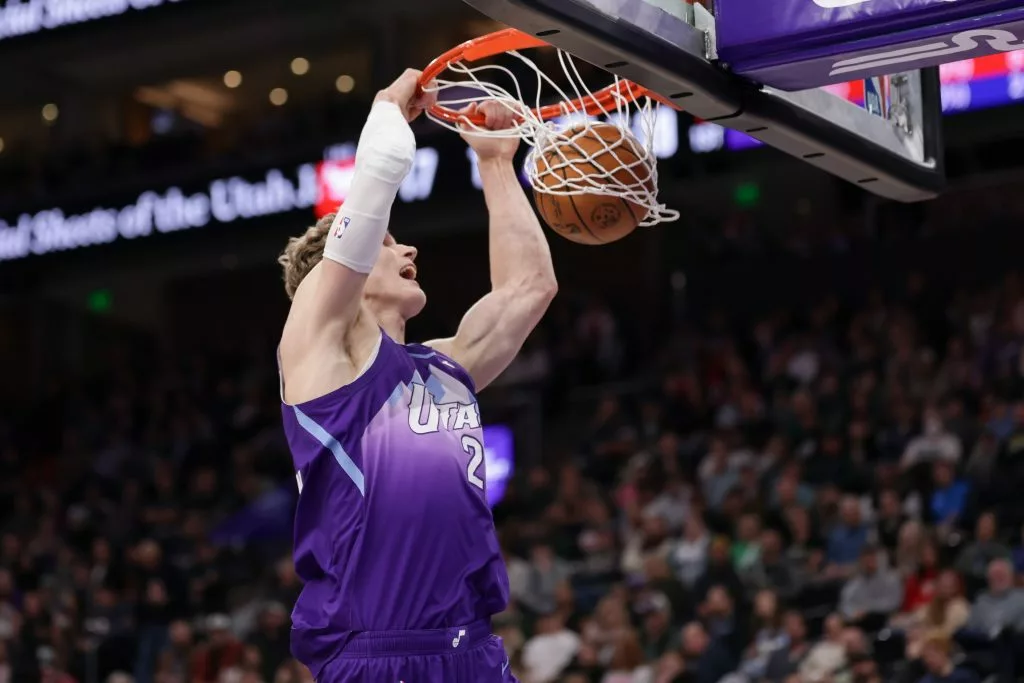
The Jazz aren’t projected to be good this season — that part’s not new. They’ve been in a holding pattern near the bottom of the Western Conference for a couple of years now. But what makes Utah particularly interesting this time around is the combination of timing and intent. There are already league-wide whispers that Lauri Markkanen, the team’s best player and lone NBA All-Star, could be available for trade. He may not be moved immediately, but multiple reports suggest the Jazz could explore deals for him throughout the season and ahead of the trade deadline.
And here’s the thing — even without a trade, Vegas already knows what’s coming.
Before those Markkanen reports even surfaced, oddsmakers had already priced Utah like a team preparing to pivot fully into a youth movement. On sports betting apps like BetMGM, Utah’s projected win total is 18.5, the lowest in the NBA.
 Up To $1500 in Bonus Bets Paid Back if your First Bet Does Not Win
 That’s not just a rebuilding number, that’s a number that suggests the market believes Utah could be historically bad. Less than 20 wins in any 82-game season is abysmal. Falling below that threshold would put the Jazz in the territory of one of the 50 worst regular-season teams in league history.
When you see a total that low across major sportsbooks, it’s not just about projecting talent. It’s an acknowledgment of intent. Vegas and the sportsbooks have already baked in the idea that Utah might not just be bad — they might be fine with it. This upcoming draft class is absolutely loaded at the top, with A.J. Dybantsa, Darryn Peterson, and Cam Boozer all projected to be franchise-caliber players. For a team like the Jazz, which already has quite a bit of promising young talent, it makes sense to take one more big swing at a future star before the organization starts trying to climb again in 2026–27.
So from a betting standpoint, Utah isn’t a “rush to the window” situation if and when Markkanen rumors heat up, or even if he’s actually traded. That movement is already priced in. Trading away an All-Star on a team with an 18.5 win total doesn’t really move the needle — because the market already expects it. The line reflects that oddsmakers believe Utah will be racing to the bottom regardless of how the roster looks in February beyond the trade deadline.
Could they win fewer than 18 games? Sure. But to fall into the 14–16 win range, they’d have to be historically bad — the kind of outlier team we rarely see in today’s NBA. The Jazz would have to land in that bottom percentile of basketball history to cash an “under” comfortably. So while Utah’s roster composition and front-office decisions scream “development year,” the value in betting that direction has already been squeezed out by the line.
The Jazz won’t admit they’re tanking — no team ever does — but they don’t need to. The moves they’ve made, the youth they’re prioritizing and the betting market’s stance all tell the same story. This is a transition year. The future in Utah is bright, but the present will be rough, by design.
So whether you’re scrolling sports betting apps looking for early-season value, or comparing odds across different sportsbooks to find the best promotions, don’t overreact to whatever happens next. Whether Markkanen stays, gets moved, or the Jazz ship off more veterans midseason, Vegas already knows what’s coming. The line reflects it. Sometimes the smartest play isn’t reacting to the news — it’s realizing the market already has.
-
Presidents Cup Odds & Predictions for 2026: Good American Chalk
-

Moozi Sweepstakes Casino Launches Free SC Oktoberfest Bundle & 8 New Slots
-

MyPrize Sweepstakes Casino Packs: Get Free Card Packs & New Yu-Gi-Oh! Bundles
-

MLB Best Bets Today: Top Pitcher Props for Sept. 22
-
Jaxson Dart Avoids Season-Ending Knee Injury After Scary Exit Against Rams
-
MLB Home Run Props and Predictions Today: Top Player Props for Sept. 22