Why Tottenham’s Old Trafford Draw Offers Hope for the Future: Analysis
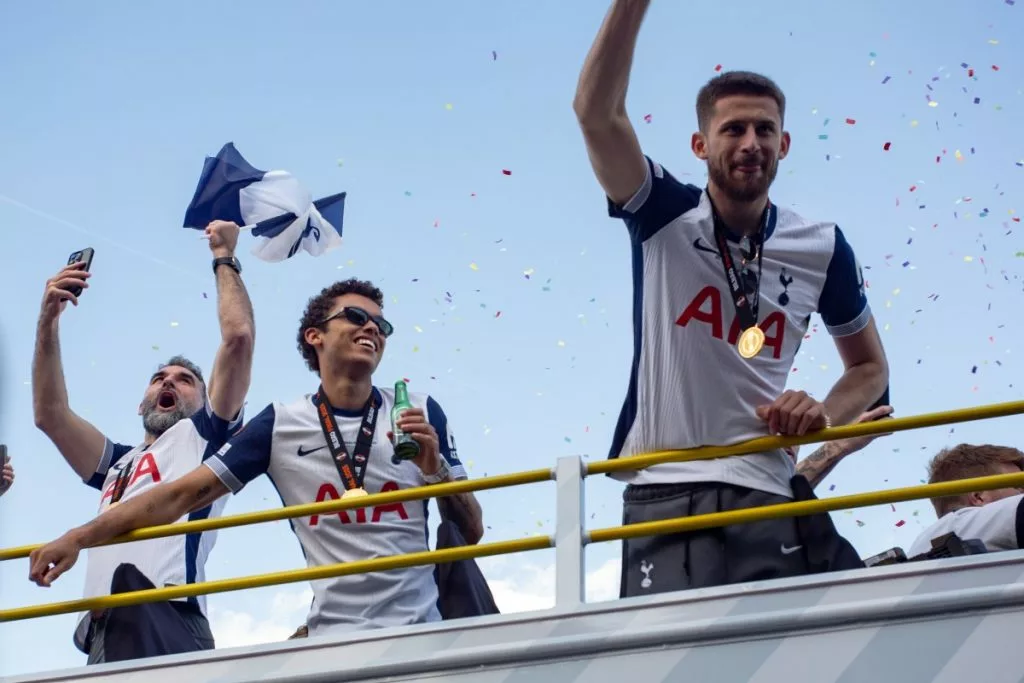
Tottenham has long been a football club of contradictions … and Sunday’s 1-1 draw with Manchester United was no different.
They dominated but couldn’t score. They were reduced to ten men and battened down the hatches – only then to find the late equaliser their earlier play deserved.
The first hour or so of the game at Old Trafford was the closest Spurs have come to looking like a proper Roberto De Zerbi team: possession with purpose, slick diagonals and third-man runs, and a man-to-man press that was simultaneously controlled and aggressive.
They may not have claimed the three points that much of their performance warranted, but Tottenham fans, ahead of a six-game run that includes winnable contests with Ipswich Town, Sunderland, Coventry City and Leeds United, finally have some reason to be optimistic.
Game of Two Halves
In the first half, Tottenham truly showed their best work in some time.
They smothered the threat of Manchester United’s front four of Cunha, Fernandes, Amad and Mbeumo, starving them of possession and then, on the rare occasions that they did get the ball, pressing and harrying them into giving it straight back.
Spurs also showed rare craft in the final third, with Savio and Mohammed Kudus dangerous on the flanks and Conor Gallagher offering box-crashing energy as a roaming number ten behind Dominic Solanke.
They created 0.96 of xG in those first 45 minutes, while amassing 17 touches in the United penalty area. They failed to make that advantage count due to wasteful finishing, with Solanke missing a golden opportunity to break the deadlock after Tottenham’s high press forced the Red Devils to relinquish possession in a dangerous area.
Those first-half stats:
- xG – Man Utd 0.05 v 0.96 Spurs
- Shots – Man Utd 1 v 7 Tottenham
- Big Chances – Man Utd 0 v 2 Tottenham
- Touches in Opposition Half – Man Utd 79 v 131 Tottenham
Gallagher and Kudus also failed to find the net with decent chances, and one of football’s oldest golden rules – the longer a game stays 0-0, the more chance you have of losing it 0-1 – looked a distinct possibility when United, having been booed off at half-time, found a goal out of the blue via Mbeumo.
Rodrigo Bentancur’s senseless dismissal looked to have ended Tottenham’s hopes of getting anything from the game, which would have been cruel on the balance of play, while casting further doubt on De Zerbi’s long-term credentials despite the positivity of the performance.
But then Sandro Tonali’s in-swinging cross brushed the top of Solanke’s head and found its way into the corner of the United net… no less than Spurs deserved, most outside of Manchester would agree.
De Zerbi’s Italian Job
Football fans love a fact, so here’s one for you: this was just the fourth time in Tottenham’s history, dating back more than a century, that the club has failed to win any of their opening six games of the season.
The Premier League table has no column for good performances or artistic merit; points are the only currency that matters.
So pressure is mounting on De Zerbi, who, as all told, has won just four of these 15 games in charge at the time of writing. With a full transfer window under his belt and ten new players arriving for a combined £250 million, the Italian has no excuses.
Recruitment Issues
Tottenham’s defensive recruitment was sound – Van Hecke, Senesi, Adarabioyo and Andy Robertson added quality and Premier League experience, but have they ticked enough boxes up front?
At some point, you expect the likes of Maddison, Kulusevski and/or Mudryk will have to do some heavy lifting, and none of the trio has played much football of late.
Not that you suspect De Zerbi is the sort of individual to shirk the challenge. He was pleased with what he saw from his players at Old Trafford. “I'm very happy because I've seen the right spirit, the right character and I want to start from this character, this reaction, this behaviour.”
Tottenham’s High Octane Football
But if the Manchester United game is the bellwether, it suggests De Zerbi’s ideas are finally getting across.
This was his interpretation of how football should be played: high press, high tempo, high energy.
It was particularly evident in the first half, with Tottenham pinning United in their own half of the pitch with a bold man-to-man press that prevented them from stringing together any meaningful passing combinations.
So often defence turned into attack, with Spurs winning the ball high up the pitch and transitioning quickly. Tonali and Lucas Bergvall, their dual midfield pivot, were tasked with pressing onto Youri Tielemans and Kobbie Mainoo. It was a high-risk strategy, as it theoretically left Bruno Fernandes free, but Tottenham were so quick to jump out that even the outstanding Portuguese had no room to play.
Energy Sapping
Solanke should have scored when Bergvall’s aggression intercepted a ball bound for Mainoo, with countless other examples of United’s attacks being snuffed out before they even began – 0.05 xG tells its own tale.
How successful this high press will be week to week remains to be seen. They looked visibly tired in the second half, letting United back into the game, and as soon as one link in the high press chain breaks, it can prove catastrophic.
At least Tottenham had an identity and a purpose in their tactical set-up, though… something evidently missing over the past few years.
Chance Creation
Attention will now turn to two other footballing foes that have been Tottenham’s achilles heel in recent times: creating chances and finishing them off.
Spurs have recorded only 6.6 xG in the Premier League this term at the time of writing; only Coventry City have a weaker attacking output. And, to make matters worse, when rare chances do come along, they have lacked a clinical edge in front of goal.
Maybe Savio will help with chance creation. The artist formerly known as Savinho was Tottenham’s best player at Old Trafford; he was at the heart of their best moments in the final third and should have had an assist to his name, but Solanke’s wasteful finishing kept it from happening.
It was a curiosity to see a left-footed winger on the left side, and it put United’s left back, Lenny Yoro, in a predicament. Savio was happy to go out wide, as you’d expect, but he also occasionally showed a willingness to cut infield; that unpredictability could serve the Brazilian well if he continues to be deployed on his ‘natural’ flank.
Spurs’ Lack of Goal Power
Although Tottenham showcased a more incisive approach at Old Trafford, that ultimately counts for nothing if you don’t put the ball in the back of the net.
Solanke did eventually do just that with an intelligent header, but not before he missed two glorious chances to frank Spurs’ dominance earlier in the contest.
The striker is something of a problem. He’s a useful target man when required and is clearly an influential character in the dressing room – De Zerbi made him captain for the United game.
But strikers will always be judged on goals, and they and Solanke have been playing hide-and-seek with one another for quite some time now. Now 29, the former Bournemouth man has still only once recorded a double-figure goal tally in a Premier League season… and that came with his former employer.
At Tottenham, the data is rather more damning:
- 2024/25 – nine goals
- 2025/26 – three goals
- 2026/27 – one goal (and counting?)
Solanke scored 19 Premier League goals for Bournemouth in the 2023/24 season. He hasn’t netted a combined 19 since then, with a running total of 13 – and only four of those have come since the start of the 2025/26 campaign.
Goal Shy
The 1-1 draw with United was the 18th occasion in 2026 alone that Spurs failed to score in the first half. And if you don’t find the net when you’re on top, the odds of a negative result increase exponentially.
It’s quite possible Solanke isn’t the solution to Spurs’ scoring woes, but neither is Richarlison, who has been left out of their Premier League squad and told he has no future at the club.
The best bet for an uptick may well be Omar Marmoush, although the Egyptian hasn’t exactly hit the ground running in London. He’s yet to find the net and has started only two Premier League games this term, suggesting De Zerbi is yet to be convinced of his merits.
The 27-year-old showed plenty of aptitude at Manchester City, so he is certainly worth preserving; the history books don’t paint a pretty picture of Solanke’s chances of solving Tottenham’s goalscoring problem.
-

Gambling Commission Targets £40 Million in Illegal Gambling Crackdown
-

Pierre Sage in Danger of Sack After Woeful Start at Crystal Palace
-

Has the UK Gambling Industry Outgrown the Gambling Act 2005? | Analysis
-

Could the Gambling Act Be Scrapped By New Independent Commission?
-

Forest Expose Man City Flaws and Deepen Relegation Fears: Analysis
-
Birmingham Top After Crazy Weekend in EFL Championship