Manchester Derby Tactical Analysis: Key Battles and Where the Match Will Be Won
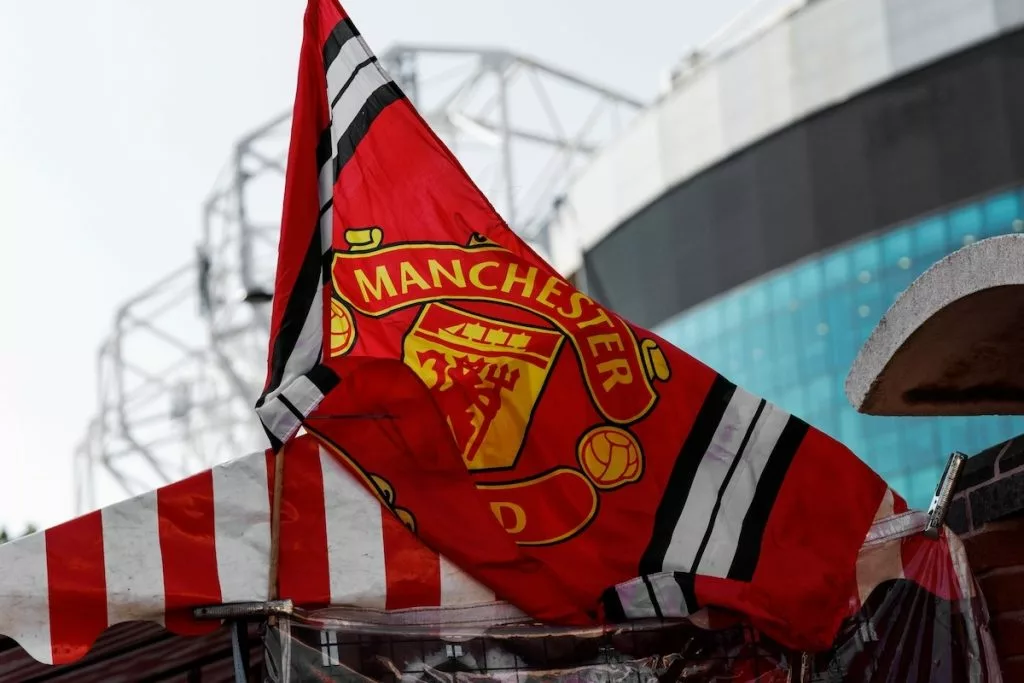
The next instalment of the iconic Manchester derby takes place on Sunday with United hosting City at Old Trafford in the tea-time kick-off.
For all the brilliance and silverware of the Cityzens under Pep Guardiola, it’s a fixture in which the Red Devils have consistently found successful tactical solutions to the problems posed by Erling Haaland and Co.
Read our Manchester derby tactical analysis to learn the ins and outs of the next edition in this storied rivalry.
At a Glance:
- Semenyo vs Shaw: cutting off the supply line to Haaland
- How do United deal with City’s extra man in midfield?
- United’s counter-attack: will they be brave and keep one or both wingers high as first receivers?
Recent Manchester Derby Results Favour United
Here’s a refresher of the last four Manchester derbies:
- United 2-0 City (January 2026)
- City 3-0 United (September 2025)
- United 0-0 City (April 2025)
- City 1-2 United (December 2024)
It would be foolhardy to write off Michael Carrick’s side on Sunday, that’s for sure.
Carrick has already tasted success in the Manchester derby, having masterminded that 2-0 victory back in January, while Enzo Maresca will be making his managerial debut in one of English football’s most mouthwatering fixtures. It’s a game that I expect to be very tactical in nature, with City unlikely to deviate from their script — positional rotations and attacking with extreme width and central overloads. How can United stop City’s fluidity? And can they maximise the counter-attacking threat that they utilised so successfully back in January’s clash?
Here’s where I think the Manchester derby will be won and lost on Sunday.
United vs City: A Clash of Styles
City's attacking shape in build-up is typically a 3-2-4-1, with several permutations possible. The wide players — likely to be Antoine Semenyo and either Iliman Ndiaye or Jeremy Doku — will hold their width, creating 1v1 duels against Luke Shaw and Diego Dalot, respectively. The left-back, probably Nico O’Reilly if he recovers from injury in time, will play as an auxiliary central midfielder in the build-up phase alongside Elliot Anderson and Enzo Fernandez, creating an overload in the middle. Alternatively, the right-back — likely to be Abdukodir Khusanov — can invert, allowing Fernandez to fly forward and accompany Rayan Cherki as dual number tens.
It’s Guardiola-esque, which perhaps explains why the City hierarchy were so keen to get Maresca in as the Spaniard’s replacement — ensuring a continuity of ideas. The Italian had deployed an inverted full-back, usually the right-back, in his successful stints as head coach of Chelsea and Leicester City. United, meanwhile, will need to find solutions. Notably, in the January meeting, Carrick ordered his players to press high and aggressively, preventing City from building out from the back. The midfield pivots followed the more attacking players higher up the pitch, so when City were able to break the lines and feed the ball into Phil Foden — their out ball that day — he was quickly closed down. Foden was substituted at half time that day; that was the extent of his impact.
How Man United Can Counter Against Man City
After winning the ball back, United have options when transitioning into attack:
- Marcus Rashford holds his width and acts as the first receiver
- Matheus Cunha drops in to create space for Rashford and/or Bryan Mbeumo to diagonally run in behind from wide areas
- Bryan Mbeumo holds his width and acts as the first receiver
In January’s contest, it was Amad Diallo who was tasked with staying wide on the right. He was able to take advantage of the spaces on that side, so it’s possible that Carrick will start with the intention of utilising Mbeumo in that same role on Sunday. Khusanov, not a natural right-back, won’t enjoy having to face up Rashford in one-vs-one situations out wide. And when inverted wingers cut in on their favoured foot, it can have devastating consequences — Mbeumo’s goal against Everton at the weekend a work of genius in that exact fashion. I expect City to dominate the ball — they had 68% possession in that January fixture — but that doesn’t necessarily equate to threat. United, particularly in wide areas, could be just as devastating on the counter.
Key Battle #1 – Semenyo vs Shaw: Pressure and Pace
Erling Haaland is arguably the best ‘No. 9’ striker on the planet. But, like all superstars of his ilk, the Norwegian’s success is largely governed by the supply line into him. The chief architect of his chances could well be Semenyo, who will look to isolate himself against Shaw in wide areas. If the Ghanaian can get a run on his marker, it could be a long afternoon for Shaw, who doesn’t have the recovery pace to track Semenyo, who has provided an assist in each of his last two outings.
The solution may well be for Shaw to get touch-tight to the winger, preventing him from having any time to settle on the ball. Carrick will know that City are unlikely to play with an overlapping right-back on that side, nor will the likes of Cherki or Haaland bust a gut to run into the space left behind Shaw.
If the Manchester United left-back can win this battle, he will cut off a major supply line to Haaland.
Key Battle #2 – Haaland vs Martinez: A Pivotal Size Discrepancy?
Not to be sizeist, as Lisandro Martinez is an excellent defender with many gifts, but he is 5-foot-9 — and in Haaland, he comes up against one of the most physical frontmen in football. Just look at the way the Norwegian was able to win the header and score the only goal against Coventry City on Saturday; Aurele Amenda tried to wrestle with Haaland before Semenyo had even crossed the ball — resorting to tugging at his shirt as a desperate last act.
The result? Haaland brushed him aside and planted his header in the back of the net. Frame that as a personal battle against Martinez, and you can see where potential issues lie for United.
- Martinez aerial success (2026/27): 66%
- Haaland aerial success (2026/27): 87%
- Haaland header goals: Three in 10 games (World Cup + EPL 2026/27)
Naturally, the Norwegian will look to isolate himself against Martinez whenever the ball goes into wide areas. United’s other centre-back, Harry Maguire, will look to intervene, given that he’s strong in the air. But he’s far from perfect: Everton’s Thierno Barry was able to drift off Maguire’s shoulder on Sunday, before missing a gilt-edged header in front of goal — a chance with a sizable xG of 0.25.
Key Battle #3 – Controlling the Midfield and Central Zones
When in possession, 34% of City’s play has gone through the middle of the pitch so far in the Premier League. Only Chelsea have a higher percentage than that, with that central focus a natural side-effect of overloading the middle of the field with at least one inverted full-back to create numerical supremacy.
The challenge for United will be shutting down those central zones, with the objective of disrupting City’s build-up play and preventing balls from being fizzed into their No. 10, be it Cherki, Foden, or somebody else, if Maresca opts to spring a surprise.
And this will be the key differentiator between success and failure for United on Sunday:
- Do they man-to-man against City’s midfield, leaving the 10 free?
- Can a sitting midfielder man-mark Cherki, freeing up Fernandez or O’Reilly (if he starts)?
- Will a centre-back jump out and pick up Cherki goal-side?
These are all viable questions with no right or wrong answer. And what has made City so good for all these years is that they’re able to present multiple problems within the same shape. Carrick will want to press City aggressively, engaging them as high up the pitch as possible. But if they press both of City’s centre-backs in possession, it means that Bruno Fernandes will need to jump out to join Cunha in that assignment. That could leave Kobbie Mainoo and Youri Tielemans 1v1 against Fernandez and Anderson, which in turn will create space in behind for Cherki. Martinez could jump out to shut down the Frenchman, but that could leave Maguire exposed against Haaland… with the Norwegian having plenty of space to run into.
The Battle for Manchester Will Come Down to Tactics and Preparation
Ideally, Carrick would love a full week on the training ground to ingrain his tactics for the Manchester derby in his players. But the Champions League clash with Sabah — to be played on Thursday, remember — will prove to be a source of frustration for United’s head coach, who will be hoping that his key players come through the encounter unscathed.
City, meanwhile, play against Porto in the UCL on Tuesday evening; handing them a full 48 hours of additional preparation time for Sunday’s crucial derby.
The nature of the Cityzens’ tactical set-up is that they don’t need to change too much for a specific opponent; they know that their shape and positional rotations create multiple problems for the opposition to solve. Carrick, meanwhile, needs to find a way to organise his troops in a way that minimises City’s attacking threat while maximising their own. He’s done it before… Can he do it again on Sunday?
It’s going to be fascinating to watch, no matter what.
-

Champions League Predictions and Betting Tips for 09/09: Reds to Prevail
-

Manchester Derby Tactical Analysis: Key Battles and Where the Match Will Be Won
-

Horse Racing Tips for Tuesday at Goodwood: Virgin Bet Daily Price Boost Handicap Best Bets
-
US Open Quarter-final Predictions & Betting Tips 2026: Mixed American Fortunes
-

Jiri Lehecka Reveals Confrontation with US Open Bettor
-
Hamilton Says Ferrari Team Orders 'Far Too Late' After Monza Setback