Can Liverpool’s Direct Approach Work Against Arsenal? | Analysis
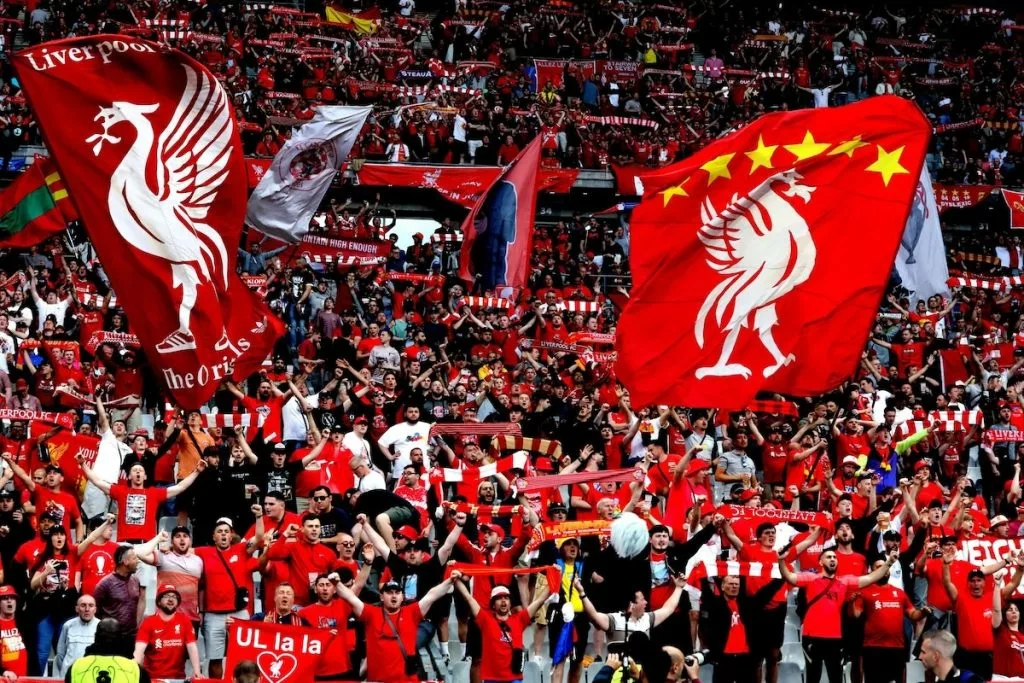
Liverpool clipped the wings of high-flying Brighton, nicknamed the Seagulls, last Sunday in a 2-0 victory.
Their goals came in a four-minute burst, with Alexander Isak finding the net alongside a Pascal Gross own goal, in addition to a couple of other good opportunities spurned.
It was remarkable how easily Liverpool cut through a usually well-drilled Brighton side, and when quizzed on the game afterwards, Virgil van Dijk let slip Andoni Iraola’s key tactical message.
Be Direct
“The message was we had to go a bit more direct,” the Dutchman confirmed. “It doesn’t maybe look the most beautiful way of playing football but you get a lot of joy, in my opinion, against them with that.”
It was staggering to see Liverpool have just 36% possession of the ball, especially at Anfield, so it was a gameplan devised by Iraola that, on this occasion, did the business.
But will it work against other opponents? The Reds host Arsenal on Sunday, who will of course present a different type of test. So can Liverpool adapt and evolve their style to defeat the Gunners and perhaps reveal themselves as genuine title contenders?
Arsenal’s High Defensive Line
It’s fascinating to note that during the 2025/26 season, Arsenal defended with a higher line – measured in defensive actions and how far they were completed away from goal – than any other Premier League side.
Manchester City, who made pitch compression a tactical must-have under Pep Guardiola, ranked second with Brighton third.
Based on that data, Liverpool’s direct running attacking quartet of Isak, Florian Wirtz, Cody Gakpo and Bradley Barcola must be licking their lips in anticipation of Sunday’s contest.
However, things have changed in 2026/27. Arsenal’s average defensive line height has dropped by more than a metre, and they now rank sixth in the Premier League for the metric. It might not sound a lot, but it reduced the opportunity to get runners in behind the Gunners considerably.
No Press, Mid Block
Something that works in harmony with that is Arsenal’s relative lack of pressing under Mikel Arteta. PPDA, or Passes Per Defensive Action, is a data point that measures exactly that: the average number of passes made before the opponent completes a tackle, block, interception etc. The lower the number, the more aggressive the press (for the most part).
Brighton rank first in the Premier League for PPDA, which explains the ease with which Liverpool cut through them last Sunday. Interestingly, Van Dijk referred to that specifically in his post-match press conference.
“If you’re then trying to be clever and find the free man and show that you’re very good football players, then you can get punished,” he remarked. “That’s what happened to a lot of teams I think against them this season.
“If you go direct – which we also did last year, by the way – you could have a bit more joy. That’s what we did, especially the first half an hour, and we scored two goals out of that as well.”
Liverpool were able to play through Brighton’s press at will, but you suspect that Arsenal will be a tougher nut to crack. Allied to their lower defensive line, the Gunners rank seventh in the Premier League for PPDA – essentially, they press less aggressively and more willing to sit in a mid or even a low block when out of possession.
Nullifying the Threat
The upshot is that Arsenal may be able to nullify the key strength of Liverpool’s runners, specifically Barcola and Gakpo, and their desire to get in behind. Instead, they will have to accept the ball into feet and then try to create play with defenders in front of them… rather than them eating their dust after breaking the line with a run.
And that’s a pattern of play that doesn’t necessarily suit Iraola’s men. They dominated the ball against Brentford, but couldn’t find a way past their low block. The Bees led 1-0 up until Yehor Yarmoliuk’s senseless red card, after which Liverpool utilised the extra space to complete a 2-1 comeback victory.
Against Fulham, the Reds made a staggering 239 passes in their opposition’s half of the pitch, but they only recorded 18 touches in the Cottagers’ box. So despite dominating territory, Liverpool were unable to transform that into something meaningful; largely because of Fulham’s willingness to sit in a deep line and defend from a low bock position.
Anecdotally, Arsenal are the best team in the land at defending in this fashion, so the expectation is that Liverpool’s attacking players will have a much tougher afternoon than they did against Brighton at Anfield.
What Is Arsenal’s Route to Goal?
Let’s assume that Arsenal are able to keep Liverpool at bay. They still need to find a path to goal themselves in order to win this game… but where does that come from?
Prior to the Gunners’ shock EFL Cup defeat to Fleetwood Town in midweek, Kai Havert and Viktor Gyokeres had gone a combined nine games without a goal – the Swede finally getting on the scoresheet against a team ranked more than 80 places below Arsenal in the English football pyramid.
Neither is a reliable source of goals, which makes the task of winning games all the more difficult; compare that to the ‘get out clause’ provided by Erling Haaland at Manchester City, who can transform matches with a goal seemingly out of nowhere.
The ongoing injuries to Bukayo Saka and Christos Tzolis, who has been so impressive early on in his Arsenal career, have hardly helped matters.
Curiously, the Gunners are scoring goals – they put two past Everton last week, and netted twice away from home at Bayern Munich, which remains one of the most challenging assignments in world football.
But their brace of goals against Everton both came from set pieces – Ezri Konsa’s directly from a corner, Gabriel’s from the second phase of play, and before that they mustered just 1.14 of xG against Nottingham Forest before Noni Madueke’s somewhat fortunate deflected goal.
Set Play Kings
Relying on set pieces is perhaps not a sustainable, long-term route to success in the beautiful game.
But they can get the job done from one week to the next. And last season, you would have banked on Arsenal – who scored more goals from set plays than any other Premier League side – causing havoc against a Liverpool side that comfortably shipped more set piece goals than any other EPL team.
But the tide has certainly turned in 2026/27 thus far, with Liverpool yet to concede a goal from a restart – only Brentford can match that tally. And prior to their meeting with Everton, Arsenal were yet to register a set piece goal of their own.
Changing Tact
One of the reasons for that, curiously, is that the Arsenal set piece coach Nicolas Jover had seemingly abandoned his modus operandi of last season: attacking in the centre of the goal or at the far post.
Time and time again the Gunners found crucial goals from corners in this fashion, but Jover has shown a desire to reinvent the wheel this term with front space deliveries and even by instructing his players to go short.
Here’s their delivery types in 2026/27 and the percentage change from last season:
- Short corners (+8.7%)
- Front post (+7.8%)
- Far post (-6.9%)
It’s generally accepted that deep balls into the far space are far harder for defending teams to prepare for and mitigate, so it’s surprising that Jover – something of a set play revolutionary – was so quick to abandon such a successful strategy.
However, the signs against Everton were that the Gunners were ready to revert back to their old ways in a ‘if it ain’t broke, don’t fix it’ kind of way.
And, as a result, they may present Liverpool with their toughest test so far when defending set plays.
The Midfield Battleground
Asserting dominance in the middle of the pitch will be vital to the outcome of Sunday’s contest.
In Arsenal’s corner we have the likes of Declan Rice and Martin Odegaard, who will be ably supported by either Martin Zubimendi or Bruno Guimaraes.
That will give them something of a numerical advantage, as Liverpool will likely field Alexis Mac Allister and Ryan Gravenberch – with Wirtz needed to drop back and ensure a 3v3 battle in midfield.
That will hamper Liverpool’s ability to break out at pace, while Arsenal’s rotations in the middle will surely give the Reds’ trio a real headache in deciding who picks up who.
Dominance Into Goals?
Rice and Odegaard are both excellent ball carriers and passers, so they can quickly take Arsenal out of their mid-block to expose Liverpool on the break, should the hosts commit too many bodies forward in a bid to open up the Gunners.
It will be fascinating to see who Arteta selects in attack. Havertz is more of a cerebral link-up man that is happy to drop deep, whereas Gyokeres is happy to run in behind – something that the ageing legs of Van Dijk could do without.
The midfield combinations may just be enough to secure Arsenal the real advantage of platform in this game… but do they have the firepower in the final third, set pieces notwithstanding, to make it count?
-

Can Liverpool’s Direct Approach Work Against Arsenal? | Analysis
-

Sergio Perez Signs New Long-Term Deal With Cadillac
-

Mixed Reaction as MGD Hiked By 5% in Autumn Budget
-

Arsenal Stunned by Fleetwood in Huge Cup Giant-Killing
-

MPs Back Calls to Ban Gambling Advertising From Football
-

Kane Beats Mbappe and Yamal to Ballon d’Or