How to Bet the Grand National
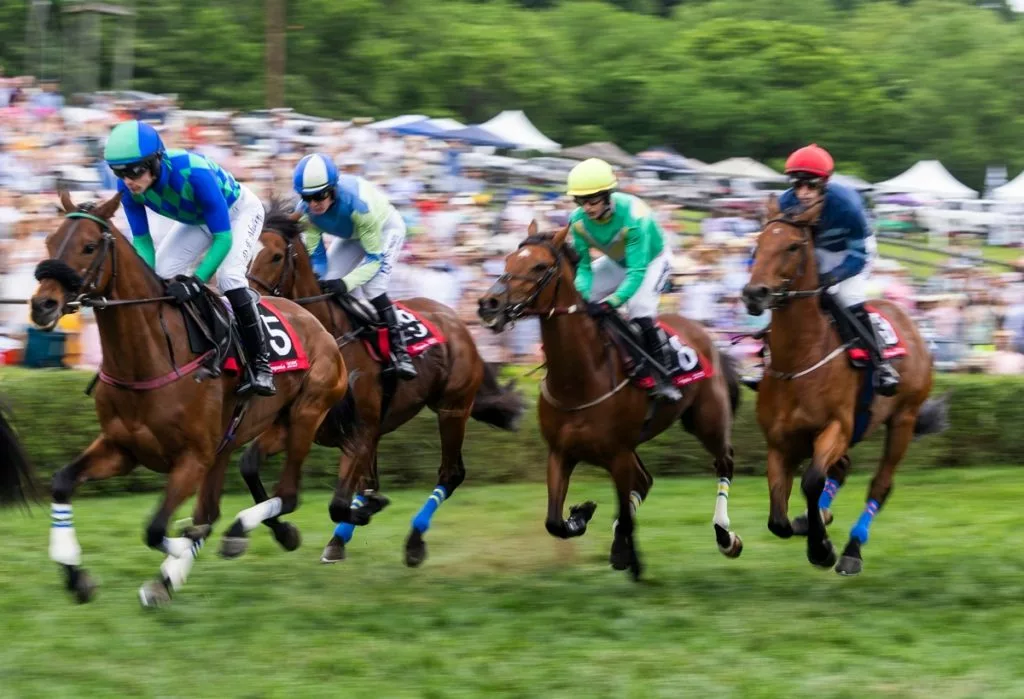
Perhaps the biggest race in horse racing in England, the Grand National, goes off this Saturday, April 11. It takes place at Aintree Racecourse in Merseyside, England. How do you go about placing your bets on this race? Well, before we get to that, let’s give you a little background of the race and then get a small rundown of how to get some money down at the window.
Rundown of the Grand National
The race, with a purse of £1,000,000, is open to thoroughbreds that are at least seven years old. It spans four miles and 2 ½ furlongs in length. It is one of the most well-known, grueling steeplechase races in the world.
Over the course of the race is a total of 30 fences that are jumped. All told, there are 16 unique fences and 14 are jumped twice, as there are two laps of the circuit made during the course of the race. As of Monday, 55 horses hold entries for the Grand National, though the maximum field is 34. That means nearly 40% of the horses that hold entries won’t actually race.
Standard Betting Options
Betting to Win: This one is pretty cut and dry. You’re betting that the horse you’re putting money down on wins the race. For example, as of early Monday morning, the favorite for the race is I am Maximus, who won the Grand National in 2024. He currently holds 6/1 odds to win, so if you wagered £10 on him and he won, you’d be in the black. You’d win £60 (your initial £10 stake multiplied by 6) plus your original £10 for a total of £70.
Betting the Exacta: If you’re going to bet the Exacta, you have to either be rather knowledgeable or have a little luck. For your bet to cash, you have to correctly identify not just the horse to win the race, but you also need the horse that finishes second. For example, in this situation, you could wager on I am Maximus to win and Jagwar to finish second. In order for that bet to win, they would have to finish in that order. If I am Maximus were to win but Jagwar finished third, your bet would come up as a loser.
Betting the Trifecta: This is similar to the Exacta, only with a higher degree of difficulty. Instead of picking the horse to win and finish second, here you pick the top three horses. Building off the previous wager examples, you could wager on I am Maximus to win, Jagwar to finish second and Grangeclare West to finish third. In order to cash in, that order would have to be the actual order of finish. Should those three place but in a different order, your bet doesn’t cash.
Other Ways to Wager
Each-Way: This bet gives you a little bit of flexibility in potential ways to cash in. If you place an each-way bet, your stake becomes twice what your bet would be on a straight bet. That’s because you’re betting on a horse to either win or place. In order for the win part of your bet to cash, obviously, your horse has to win. If your horse wins on an each-way bet, you’d cash both legs as a winner obviously places.
Using our earlier example, you pay £20 for an each-way bet on I am Maximus at 6/1. Should he win, you cash £60 (£10 multiplied by 6), plus your initial stake, for a total of £70. The place bet would pay out at ¼ or 1/5 odds, depending on the size of the field. If I am Maximus were to win, you’d cash the place bet as well. Going at ¼ odds, that would put the place payout at 1.5/1, so you would earn an additional £15 (£10 multiplied by 1.5, which is ¼ of 6) and your initial stake of £10 for an additional return of £25.
Place Betting: If you don’t want to lock yourself into picking a horse to win or make wagers involving multiple horses, you can just lay a bet on a horse to place. That means you can take a flier on Grangeclare West, who is going off at 10/1 odds, to place. In a field this big, you can conceivably cash if the horse you wager on finishes in the top four or five spots.
Non-Runner, No Bet: As we mentioned before, there are 55 horses that hold entries for this race. However, only 34 horses can make the field. That means you may bet on a horse and ultimately, he doesn’t make the field. Instead of being just out your cash in the “too bad, so sad” department, you could have your money refunded if your horse doesn’t compete. It doesn’t make you any money in the grand scheme of things. However, it does prevent you from losing cash when your horse never gets on the track.
-
Where Do the UK's Political Parties Stand on Gambling? | Analysis
-

Kimi Antonelli On Verge Of Becoming Formula 1 Champion After USA Win
-
YouGov Poll Reveals Vital Role Betting Shops Play on the High Street
-
Eight Arrested in Illegal Gambling Raids on Busy London Borough
-

Three Taking Points Ahead of Super Sunday
-

Premier League Predictions Today: EPL Betting Tips for 25 October