When Is a Betting Shop No Longer a Betting Shop? | Analysis
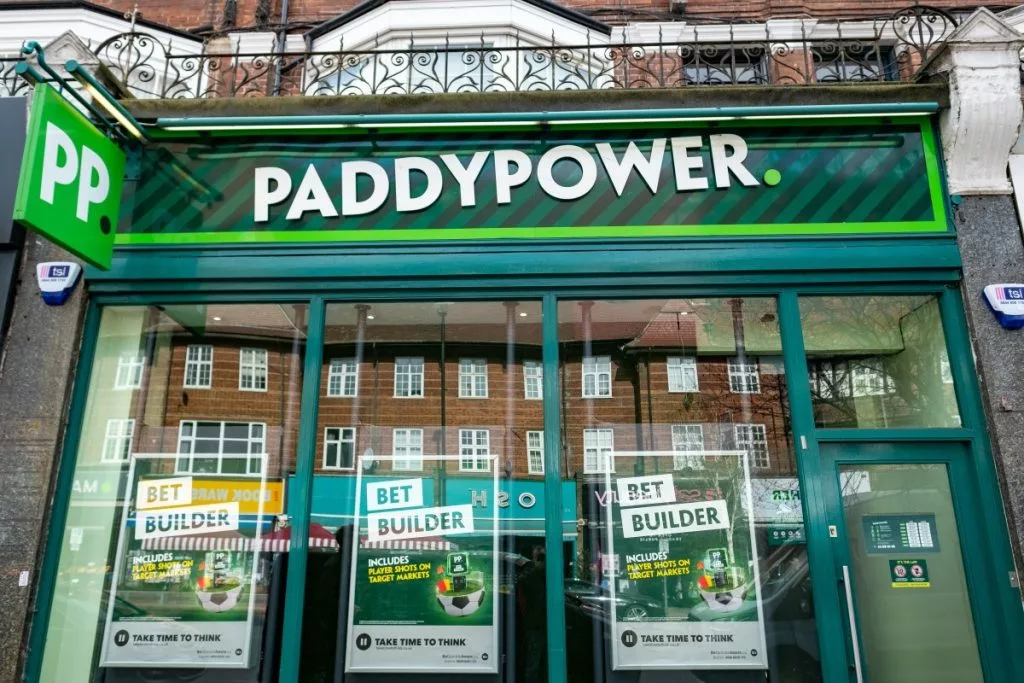
Machine Games Duty is at the heart of a heated debate. Some believe increasing it could spell disaster for Britain's betting shops, while others argue it could raise hundreds of millions for the Treasury without causing the widespread closures the industry predicts.
Ahead of the Autumn Budget on 28 October, the government is reportedly considering doubling the standard rate of Machine Games Duty (MGD) from 20% to 40%.
On one side of the debate is the Betting and Gaming Council (BGC). It has warned that the increase could result in nearly 1,500 betting shop closures, thousands of job losses and a threat to the future of high street bookmaking.
On the other are almost 100 Labour MPs calling for higher taxes, alongside organisations such as the Social Market Foundation (SMF). The SMF's polling found that 43% of the British public support increasing taxes on gaming machines. Supporters argue that higher MGD could raise additional revenue for the Treasury while helping to address gambling-related harm.
Both sides have presented evidence to support their positions, but the disagreement raises another question:
If a tax increase on gaming machines could force so many betting shops to close, how much of their business actually comes from taking bets?
Almost Half of Betting Shop GGY Comes From Gaming Machines
Before getting into the figures, it’s important to understand what GGY, or gross gambling yield, actually is. It is not profit. Instead, it is the amount a gambling operator retains after paying out customers’ winnings, but before deducting expenses.
That means that if a betting shop takes £500 in stakes and pays out £200 in winnings, then its GGY is £300. However, it also has to pay rent, wages, taxes, and licensing fees, so its profit might only be £100.
With that said, the latest figures from the UK Gambling Commission show that in non-remote gambling, gaming machines are very much leading the way.
In Britain’s non-remote betting sector, or betting shops, gaming machines now account for almost half (49.4%) of all gross gambling yield.
For bingo halls, that number is even higher. Nearly two-thirds (65.6%) of their GGY comes from gaming machines rather than bingo itself.
At a bakery, baked goods drive revenue; at a greengrocer, it’s fruit and vegetables. In betting shops and bingo halls, you’d expect betting and bingo to be the primary source of income.
Is the problem not that betting shops will lose out if MGD is increased, but rather that betting shops have become too dependent on activities other than those they were originally established to provide?
When Did Betting Shops Become So Dependent on Machines?
It’s tempting to think Britain’s bookmakers gradually transformed into gaming arcades as sports betting moved online, but that’s not quite the case.
First, UKGC licensing rules prevent this from happening. A typical betting shop can offer a maximum of four gaming machines in categories B2 to D. Yet, across the sector, machines generate almost as much GGY as all of the other betting products more traditionally associated with bookmakers.
Secondly, this isn’t such a new phenomenon. In the year to September 2019, machines accounted for 52.1% of non-remote betting GGY. This means machines actually account for a slightly smaller share of betting sector GGY than they did seven years ago.
For customers, a betting shop can still be a place to watch racing, discuss football, or place a cash bet. But financially speaking, gaming machines have become almost as important as the betting activity itself.
What Makes a Betting Shop a Betting Shop?
Under the Gambling Act 2005, gambling premises are licensed according to the activities they provide.
The UK Gambling Commission's guidance explains that gaming machines should be an ancillary offering in betting shops. In other words, they should supplement the primary gambling activity, rather than replace it.
But the rules that determine an ‘ancillary activity’ are starkly different depending on the type of premises you operate:
- Betting shops: Four gaming machines in category B2 to D
- Bingo halls: A maximum of 20% of the total number of gaming machines in category B3 to B4, with no limit on lower-category machines.
With gaming machines generating almost two-thirds of GGY for bingo halls and their restrictions on gaming machine numbers being directly in line with adult gaming centres, it’s hard to see how gaming machines are an ancillary offering.
However, the UKGC believes they are. As long as people primarily visit a bingo hall to play bingo and a betting shop to place bets, then the income generated from gaming machines is irrelevant.
There is no requirement for a particular percentage of GGY to come from traditional betting or bingo.
Does MGD Expose a Problem With Betting Shop Classification?
The proposed MGD increase highlights a contradiction in how Britain's betting shops operate.
Under current regulations, gaming machines are supposed to be an ancillary offering. Yet the industry argues that making those machines less profitable could threaten the existence of hundreds of betting shops.
In an open letter to the Chancellor published on 14 October, executives from six major gambling companies warned against further increases in gambling taxes.
The BGC cited modelling by EY suggesting that increasing MGD to 40% could lead to:
- Between 690 and 1,470 betting shop closures
- Thousands of jobs
- A cost of £124 million to the Treasury
While these are industry-commissioned projections, rather than confirmed outcomes, they should still serve as a warning, or at least a jumping-off point for proper debate.
Currently, four gaming machines per shop generate almost as much GGY as all the traditional betting activity within the sector. Is it therefore realistic to regard them as ‘supplementary’ to the business?
If these shops do become unviable, what are the knock-on effects?
Those customers who visit bookmakers to bet on sports will lose access to those services.
Employees who run the shops will need to find new work.
Sports like horseracing, which rely so heavily on gambling income, could suffer huge losses.
So, while a tax raise on MGD may have excellent upsides, it could also have serious downsides that have very little to do with gaming machines.
Could A More Targeted MGD Increase Spare Shops?
While an increase from 20% to 40% is a large leap, not everyone views it the same. Some of those calling for higher MGD aren’t calling for a blanket increase.
The Social Market Foundation has argued for higher taxation specifically on Category B gaming machines. These are the machines that offer the highest possible stake and the highest possible prizes. At present, HMRC does not distinguish (for MGD purposes) between these bands, but what if it did?
While these machines arguably generate the largest amount of revenue for betting shops, they don’t have to. Betting shops can have up to four machines from any category B2 to D. If they switched out machines to a lower category, then they could reduce their MGD burden. If they chose not to, then the increased tax from the Category B machines could still help address gambling-related harm and raise additional public revenue.
While it isn’t easy to change behaviours, and it’s not as simple as throwing out all Category B machines, there have already been moments in UK gambling regulation that have made distinct changes.
In April 2019, the government reduced the maximum stake on Category B2 machines from £100 to £2. In the following year, GGY from those machines fell by 99%, while GGY from Category B3 machines, which weren't directly affected by the restriction, increased by 39.5%.
Although this doesn't prove that customers simply switched between machines, it does demonstrate how restrictions on one type of gaming product can coincide with growth in another.
It also raises the possibility that a more targeted approach to MGD could encourage operators to adapt their offerings, rather than just closing.
Betting shop numbers have been declining for years. Changing customer habits, competition from online bookmakers, and tax changes all play a part. A more nuanced approach to MGD increases might save some of the shops still left.
So, When is a Betting Shop No Longer a Betting Shop?
For me, financially speaking, almost none of our high street bookmakers are just betting shops anymore. But the real answer is less tangible. Betting shops are places for people to place sports bets. That is absolutely still the case.
However, just as some bakeries make more on coffee than on croissants, it seems some betting shops make more on games than on sports bets. It’s probably not fair to penalise them for this.
Perhaps the question should instead be whether our approach to taxing and regulating betting shops has kept pace with the way these businesses actually operate.
There is a strong argument for ensuring that higher risk gambling products are taxed appropriately. Equally, there is a case for protecting the jobs, betting services, and sporting industries that depend on the income these machines generate.
The challenge is finding a balance between the two. Ultimately, a betting shop doesn't stop being a betting shop simply because its gaming machines generate more money than its sports bets.
But when a tax on those machines threatens the future of the entire business, it's worth questioning whether we should still be treating them as little more than an additional service.
-

When Is a Betting Shop No Longer a Betting Shop? | Analysis
-

90 Labour MPs Sign Letter Calling for Machine Games Duty Hike
-

Wiegman Signs New England Deal
-

Nottingham Forest vs Arsenal Prediction, Odds & Tips: Over 3.5 Goals
-

Premier League Predictions Today: EPL Betting Tips for 18 October
-

Matchbook Acquires Betdaq Amid Prediction Market Interest