Sporting Integrity Group Alleges Suspicious Betting Patterns and ‘Manipulation’ at the World Cup
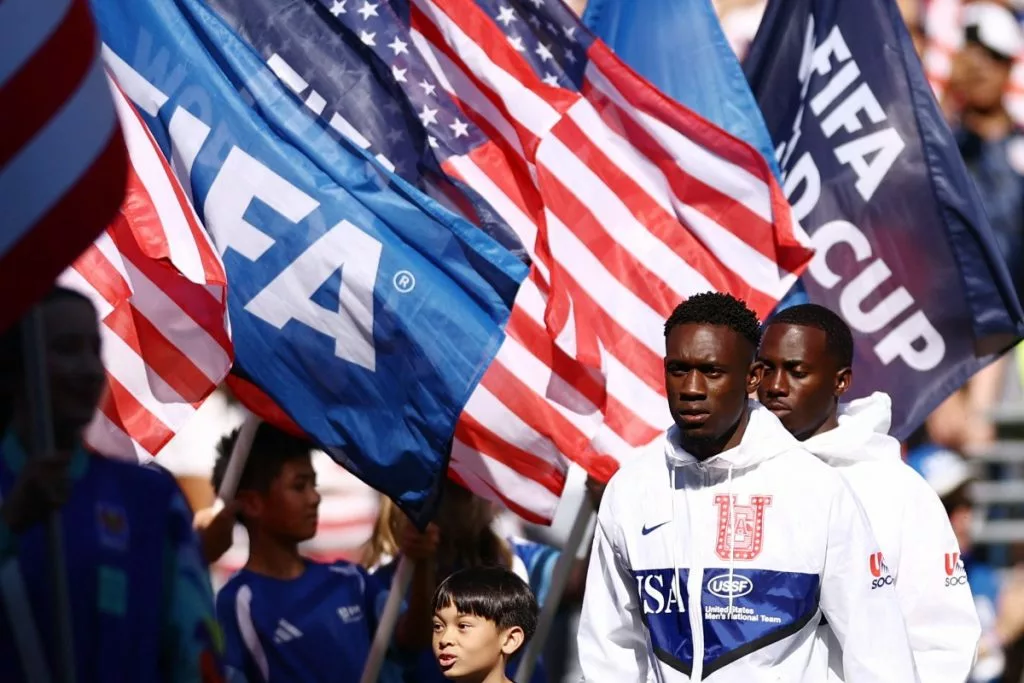
An independent sports integrity group has claimed that matches at the World Cup could have been manipulated for betting purposes.
The Group of Copenhagen, who detect fraud and integrity breaches at major sports events, allege that several key moments at the tournament – including Folarin Balogun’s suspended red card and the dismissal of South Africa’s Themba Zwane against Mexico – coincided with suspicious betting activity.
FIFA’s Integrity Task Force has rejected the claims, revealing that they had found no evidence of ‘suspicious betting activity or indications of match manipulation’ in its investigations of the World Cup’s 104 matches.
Suspicious Behaviour
Although they are yet to publish their full report, the Group of Copenhagen have identified 15 games in which there may have been manipulation – upgrading these to ‘enhance surveillance’ status.
The organisation focussed specifically on betting odds and prediction markets, identifying price movements and the ‘de-listing’ of prices at controversial times. The Group of Copenhagen examined both open-source information and social media channels, while tracking individuals and groups it already suspects of sports manipulation.
The outcome has been a series of betting ‘irregularities’, with one of the most significant linked to the red card of the USA’s Folarin Balogun against Bosnia.
If that dismissal had stood, the star striker would have missed America’s last 16 clash with Belgium. However, the US president Donald Trump intervened, personally calling FIFA in a bid to get them to overturn the red card.
And football’s governing body effectively did exactly that, allowing Balogun to take to the field.
At the same time, the prediction market Polymarket offered prices on ‘Will Balogun play against Belgium?’ The line was opened before news of Trump’s call to FIFA was revealed.
New Challenges
Regarding the Balogun case, the Group of Copenhagen has written to FIFA asking for a formal explanation and timeline of events that led to his suspension being overturned.
There were also alleged irregularities and suspicious betting activity surrounding Themba Zwane’s red card in the opening match of the World Cup between South Africa and Mexico, as well as unique bet patterns around Spain’s 4-0 win over Saudi Arabia.
This was the first World Cup at which prediction markets have become such a prominent outlet for sports bettors. This presents problems, given that they aren’t regulated in the same way as traditional betting firms.
“These markets raise new challenges: they allow you to bet on a very wide range of events, often anonymously and by means of payment that are difficult to trace,” said a representative of the Copenhagen Group.
Ahead of the Game
In a bid to ward off negative press, FIFA’s Integrity Task Force pre-empted the Group of Copenhagen’s findings by publishing their own findings about the tournament.
They reported that through their own evidence gathering and analysis, there were no indications of suspicious betting patterns or the potential for fraudulent activity.
FIFA’s senior integrity manager, Liam Rich, commented:
“The FIFA Integrity Task Force provided a strong framework during the FIFA World Cup 2026 for sharing intelligence, assessing potential concerns and coordinating a timely response.
“We thank all Task Force members for their expertise and commitment during the competition and we look forward to building on this collaboration at future FIFA tournaments.”
What is particularly unique about this situation is that the Copenhagen Group are members of the FIFA Task Force, as is the Council of Europe – whose Magglingen Convention is used by integrity groups to investigate the manipulation of sporting events.
This dissention between FIFA and the Group of Copenhagen suggests that there could be more to this story than meets the eye.
-
Spanish Grand Prix 2026 Odds, Tips And Preview As Norris On Pole
-
Man United vs Man City Prediction, Odds & Betting Tips for 13/09
-

Sheffield United vs Wolves Prediction, Tips for 13/09: Visitors to Prevail?
-

Horse Racing Tips: Ed Quigley’s Doncaster Best Bets for Sunday, 13 September
-

St Leger 2026 Highlights £16.6bn UK Gambling Black Market Threat
-
Championship Betting Tips: EFL Predictions for 12 September