Supreme Court Decision Might Affect Prediction Markets’ Legal Strategy
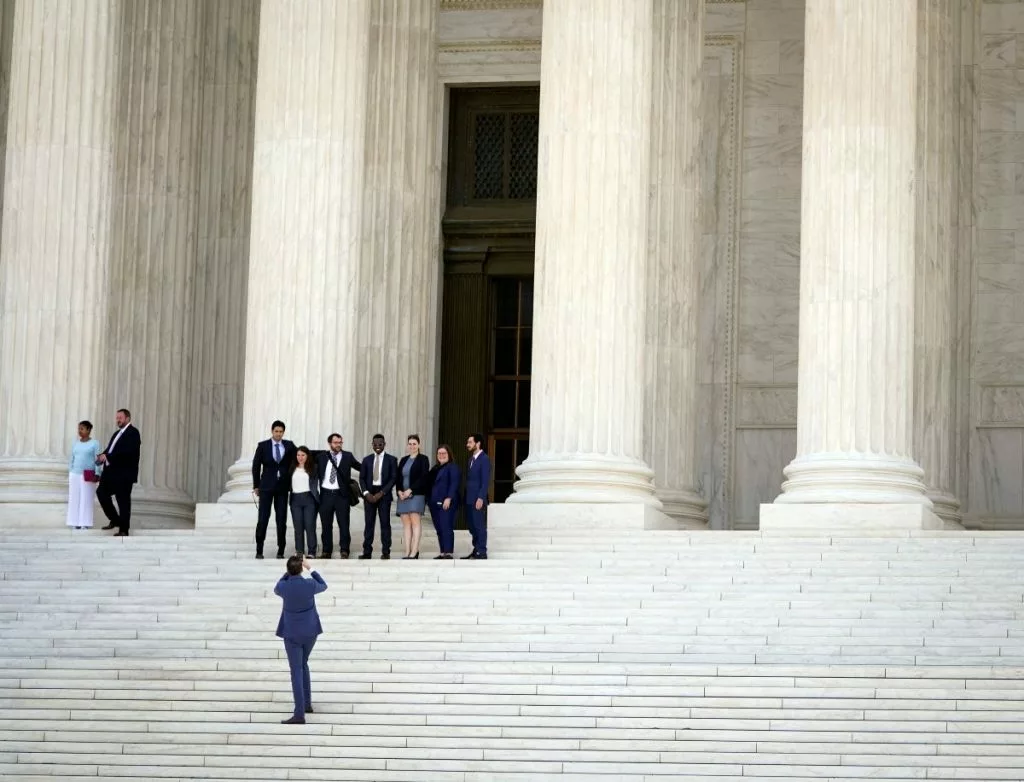
An unrelated decision from the United States Supreme Court might have changed the game for prediction markets’ legal strategies. Specifically, it might have closed off a specific pathway for prediction markets to fight unfavorable rulings.
In a 5-4 decision, the Supreme Court ruled in T.M. v. University of Maryland Medical System Corporation that federal courts below the Supreme Court cannot review state court decisions, even if the state court decision is still being appealed. Previously, the Court held in both Rooker v. Fidelity Trust Co. (1923) and Columbia Court of Appeals v. Feldman (1983) that federal courts could not review cases decided by state courts.
But until this case, nothing stopped losing parties from trying to move an unfavorable ruling from state court to federal court. Kalshi tried that exact strategy in Nevada in March, attempting to get an injunction from the Ninth Circuit Court of Appeals after losing its initial case in state courts.
While filing an appeal, Kalshi attempted to move the case to federal court, where it had a better chance of a favorable ruling. It further tried to claim that allowing state and federal courts to reach conflicting rulings would create an untenable position.
That pathway is now closed off. Once a state court decides a case, federal courts have no say unless a party appeals to the Supreme Court. The Supreme Court would then have to agree to hear the case. That requires four justices to approve, one less of the minimum to win a decision.
How Are Prediction Markets Affected By This Ruling?
Most likely, the ruling will trigger a “first-to-file” showdown. So far, prediction markets have countersued states to try to get the case to federal court. That just happened in New Mexico, in response to that state filing a suit in its courts. That case is one of several pending, with the federal government arguing on prediction markets’ behalf.
Currently, that strategy is still valid. Under the terms of T.M. v. University of Maryland, only suits that have been decided in state court are impermissible in federal court. That was the crux of the decision, as the Supreme Court ruled that T.M. qualified as a state-court loser.
But Kalshi’s attempted effort in Nevada is now effectively illegal. If a state court issues a judgment, T.M. v. University of Maryland locks the case to the state court system, unless the Supreme Court accepts an appealed case. That increases pressure on prediction markets to either countersue or beat states to the punch, as they now face a definitive clock to get the court they want.
What Lawsuits Aren’t Impacted By This Ruling?
Any suit in response to a passed law wouldn’t be affected. Prediction markets have exclusively kept those cases to federal court, and state courts haven’t weighed in at all. Examples of those include Minnesota, which banned prediction markets, and Kentucky, which passed a tax on markets.
The markets have consistently tried to get suits to federal court. Kalshi, Polymarket and others remain free to select their courtroom when they’re the plaintiffs.
What Does the Future Look Like?
The decision could lead to a conflict regarding two different cases. While the prediction markets countersued in New Mexico, they were first to file in Kentucky. As T.M. v. University of Maryland didn’t touch that situation, it remains a legal gray area.
Until a court decides one way or another which court has jurisdiction regarding if prediction markets are legal, this battle of “first-to-file” will likely continue in several more states.
-

Spend $5 Get $50 in Free Play, Plus a 100% Match Up To $100 on Dodgers vs Braves MLB: Use Fliff Code [bonus-code operator="2678" section="socialbetting"]
-

Dabble Promo Code [bonus-code operator="3027" section="dailyfantasysports"]: TNF Week 5 Betting
-

Trade $25 Get $55 on Brewers vs Padres MLB: Use Kalshi Code [bonus-code operator="3731" section="sportspredictions"]
-
Things Look Good for the Braves After Beating Dodgers in NLDS Game 2
-

Anytime Touchdown Scorer Picks for Oct. 5: Falcons-Saints MNF Bets
-
MLB Home Run Props and Predictions Today: Top Player Props for Oct. 5