Six Prediction Markets Targeted in Missouri Crackdown
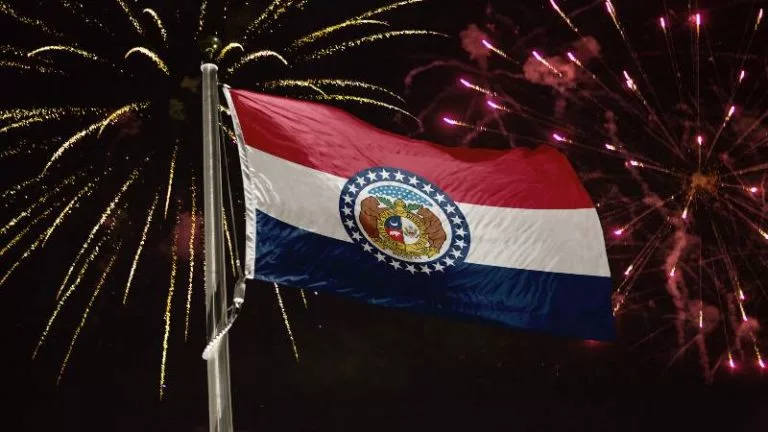
Missouri is the latest state to take on the prediction markets in the latest battle over “unlawful sports wagering”.
Missouri Attorney General Catherine Hanaway instructed her office to issue cease-and-desist letters to six prediction market exchanges, following the likes of Connecticut and New Jersey this year.
The platforms targeted include Robinhood and heavy hitters like Polymarket and Kalshi. As with other states who have taken a similar path, the issue centers around facilitating event contracts that “constitute unlicensed sports wagering” under the current state laws.
AG: Prediction Markets ‘Must Be Licensed’ by Missouri
Hanaway’s office posted the cease-and-desist letters this week, highlighting the state’s fledgeling regulated sports betting market.
Companies like Polymarket, she said, “cannot repackage sports bets as ‘event contracts’to avoid Missouri law”.
Missouri has a comparatively new sports betting industry, only legalizing in 2024. The market launched on December 1 a year later.
The crux is not only that sportsbooks must be licensed, but they pay tax in Missouri. No prediction market exchange is currently liable for state taxes.
Missouri vs Prediction Markets: The Key Flashpoints
- Missouri legalized online sportsbooks in 2024
- Sportsbooks are restricted to over-21s only. However, prediction markets are available nationwide to under-21s
- Missouri sports betting sites are liable to a 10% state tax on receipts to support public education. There is no state tax imposed on prediction sites
- Cease-and-desist letters specifically target sports event contracts, not financials
- AG calls on Novig, Kalshi and others to acquire Missouri Gaming Commission licenses and comply “without delay”
Swaps vs Sports Betting
The ongoing argument in courts comes down to what sports event contracts actually are. Are they fixed bets, or are they “swaps” that can be traded in and out?
Prediction markets argue their platforms are similar to derivatives, where traders can exchange contracts with one another over time until they resolve. That’s different from a sportsbook, where gamblers simply bet against the house.
However, some state regulators say that sports contracts, in particular, are too close to betting markets. The past year has seen a huge rise in sports-like “events contracts” on individual games, outright tournament winners, and even player props.
As one regulator put it, “if it walks like a duck and quacks like a duck…”
Some states have had success convincing federal courts that the law is on their side.
Last month, the Ninth Circuit Court of Appeals ruled that states like Nevada have the power to regulates prediction markets.
Circuit Judge Ryan Nelson argued that Kalshi couldn’t show that the Commodity Exchanges Act, which prediction market exchanges operate under, pre-empts state gambling rules.
Some Operators Already Complying
Some prediction market operators are already beginning to drop their sports contracts. Robinhood ditched its sports event contracts in Michigan this month
“We’re pleased,” the MGCB’s Henry Williams said, “Robinhood has agreed to step back from offering these unregulated products while the courts continue to sort out the broader legal questions.”
Legal Challenges Show No Sign of Stopping
The “sorting out” of the broader legal questions is at the crux of the ongoing confusion over who regulates what.
The platforms say they are regulated under the terms of the Commodity Exchange Act (CEA) and regulated by the Commodity Futures Trading Commission (CFTC).
States with existing sports betting frameworks are crying foul and arguing their gaming commissions have jurisdiction.
Connecticut sued Kalshi in August, saying that exchanges are “not magically shielded by federal law”. Kalshi responded by countersuing.
Earlier in March, an Ohio judge ruled that Kalshi must follow the state’s sports betting laws.
What seems certain is that the farcical legal situation is set to be resolved in the U.S. Supreme Court. The court is likely to rule on how prediction markets are licensed at some point in the next year. By the end of 2027, exchanges and regulators alike may know whether their ‘Yes’ or ‘No’ contracts have resolved.
-

Six Prediction Markets Targeted in Missouri Crackdown
-

Restoration of Gambling Loss Deduction Clears House Committee
-
Nationals vs. Tigers Prediction, Odds & Props for Sept. 21: Detroit gets W
-

WOW Vegas Announces and Pulls WOW Rips; Reveals 200% Bonus Instead
-

CrashDuel Sweepstakes Casino September Rush: Claim a Share of 4,500 SC
-

Trade $25 Get $25 on Chargers vs Bills NFL: Use Kalshi Code [bonus-code operator="3731" section="sportspredictions"]