Prediction Markets Hit $11B While Legal Battle Escalates
Prediction markets had one of those weeks where almost every major storyline in the industry moved at once. Trading volume reached record territory. Polymarket reportedly lined up another massive funding round. Kalshi continued expanding its presence in sports, while new competitors pushed into different types of event contracts. At the same time, the industry's legal fight took perhaps its biggest step yet, with New Jersey formally asking the Supreme Court to weigh in.
If you only looked at the legal headlines, you might think prediction markets were facing an existential crisis. If you only looked at the money and trading activity, you would probably come away with the exact opposite impression. The reality sits somewhere in between, and that makes this an especially interesting moment for the industry.
Prediction Markets Just Had an $11 Billion Week
Let's start with the number that jumped out to me most. Prediction markets generated $11.26 billion in weekly contract volume, according to data reported by DeFi Rate. Kalshi accounted for a remarkable 90.4% of that activity, with sports and combo markets doing much of the heavy lifting. The sheer size of the number matters, but Kalshi's share might matter even more. Prediction markets are becoming increasingly competitive, yet one platform captured roughly nine out of every 10 dollars traded in that particular dataset.
Sports appear to be a huge reason why. Kalshi has continued expanding there, including an exclusive prediction market partnership with the US Open and US Tennis Association. Add football, baseball, and soccer activity, and sports have quickly become one of the biggest engines behind the industry's growth. That brings us to the uncomfortable part.
The Courts Still Haven't Decided Who Makes the Rules
While billions are flowing through prediction markets every week, courts are still trying to determine something pretty fundamental: who actually gets to regulate them? The Ninth Circuit handed states a significant victory last week in Kalshi's fight with Nevada regulators. That decision went against Kalshi's argument that its federally regulated status prevents states from enforcing their own laws against sports event contracts.
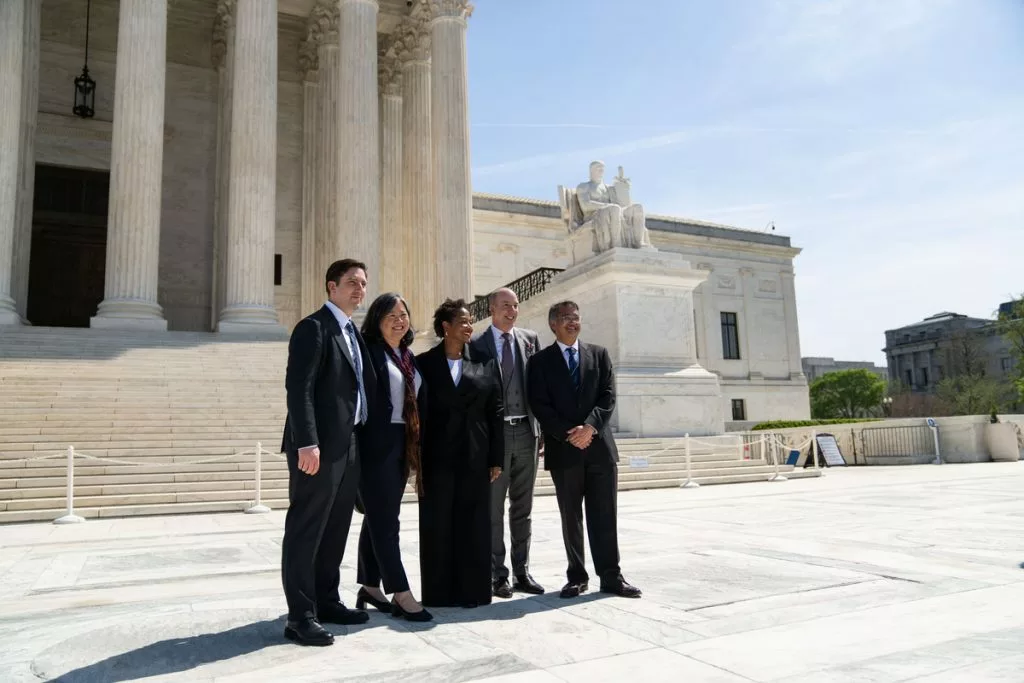
There's one major problem: another federal appeals court already reached a different conclusion. The Third Circuit sided with Kalshi earlier this year in its dispute with New Jersey. Now you have two federal appellate courts pointing in different directions on a question that could completely reshape how prediction markets operate nationally. New Jersey decided this week that it wants an answer. The state officially petitioned the Supreme Court to review the Third Circuit decision, bringing the prediction market industry's legal fight to the nation's highest court for the first time.
The Supreme Court hasn't agreed to hear the case, so a final ruling is still a long way off. The circuit split, however, makes the possibility much harder to dismiss. If the justices eventually side with the states, prediction market platforms could face a much more fragmented regulatory environment. A Kalshi sports contract available in one state might not necessarily be available in another. That would be a major change for platforms built around national liquidity.
Meanwhile, Investors Keep Writing Huge Checks
You might expect all that legal uncertainty to make investors nervous. Apparently not. Polymarket is reportedly raising $1 billion at a valuation of roughly $21 billion, with 1789 Capital investing another $300 million. That investment carries another interesting wrinkle. Donald Trump Jr. is a partner at 1789 Capital and serves as an adviser to Polymarket. He also advises Kalshi.
The political connections will attract plenty of attention, particularly while federal and state governments battle over regulation. Strip that part away, though, and the valuation itself tells you plenty about how investors currently view the opportunity. Prediction markets face serious legal uncertainty while attracting capital at valuations that would have seemed almost impossible a few years ago. That's a strange combination.
The Industry Is Already Looking Beyond Sports
Sports might be driving enormous activity today, but prediction market companies clearly aren't planning to stop there. Crypto.com and PYMNTS announced a two-year partnership this week to launch more than 20 AI-focused event contracts through OG Prediction Markets. Those contracts will focus on measurable questions involving consumer AI adoption, enterprise deployment, workforce changes, financial services, healthcare, and other areas.
I find this part of the industry's evolution particularly interesting. Sports and elections naturally generate attention because people already understand those events. The bigger long-term opportunity could be turning prediction markets into tools for forecasting business, technology, economics, and other measurable real-world outcomes. AI is about as good a test case as you could ask for.
Bigger Markets Bring Bigger Integrity Problems
Rapid growth also means prediction market platforms are encountering problems that didn't matter nearly as much when the industry was smaller. We saw two good examples this week. Former Congressman George Santos received Kalshi's first lifetime ban and a fine exceeding $70,000 following trades connected to his own potential appearance at the State of the Union.
North Carolina congressional candidate Laurie Buckhout also received a three-year suspension and a $2,589.96 fine after purchasing contracts tied to her own election. Those aren't just strange political stories. They're examples of an issue prediction markets will have to address aggressively as more money enters these markets.
Information is what makes prediction markets valuable. Information that comes from someone directly capable of influencing the outcome is an entirely different problem. Platforms will need increasingly sophisticated surveillance and enforcement systems as their user bases grow. Regulators will almost certainly be watching how effectively they handle that responsibility.
Prediction Markets Are Growing Faster Than Their Rulebook
That's what makes this past week so fascinating. You had more than $11 billion in weekly volume, a reported $21 billion Polymarket valuation, another major sports partnership, expansion into AI markets, multiple insider-trading enforcement actions, and a Supreme Court petition all happening within essentially the same stretch of days.
Those stories might seem disconnected, but together they show where prediction markets are right now. The industry isn't waiting for regulators or courts to figure everything out. Companies are raising money, launching products, signing partnerships, and processing billions of dollars in contracts while the legal framework develops around them.
That creates plenty of opportunity, but it also creates risk. The biggest question facing prediction markets is no longer whether people are interested in them. We've got enough volume, capital, and mainstream partnerships to answer that one. The question now is whether the rules governing this rapidly growing industry can catch up with it.
-

Kalshi Boss Warns of Prediction Markets Exodus if Regulations Change
-
Caleb Williams Returns For Bears’ Sunday Matchup With Falcons
-
Anytime Touchdown Scorer Picks for Oct. 18: 5 NFL Week 6 Bets
-

Chargers vs. Chiefs Prediction, Odds & Picks for Oct. 18: Kansas City Stays Undefeated
-
Cowboys vs. Packers Prediction, Odds & Picks for Oct. 18: Offensive Shootout
-

Chanced Casino Launches Dark Harvest Halloween Drops: Win 500 SC Instantly