Polymarket Files Lawsuit Against New Mexico Prediction Market Crackdown
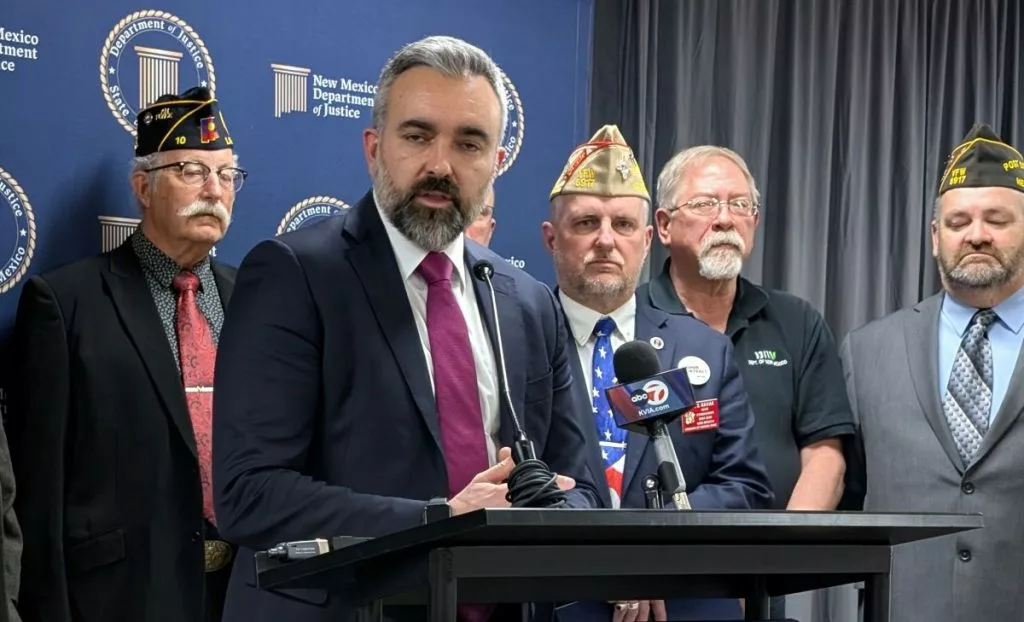
New Mexico’s lawsuit against Kalshi marked its first foray into its prediction market crackdown. Polymarket decided it wasn’t going to wait for the state’s next move.
The prediction market operator filed a lawsuit against New Mexico attorney general Raul Torrez, alleging that his office’s prediction market crackdown threatens Polymarket’s ability to operate. The suit alleges that when Torrez sued Kalshi, it forced Polymarket to respond in kind.
Polymarket further stated that it tried to resolve the dispute with Torrez’s office. After the lawsuit against Kalshi, Polymarket requested that New Mexico agree to delay enforcement until that suit was resolved. Following a lawsuit by the Commodity Futures Trading Commission (CFTC) against New Mexico, Polymarket repeated its request.
According to the suit, New Mexico rejected those requests. Polymarket then launched its lawsuit, notably doing so in federal court.
Why Has Polymarket Filed to Stop New Mexico’s Prediction Market Crackdown?
This appears to be part of the prediction market operators’ overall strategy. Following the Supreme Court’s decision in T.M. vs. University of Maryland Medical System, attorney generals and prediction market operators have found themselves in a “first-to-file” situation.
When New Mexico sued Kalshi, it did so in state courts. Once a judgment is made in that case, it couldn’t be moved to a federal court. Had Polymarket waited for a judgment, it likely would have been subject to the same terms, either favorable or unfavorable.
By filing suit in federal court, Polymarket has attempted to beat New Mexico to the punch. It has filed its suit before any judgment is made, which is still permissible under T.M. It’s also separate from the Kalshi lawsuit, further strengthening its potential legal challenge.
Prediction markets have repeatedly tried to get their lawsuits to federal courts, where a favorable judgment is more likely. The federal government has taken the side of Kalshi, Polymarket and others during the prediction market crackdown, while state governments have maintained that little difference exists between prediction markets and legal sports betting.
What Is Polymarket’s Argument In the Lawsuit?
Polymarket’s position has been the same that has been tried elsewhere: that states cannot enforce their betting laws against event contracts. The prediction market operator contends in the suit that “event contracts do not constitute gambling. Moreover, the CEA’s Special Rule anticipates that certain “event contracts” will “involve . . . gaming” and authorizes the CFTC to ban the trading of those contracts.”
The states have said that these event contracts lack any distinction from sports betting. While sports betting is legal in New Mexico, only its state tribes can offer any form of it.
What’s Next For the Lawsuit?
With three lawsuits now on file regarding New Mexico and its prediction markets crackdown, seeing which one is decided first will be crucial. Part of Kalshi and Polymarket’s position is that having contradicting rulings between state courts and federal courts would harm their business models. If that happened, they’d need to geofence certain states.
Most likely, the lawsuit battles will continue until a definitive ruling comes as to whether prediction market contracts are governed by states or by the CFTC. With the Supreme Court out of session until October, the disputes will likely continue through at least 2027.
-

'Tip of the Iceberg': NBA Gambling Scandals Imply Offshore Problem
-

NHL Anytime Goal Scorer Predictions Today: Best Bets for Oct. 2
-

College Football Picks and Parlays for Week 5: The Big Boys Shine
-

Jalen Duren's Contract Standoff with Pistons Comes to an End
-

Pokémon Vintage Raffle: Win PSA 10 Cards for Free at Courtyard.io
-

Spree Sweepstakes Casino Adds NoLimit City Slots: Play With 'No Limits', 'No Rules'