Oklahoma Tribes Call for Legislation Against Prediction Markets in Congress
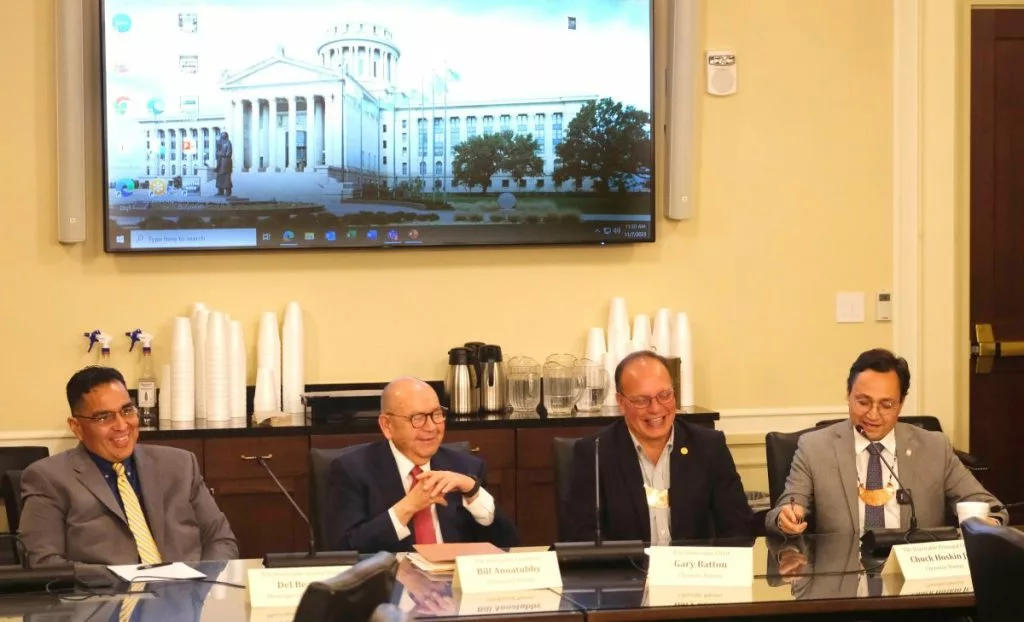
So far, state courts and federal agencies have contested the fight over Kalshi, Polymarket and others. Oklahoma’s largest Native American tribes say that’s not enough, and they need legislation regarding prediction markets in Congress.
The Inter-Tribal Council of the Five Tribes, consisting of the Cherokee, Choctaw, Chickasaw, Muscogee and Oklahoma Seminole Tribes, released a statement calling on federal regulations regarding prediction markets. With the executive branch taking the side of prediction markets, Congress getting involved could help ease tribal concerns.
“Predictive markets undermine tribal sovereignty and the long-standing tribal gaming compacts and laws that have governed tribal gaming for decades,” Choctaw tribal Chief Gary Batton stated. “These markets are rapidly expanding, and regulators and lawmakers must close the legal loopholes that allow them to operate outside established gaming laws and ensure tribes have a seat at the table as these issues are debated and resolved.”
What Is the Status of Gambling in Oklahoma?
Notably, sports betting is currently not legal in Oklahoma. The Sooner State has tried multiple times, recently with measures such as House Bill 1101, but none have made it through the state legislature, let alone reached the governor’s desk.
That’s a problem for the tribes, who have seen prediction markets cut into their revenue. Currently, all forms of gambling besides the state lottery are controlled by Oklahoma's tribes. Tribal gaming has existed in some form in Oklahoma since 1987, with Class III casinos beginning in 2004. However, no form of online gambling exists in the state. With casino gaming only available on tribal lands, several Oklahomans have turned to prediction markets.
Congress hasn’t yet taken a position on regulating prediction markets. While the Commodity Futures Trading Commission (CFTC) has vehemently opposed state regulation, Congress doesn’t have to follow that stance. It could decide to rein in prediction markets, especially if the 2026 elections changes the makeup of the legislature.
What Are Tribes Asking For Regarding Prediction Markets in Congress?
Specifically, the tribes want their ability to profit off gambling protected. Currently, prediction markets operate with virtually no oversight, as they and the CFTC have held that prediction markets fall under the federal government’s jurisdiction.
President Donald Trump’s government has openly sided with the prediction market operators, allowing them to operate as they wish. At the state level, that’s led both states and tribes to cry foul. Both state governments and tribal leaders have received millions of dollars from legal gambling, which they can both regulate and tax.
As long as prediction markets operate outside regulation, they pay no taxes. That can allow them to set more favorable odds and undercut the regulated sportsbooks. In turn, that makes them more enticing to the average player.
How Likely Is Regulation of Prediction Markets in Congress?
Sen. Adam Schiff (D-Calif.) has introduced Senate Bill 4160, which would explicitly define prediction markets as gambling. Schiff’s bill explicitly states that its passage would not preempt state law, allowing states full power to regulate sports betting, iGaming and other forms of gambling.
SB 4160 has attracted a Republican co-sponsor, Sen. John Curtis (R-Utah). That could make things difficult for Trump, who would almost certainly veto the bill. Republicans currently hold majorities in both the House and Senate, but several Republican states have posited themselves against prediction markets. Congress would need a two-thirds vote to override a presidential veto.
What’s Next Regarding Prediction Markets?
The tribes’ statement is the latest signal that the fight has a long road ahead concerning prediction markets. Congress reconvenes in September, but that’s just two months before the midterm elections.
Most likely, Schiff will reintroduce SB 4160 in January, after the new Congress convenes. If Democrats win the majority, Schiff will have a much easier time getting his bill to the floor of both chambers.
That leaves the next checkpoint as October, when the Supreme Court begins its next term. If Congress takes no action, the Supreme Court will likely give the decision as to how and if prediction markets are regulated.
-
'Tip of the Iceberg': NBA Gambling Scandals Imply Offshore Problem
-
NHL Anytime Goal Scorer Predictions Today: Best Bets for Oct. 2
-
College Football Picks and Parlays for Week 5: The Big Boys Shine
-
Jalen Duren's Contract Standoff with Pistons Comes to an End
-

Pokémon Vintage Raffle: Win PSA 10 Cards for Free at Courtyard.io
-

Spree Sweepstakes Casino Adds NoLimit City Slots: Play With 'No Limits', 'No Rules'