House Committee Expands Probe into Prediction Markets Insider Trading
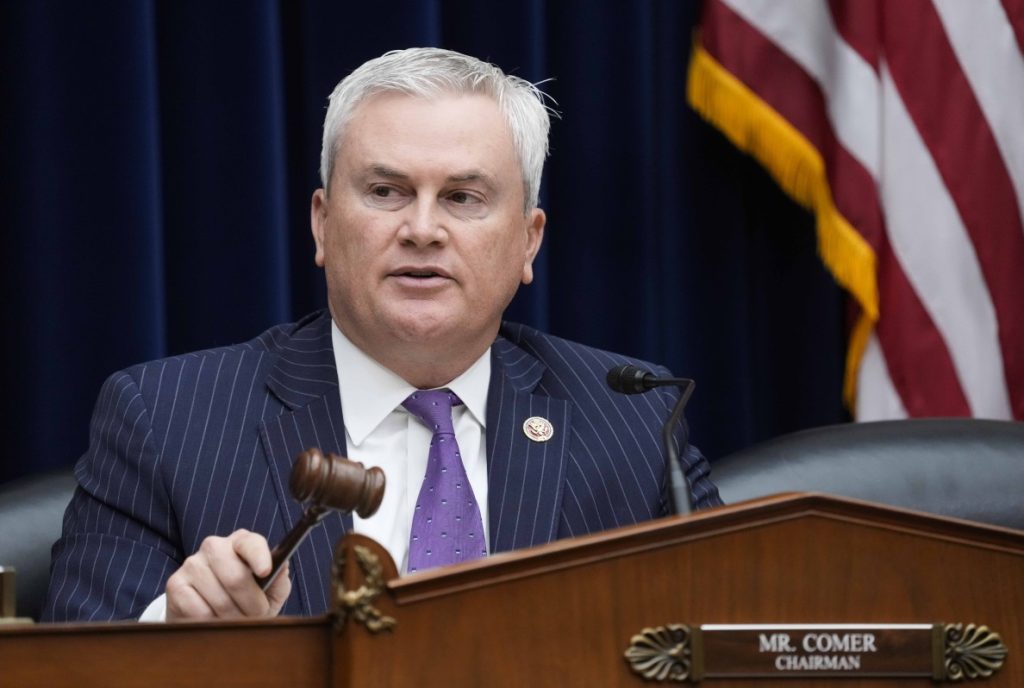
James Comer, chairman of the House Committee on Oversight and Government Reform, is expanding his probe into alleged insider dealing at prediction markets.
The House reported this week that Comer is continuing his investigation into how some users are gaining an advantage over other traders by using nonpublic or classified government information.
It also reported that Comer has sent letters requesting documents and information from several prediction exchanges, including Crypto.com and Hyperliquid Labs.
‘Bad Actors’ Exploiting the Platforms
The aim of the probe is to investigate whether prediction markets are “fulfilling their legal obligations”, according to the House Committee press release. Comer went on to say that he will be asking prediction markets how they verify users’ identities and “detect suspicious trading activity.”
“Some bad actors have exploited the platforms to make thousands of dollars by placing bets based on nonpublic information,” he added.
The House Committee confirmed it had received nearly one thousand documents from Polymarket and Kalshi so far.
Probe Launched in May
Comer launched his investigation back in May off the back of several high-profile cases of alleged insider dealing. Some were proven, such as the case of former U.S. congressman George Santos, who was fined and banned from Kalshi for life for betting on his State of the Union attendance.
Of particularly concern to Comer was how – or whether – prediction exchanges were adhering to “applicable U.S. federal regulations” governing platforms.
There have been several headline-grabbing cases of insider dealing, alleged or proven. Most serious was the case of U.S. Army Master Sergeant, Gannon Ken Van Dyke, who used classified information to trade on the timing of the U.S. operation to remove the Venezuelan president.
Roll Call of Major ‘Insider Trades’
- Army soldier wins $400,000 backing ‘Yes’ on a Venezuelan operation to capture Nicolas Maduro.
- Suspicious trades made on prediction markets on the timing of strikes on Iran in 2026.
- George Santos banned for insider trading on whether he would attend the State of the Union address.
- Suspicious trades on the Hyperliquid platform on the scale and timing of U.S. tariffs.
Regulator Probes Kinzinger for Pardon Bet
The House Committee probe couldn’t have come at a worse time for the industry. It has dominated industry headlines in 2026 with a raft of stories on insider trades.
As James Comer’s press release dropped, it emerged that another former U.S. representative was being investigated.
Adam Kinzinger is under investigation for his 2025 pardon from outgoing president, Joe Biden. The representative was fearful of a presidential reprisal following his part in investigating Donald Trump's role in the Jan 6, 2021, storming of the Capitol.
It emerged that Kinzinger traded around $660 on Kalshi that he would be pardoned, something he denied having advance knowledge of. He told CNN in an interview that it was “a dumb bet”.
However, the investigation will continue as the industry tries to clean up its act ahead of any potential Supreme Court ruling next year.
CFTC Warns Against Mention Markets
There has been a concerted effort by the CFTC, the prediction markets regulator, to rein in contracts that are prone to insider trading.
Last week, it issued guidance on mention markets, highlighting the “heightened risk of manipulation” that they can carry.
The CFTC isn't prohibiting regulated sites like Polymarket from offering mention markets. However, it is requesting new information before a market goes live. Specifically, it will want to know how a mention market is not susceptible to manipulation.
AGA on ‘War Footing’ Against Prediction Markets
The American Gaming Association (AGA) took aim at prediction markets during this week’s G2E expo in Las Vegas. It said it was on a “wartime footing” as state-licensed sportsbooks try to deal with the boom in federally-regulated prediction exchanges.
“We come in through the front door,” said AGA president Bill Miller. He added that regulated operators “follow state laws, respect regulations…honor tribal sovereignty.” There is, he said, a “new group of well-funded bad guys [who have] kicked in the back door.”
With new responsible gambling rules in place and more federal probes, the issue of prediction markets’ place in the U.S. firmament will continue.
-
House Committee Expands Probe into Prediction Markets Insider Trading
-

Capitals vs. Hurricanes Prediction, Odds and Props for Oct. 2: Back Carolina at Home
-
Steelers vs. Browns Prediction, Odds & Picks for Oct. 1: AFC North Bout on TNF
-

2026 Midterms Prediction Markets: Democrats Sweep Odds Increase
-

2 Sweeps Coins Free for Sign Up on Titans vs Ravens NFL: Use Thrillzz Code [bonus-code operator="3045" section="socialbetting"]
-

Up to 103 SC + 20,500 GC for FREE on Jets vs Bears NFL: Use Legendz Code [bonus-code operator="3078" section="socialbetting"]