Federal Judge Denies Injunction Request to Kalshi in New York
A federal judge has rejected a request for an injunction, clearing the way for officials to block Kalshi in New York and possibly forcing the prediction markets to reconsider their strategy.
United States District Judge Analisa Torres, a federal judge for the Southern District of New York, denied Kalshi a preliminary injunction against New York state gambling regulatory officials. Kalshi had sought an injunction that would have blocked the state from enforcing its laws against the contract operator.
More worrisome for prediction markets, Torres rejected Kalshi’s claim that the Commodity Futures Trading Commission (CFTC) holds authority over its contract swaps. That strategy had helped Kalshi skirt state laws and avoid taxes. It had the backing of the federal government, which had led prediction market operators to try suing states in federal court.
But Torres ruled that Congress never intended for the CFTC to broadly restrict all state gambling laws from governing contracts. If that argument holds, it could have far-reaching consequences beyond the legality of Kalshi in New York.
What is At Stake Regarding Kalshi in New York?
Up until this point, Kalshi has operated separately from sports betting operators. It’s done so by claiming to offer event contracts, as opposed to traditional sports betting. That has allowed it to avoid paying taxes to each state while technically remaining legal, an important factor for Kalshi.
In New York, that’s meant it has avoided a 51% tax rate, the highest in the nation. The Empire State is the largest with legal sports betting, leaving sportsbooks with little choice but to pay for access. Kalshi and other prediction markets changed the game, allowing bettors to participate in sports gambling without having to pay the sportsbooks’ required premiums.
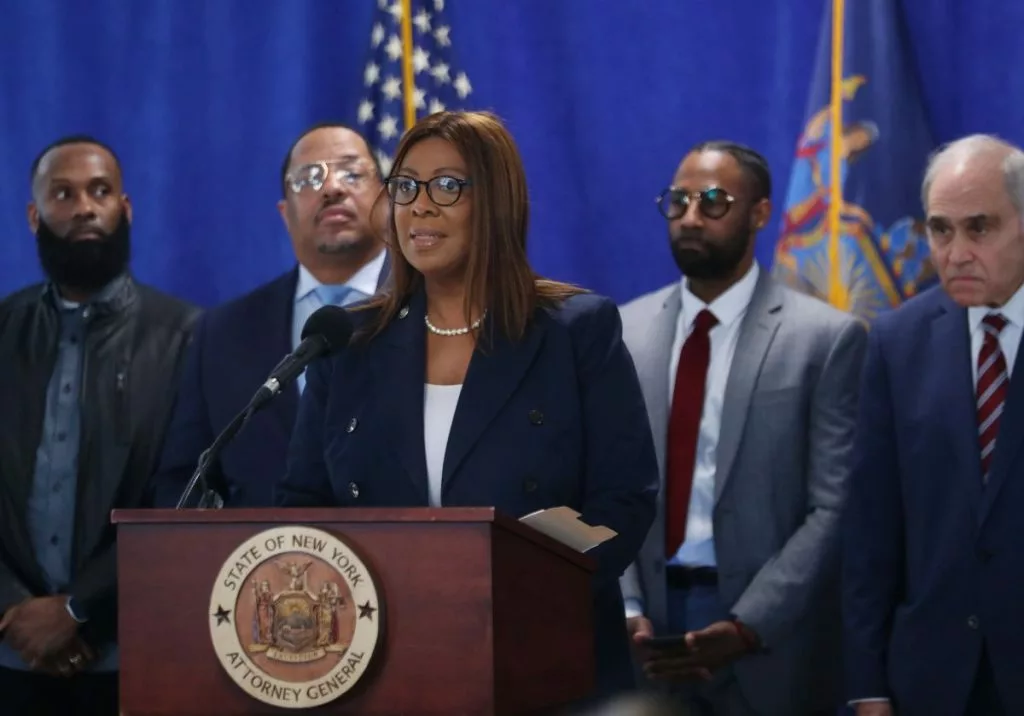
Governor Kathy Hochul and attorney general Letitia James have attempted to rein in Kalshi in New York. In October 2025, New York sent cease-and-desist notices to Kalshi, claiming illegal practices. Kalshi responded by filing suit against the state gaming commission, claiming that only the CFTC had jurisdiction over its practices.
Why Was the Injunction Denied?
In order for Kalshi to continue to operate in New York, it had to show it would both succeed on merits and suffer irreparable harm without an injunction. Torres ruled that Kalshi had failed on both counts, a devastating blow to its future prospects in the state.
Torres said that Section 2 of the Commodity Exchange Act, passed in 1936, disputes Kalshi’s argument. Specifically, the text says, “nothing contained in th[e] section shall . . . supersede or limit the jurisdiction at any time conferred on . . . other regulatory authorities under the laws of the United States or of any State.” Per Torres, that means the CFTC’s authority does not supersede New York’s laws regarding sports betting. That also meant she did not believe Kalshi would succeed on the merits.
Torres further ruled that operating Kalshi in New York was as simple as Kalshi obtaining a New York gaming license. While that might be expensive, it remains a valid option for Kalshi to operate. Because of that, Torres ruled that Kalshi would not suffer irreparable harm.
What’s the Future of Kalshi in New York?
Kalshi has filed an appeal, which will allow it to keep operating for the time being. If that gets denied, it would likely spell the end of Kalshi in New York for the short term. The prediction market operator could apply for a New York gaming license, but doing so could undercut its argument in other states.
Most likely, Kalshi will attempt to continue to operate for as long as possible in New York. But with the injunction denied, its options are limited unless it finds a more favorable judge. If the appeal is unsuccessful, Kalshi would have to geofence New York until the case is fully decided.
-
'Tip of the Iceberg': NBA Gambling Scandals Imply Offshore Problem
-

NHL Anytime Goal Scorer Predictions Today: Best Bets for Oct. 2
-

College Football Picks and Parlays for Week 5: The Big Boys Shine
-

Jalen Duren's Contract Standoff with Pistons Comes to an End
-

Pokémon Vintage Raffle: Win PSA 10 Cards for Free at Courtyard.io
-

Spree Sweepstakes Casino Adds NoLimit City Slots: Play With 'No Limits', 'No Rules'