Donald Trump Jr. Leaves Adviser Role at Kalshi After Polymarket Investment
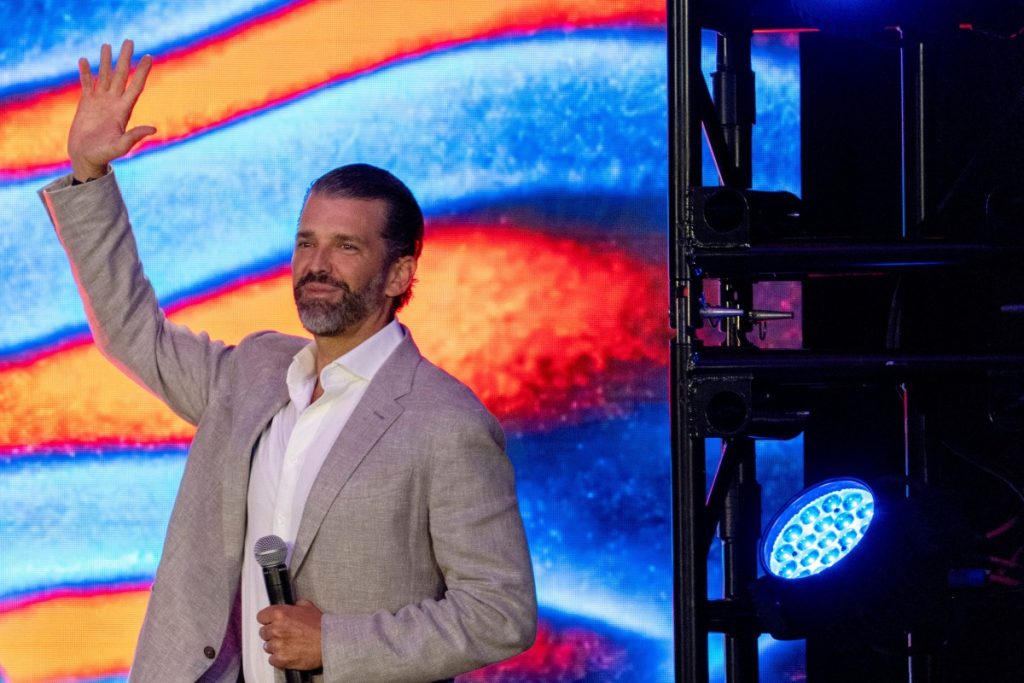
Donald Trump Jr. has left his advisory role at prediction market giant Kalshi following his company’s increased investment in rival Polymarket.
Competing reports suggest Trump Jr. severed the relationship himself or was pushed out by Kalshi. Whatever the reason behind the split, Trump Jr. will continue his business with Kalshi’s great rival and maintain a prediction markets link to the White House.
However, the move could also be linked to the Democrats’ clean sweep of Congress in this month’s midterms. Speculation is growing that with control of the House and Senate the Democrats will start scrutinizing prediction markets once they take over Congress in January.
Polymarket Investment Leads to Divorce
Kalshi said the split was a mutual business decision between the exchange and the president’s son.
Kalshi’s Dani Lever explained that the company and Trump Jr. had “mutually agreed” to end the advisory role following a “significant investment in a competitor” during the summer.
That “competitor” is likely Polymarket, in which Trump Jr. invested $300 million just two months ago. It appears that talks of a split have been ongoing ever since 1789 Capital pumped hundreds of millions into Polymarket in September.
Despite the apparent rift, however, both prediction markets continue to have tremendous success. Multiple funding rounds have created enormous valuations of both Polymarket and Kalshi.
Donald Trump Jr.’s Predictions Gamble
- January 2025: Donald Trump Sr. is sworn in as U.S. president. Trump Jr. becomes an adviser to Kalshi.
- August 2025: Trump Jr. invests in Polymarket through his company 1789 Capital.
- March 2026: Trump Jr. tells Republicans to withdraw legal threats against prediction markets.
- September 2026: Donald Trump Jr. leads a $300 million investment round in Polymarket. The company’s valuation increases to $21 billion.
- November 2026: Kalshi announces they are ending Trump Jr.’s role as an adviser by mutual consent.
Trump Jr. Hasn’t Lost His Love of the Markets
It’s no secret that the Trump family has had a long-held interest in prediction markets. Trump Jr. openly espoused the accuracy of prediction markets over pollsters, most notably in the 2024 presidential election.
While polls and some online sportsbooks predicted a win for Kamela Harris, prediction exchange traders bet the other way. They were right, as Donald Trump secured a second term.
Prediction markets, Trump Jr. said at the time, “have completely changed the way people follow the news.”
There have been arguments that having the president’s son acting as an adviser could result in favorable treatment from the administration. Despite POTUS coming out in support of prediction markets, Kalshi themselves have argued that the relationship wasn’t to curry favor with the White House.
Democrats May Increase Predictions Oversight
The president’s son may want to follow the news closely after January when the Democrats take control of Congress.
According to reports, some Democrats are preparing action against the markets. Rep. Jeff Merkley (D-OR) said that politicians needed to “rein in this gambling”. The Democratic sweep of Congress meant, he added, that it was “time for long-overdue legislative action.”
What legislative action that is unclear, but it’s true that prediction markets now have far fewer friends than they did before the midterms.
The Democrats are already lining up measures to curb the burgeoning AI industry. They are reportedly planning multiple bills relating to data centers. However, AI was an area of concern for voters during the midterms.
Kalshi in New Fundraising Bid
While it’s (moderately) all change at Kalshi, the prediction exchange continues to launch new fundraising bids.
The latest news is that Kalshi is in talks to raise a new batch of funds totaling $65 million.
The new funds, Reuters reported, will go toward developing a new platform for “compute futures”. These are relatively new products in prediction markets that let traders buy event contracts on the prices of tech services, such as cloud.
It’s not just Kalshi that is wanting in. Financial groups and startups want access to new compute derivatives as they offer can protection from shocks, including a rise in chip prices or property rentals.
-

Donald Trump Jr. Leaves Adviser Role at Kalshi After Polymarket Investment
-

$1500 Bonus Bets If Lose on Panthers vs Saints NFL: Use BetMGM Code BTSLINES
-

Get 50% deposit match up to $1,000 on Vikings vs Packers NFL: Use Underdog Code TLCDFSUSA
-

Promo Code PREMARLINES for Kalshi: Week 10 NFL: Kalshi & Prediction Markets
-

Promo Code From Fliff: TLCBET Week 10 NFL Weekend
-

Dabble Promo Code: JOIN10 for MNF Week 10 Betting Deal: $10 Free on Signup, No Deposit Required