Nikola Jokic Injury Update Creates Domino Effect Across the Western Conference
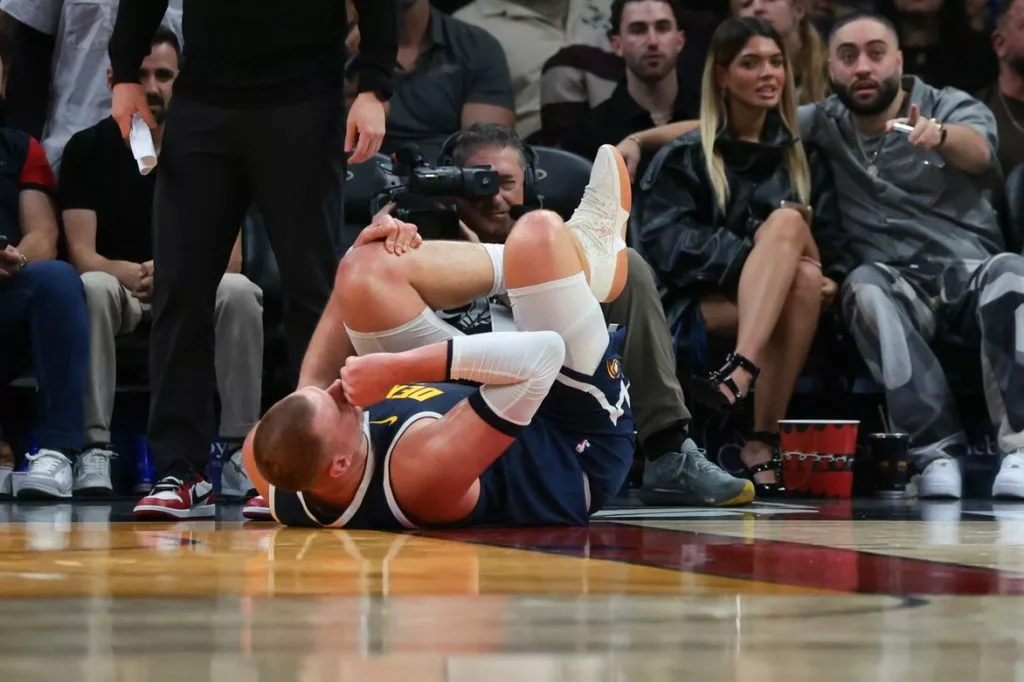
Fans of all NBA teams went to sleep Monday night holding their breath after Nikola Jokic fell to the floor late in the second quarter in Miami, immediately grabbing at his left knee and limping off with help. The initial fear with any awkward knee moment is always structural damage, so the anticipation was that Tuesday morning would bring league-altering news, one way or the other.
Luckily, Denver got the best version of bad news. It was a left knee hyperextension for Jokic, no season-ending diagnosis, but still a timetable that reshapes the calendar. The Nuggets announced the three-time MVP will be sidelined at least a month and re-evaluated in four weeks, which leaves open the very real possibility that the return date stretches beyond that checkpoint depending on how his knee responds.
So what does this mean for Jokic, the Nuggets, and the rest of the league?
How Does this Impact Denver?
The simplest version is that Denver just lost the engine of its offense, and the stabilizer that makes every possession feel manageable. Jokic is not just a star scorer, he is the system. He's the hub that keeps Denver’s spacing, timing and decision-making humming even when the rest of the roster is banged up. When he's off the floor, the Nuggets have to manufacture offense in more traditional ways, which usually means more difficult shot creation, more reliance on guard play to win possessions, and less efficiency created by his passing, screening, and gravity.
The larger problem is that this is not happening in a vacuum. Denver is now staring at life without four starters for the foreseeable future, and that type of injury cluster changes everything about how you survive a month. Rotations tighten, roles get distorted and the “next man up” plan becomes near-impossible while depth gets tested and defensive cracks start to show.
January is also not a gentle part of the schedule, and the Nuggets have enough volume coming that even a brief downturn can add up quickly, especially with four back-to-backs next month.
That’s where seeding becomes the headline. Denver can survive a short stretch without Jokic if it stays afloat, but the Western Conference does not give you much room to breathe. A two-week skid can drop you multiple spots, and a month of uneven results can change the entire playoff road. The ability to earn home-court in multiple rounds, and a more favorable first-round draw instead can become a series that feels like a second-round matchup in disguise.
For a team built to contend, the nightmare isn’t just losing games, it’s losing positioning, then having to spend the rest of the season digging out of a hole.
How Does this Domino Impact the Broader NBA?
This is where the domino effect kicks in, because one contender wobbling reshapes the ecosystem for everyone else. Teams chasing Denver now have a clean window to make up ground in the standings, and teams already near the top have an opportunity to separate. That matters because the West is often decided by narrow margins, and a few games of swing can turn a tight race into a clearer hierarchy by the time Denver gets healthy.
Longer term, this can change matchups across the conference. If the Nuggets slide far enough, teams that expected to see Denver late might see them earlier, or not at all, in the postseason. Oklahoma City is a great example of how the ripple works. Instead of a world where the Thunder only run into Denver in a Western Conference Finals-type setting, a Nuggets drop could create a bracket where Denver shows up in Round 2. That changes preparation, it changes the physical toll, and it can change the way a top seed manages minutes down the stretch if they’re suddenly planning for a different playoff path.
It also changes trade deadline behavior. If Denver looks vulnerable, contenders that were on the fence about making a move can convince themselves that the door is open. Meanwhile, teams near the middle can treat January as a chance to climb into a safer seed range, avoid the play-in mess, and set themselves up for the best matchup possible. Even if Jokic returns and Denver looks like itself again, the standings damage can linger, and that lingering damage is exactly what other teams will try to capitalize on.
How Does this Impact Jokic?
The injury doesn’t just hit Denver’s title equity. It also punches directly into the NBA MVP market and the league’s awards landscape. Jokic was just coming off the type of signature stretch that fuels an MVP campaign, including a massive overtime win that helped push him to the top of odds boards. Then, the moment the four-week timetable became public, sportsbooks reacted quickly.
Jokic was taken off MVP boards entirely at most books because availability and eligibility suddenly became the story.
Right now, the market has flipped hard toward Shai Gilgeous-Alexander as the clear favorite, listed at -450 with Luka Doncic next in line, but at a far lower probability. That odds gap is not just about who is playing better in December, it’s about who is actually going to be eligible, and that’s where the 65-game rule matters.
With the NBA’s minimum games requirement for major awards, missing an entire month at a minimum makes the math brutal. Jokic can be the best player on the planet when he returns, but if he can’t reach 65 games, he’s not just unlikely to win MVP, he’s ineligible to win it.
And even if he threads the needle on the technical threshold, missing time still hurts in the traditional voter sense. Less total value over the season, fewer signature moments and a Nuggets record that could sag without him, which often drags down the “best player on a top seed” framing that MVP cases lean on.
-
Panthers RB Jonathon Brooks Slated for Surgery, IR Stint
-

VegasWay Sweepstakes Casino Partners With Sneaky Slots: Play 3 New Games
-
MLB Home Run Props and Predictions Today: Top Player Props for Sept. 23
-

Presidents Cup Props & Parlay Picks for 2026: Sam Burns Time
-
‘America’s Got Talent’ Finale Prediction Markets: Nene Royal Leads
-

Tribes Line Up to Criticize Tunica-Biloxi Prediction Market Move