10 NFL Player Prop Trends Bettors Need to Know Entering Week 5: Analysis
Roles continue to become clearer as we progress through the NFL season. We can use the information available to identify the most important NFL player prop trends.
We’ll continue focusing on player usage rather than production to identify value in player props. Some of the usage metrics we prioritize for NFL Week 5 player props are:
- Snap shares
- Carries
- Backfield opportunity
- Routes
- Targets
- Target share
Usage is generally more predictive than production, especially with small sample sizes. The following 10 trends are based on Weeks 1-4 and help us project Week 5.
NFL Player Prop Betting Trends to Consider
Keep in mind that trends don’t automatically make good bets. Use them as context, and find the best NFL player prop odds for value.
These trends can help bettors identify potential value in Week 5 NFL player props.
1. Kyren Williams Is Moving Back Toward a Workhorse Role
Williams was splitting snaps and opportunities with Blake Corum early in the 2026 season. Through the Los Angeles Rams’ first two games, Williams saw 28 opportunities on 73 snaps, while Corum saw 23 opportunities on 42 snaps.
The roles in the Los Angeles backfield started to shift in Week 3, though. Overall, Williams has recorded 51 opportunities on 131 snaps over the Rams’ last two games, compared to only 17 opportunities on 38 snaps for Corum.
Williams is the preferred option in passing situations, as he handled all two-minute snaps for Los Angeles and played roughly 90% of the Rams’ final 60 snaps on Sunday.
This backfield is becoming less split, and Williams is starting to take over, particularly in passing situations.
2. CeeDee Lamb Owns One of the NFL’s Best Receiving Workloads
There was some concern about Lamb’s role alongside George Pickens in Dallas, but the former has maintained one of the best receiving workloads in the NFL.
He’s leading the league in receiving yards, while averaging 11.5 targets per game. He’s also averaging 121.9 air yards per game, totaling 44.8% of Dallas’ total air yards, according to NFL Next Gen Stats.
Lamb doesn’t just boast an elite role for receiving yards, but he also ranks 11th in the league in red zone targets (5). The majority of those targets have come in the end zone, giving him elite touchdown equity.
Dallas’ star receiver is seeing some of the best targets in the NFL, and that should continue against the Tampa Bay Buccaneers this week.
3. Malik Nabers’ Full-Time Role Is Taking Shape
Nabers only played 52.2% of the snaps in Week 1, returning from a major ACL injury in 2025. He’s played roughly 75% of the snaps in each of his last three games, though, including a season-high 51 snaps in Week 4.
New York’s star receiver posted a season-best six receptions with 112 yards and one touchdown against the Arizona Cardinals. He’s adjusting to a new quarterback, but there was major progress last week.
More importantly, he’s recorded 296 air yards with an 11.4 aDOT this season. His aDOT jumped to 16.6 in Week 4, and nearly half of his air yards came in that game.
Nabers’ role seems to be increasing as the season progresses and he becomes more comfortable with Jameis Winston.
4. Michael Wilson Has Quietly Become a Major Part of Arizona’s Passing Game
Trey McBride is still the focal point of Arizona’s passing attack, but Wilson has carved out a major role.
Wilson owns a 29.7% target share through four games, leading the wide receivers. He’s also seen a 43.4% air-yard share, averaging 105.6 air yards per game. His aDOT sits at only 9.6 on the season, though.
Arizona heavily features McBride and Wilson in the red zone. They’re both seen nine red-zone targets, ranking third in the NFL. Wilson’s also seen five targets inside the 10-yard line this season.
The Cardinals have condensed their passing game, and Wilson’s taken on a massive role next to McBride.
5. Quinshon Judkins Is Becoming More Than an Early-Down Runner
There were questions about Judkins’ receiving ability entering the NFL, and he saw a somewhat limited role in 2025. He ended the season averaging 2.6 targets per game with a 6.9% target share.
Judkins has had a drastically bigger receiving role in Cleveland in 2026. He’s already seen 16 targets, averaging four per game. He also boasts a 13.9% target share through four games.
Dylan Sampson hasn’t played this season, and he was the primary receiving back in 2025. That said, Rocket Sanders has seen 11 targets this season, so Judkins isn’t taking all the receiving work.
The Browns’ star running back is becoming more than an early-down runner, creating potential value in his rushing-attempts and receiving props.
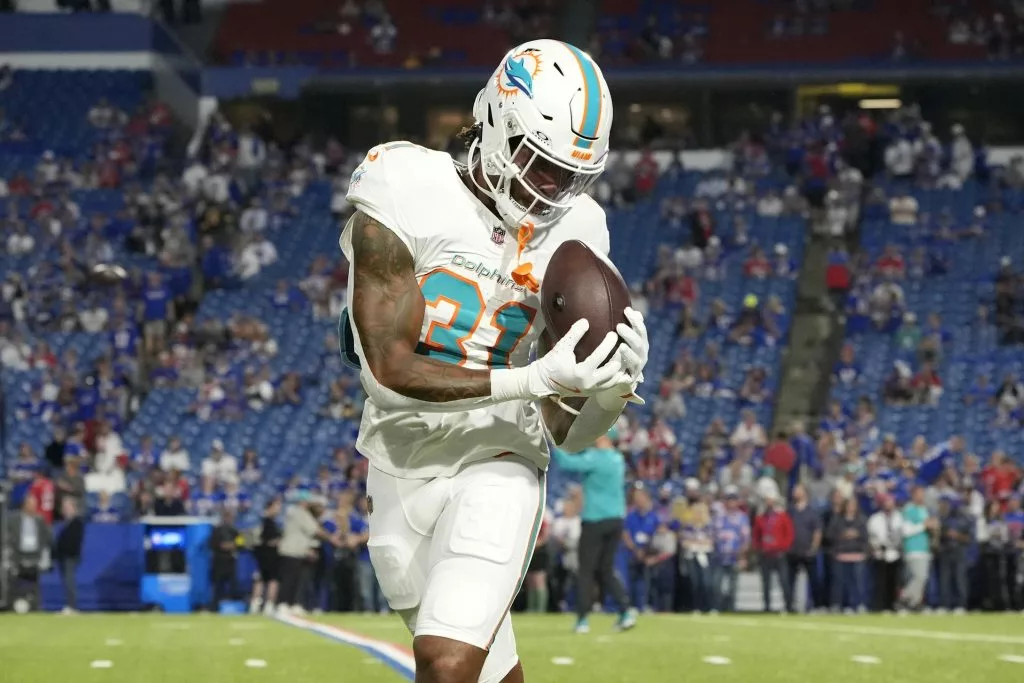
6. Ollie Gordon II Clearly Led Miami’s Backfield With Jaylen Wright Active
De’Von Achane tore his ACL last week, and questions arose about how Miami would use Gordon and Wright moving forward.
Gordon led the backfield, playing 56.4% of the offensive snaps. Wright only played 30.8% of the offensive snaps in Week 4.
The clearer picture comes from the opportunities. Gordon saw 68.8% of the backfield opportunities, while Wright saw the other 31.2%. Gordon also saw the only two running back targets in the game.
The majority of Gordon’s production came on one run, so his 100-yard performance should be taken with a grain of salt, but he’s clearly the lead runner with Achane out for the season.
7. Bucky Irving Is Losing High-Value Backfield Opportunities
Tampa Bay recently stated that they wanted to reduce Irving’s volume to keep him healthy, and he lost high-value touches in Week 4.
Irving still has a big role in the offense, recording a team-high 16 carries while playing 58.7% of the offensive snaps. It was the first week he didn’t record a target, though. Kenneth Gainwell was the only running back to receive any targets against the Green Bay Packers.
Gainwell and Sean Tucker were the options used inside the 10-yard line in Week 4. Both scored touchdowns, with Tucker’s coming on the ground and Gainwell’s through the air.
This is a volatile situation, as it's rookie Jalon Daniels’ first start, but the Bucs seem to prefer Irving primarily as a runner, while Gainwell and Tucker get higher-value receiving and goal-line opportunities. Keep all of this in mind for NFL rushing props.
8. The Chargers Have Become a Three-Man Running Back Committee
Omarion Hampton entered the season as the lead back for the Los Angeles Chargers, but that’s been changing as the season progresses.
Hampton’s seen a lower snap share in two consecutive games, playing only 35.2% of the offensive snaps in Week 4. Keaton Mitchell and Kimani Vidal played 36.6% and 35.2% of the offensive snaps, respectively, last week.
This is a situation where Hampton went from a clear lead back to a three-way split. Game script could partially explain the split, but the multi-week decline suggests this is more than a one-game anomaly.
9. Jaylen Warren Has Played More Than 90% of Pittsburgh’s Snaps in Back-to-Back Games
Warren’s taken on one of the heaviest running back workloads in the NFL with Rico Dowdle injured.
Dowdle missed Week 3, and Warren played 90.3% of the offensive snaps while handling 100% of the running back opportunities. He followed that up in Week 4 by playing 97.2% of the snaps while handling 92% of the opportunities.
Dowdle could return in Week 5, and Warren would likely return to a committee role, but he’ll be a workhorse in any future games without Dowdle.
10. Puka Nacua Immediately Returned to a Full-Time WR1 Role
Last week, Nacua returned for his first game since Week 1. He immediately returned to an elite role in the Los Angeles Rams’ offense.
The star wide receiver played roughly 90% of the offensive snaps in his return. He saw 12 targets, recording nine receptions for 125 yards. He also scored on the ground in Week 4.
Nacua’s role was never the primary concern; his health was. He was immediately thrust into those snaps, suggesting he’ll continue in an elite role, even with question marks around his current injury.
How To Use NFL Player Prop Trends for Week 5 Betting
Trends aren’t designed to be the sole reason for placing bets. Use them to find changes in value, then decide whether to evaluate those changes further against available lines.
Opportunity metrics are among the most important trends for identifying value, as they’re generally more predictive than previous box scores. Efficiency and matchups are the other trends to consider before placing any wagers.
Check injury reports throughout the week, as some trends specifically rely on players missing games. Shop for the best lines by comparing prices across sportsbooks, as it’s one of the most important parts of NFL prop betting. A sound NFL prop betting strategy still requires comparing usage trends to the available lines.
Final Thoughts: Target Shifting Roles, New Opportunities
We’re continuing to gather information early in the season, and roles are becoming more established through four games.
Opportunity is the most important aspect, as it’s more predictive and reliable than previous production. It shows a better picture overall rather than just what happened before.
Trends shouldn’t be used strictly to make bets, but they can help identify undervalued spots. Whether driven by injuries, new roles, or breakouts, you’ll need to research each trend further before betting.
We’re looking for markets that haven’t fully adjusted to these trends. Make sure you’re checking lines and the latest Week 5 NFL player prop odds before kickoff.
-
10 NFL Player Prop Trends Bettors Need to Know Entering Week 5: Analysis
-
Buccaneers vs. Cowboys Prediction, Odds & Picks for Oct. 8: Dallas Offense Continues to Roll
-
Rays Sweep Yankees, Advance to ALCS
-

NHL Anytime Goal Scorer Predictions Today: Best Bets for Oct. 8
-
MLB Home Run Props and Predictions Today: Top Player Props for Oct. 8
-
TNF Week 5 NFL Parlay Picks & Player Props: Cowboys Go Big