New Jersey Congressman Proposes Mandatory Facial Recognition for Betting Sites
Minors gaining access to parents’ online sports betting accounts has become a real problem for the industry. One congressman believes facial recognition software could be the solution.
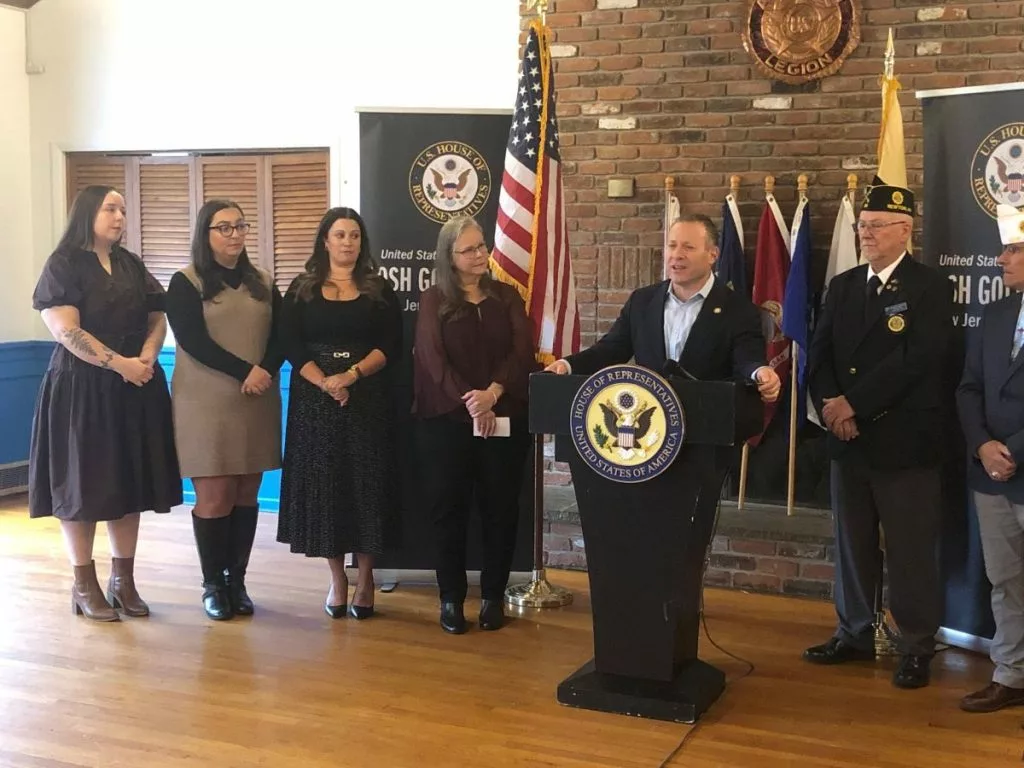
Rep. Josh Gottheimer (D-N.J.) has written a bill that would require both prediction markets and sportsbooks to require facial recognition software in order to use their sites. This could potentially block minors from accessing accounts without supervision, cutting off one of their main uses of betting sites.
Gottheimer’s announcement came flanked by Kalshi CEO Tarek Mansour, who has expressed full support for the bill. Whether that’s a positive remains to be seen, as Kalshi is a polarizing name in the industries at the moment.
The bill has been assigned as House Bill 9706, also known as the Facial Recognition to Protect Children Act. It has nine sponsors, and would apply equally to prediction markets and sportsbooks.
Why Does Kalshi Support a Facial Recognition Software Act?
There are two major reasons. First, Kalshi has staked almost everything on its position that only the federal Commodity Futures Trading Commission can govern it and other prediction market operators. If that’s true, that would require a federal law to enforce facial recognition software.
Second, Kalshi has a greater risk than most traditional sportsbooks. Prediction markets have tried to classify themselves as event contracts rather than sports betting, which ties into their claims of federal regulation. Contracts only require a person to be 18+, while gambling requires a bettor to be 21+.
In practice, that means younger siblings can gain access to older siblings’ prediction market accounts. Roughly 85 to 90% of high school seniors turn 18 before graduation, meaning parents aren’t the only ones in many American households who can legally access prediction markets. Sportsbooks rarely have this problem, as very few 21-year-olds live with their parents outside of summer breaks.
Does This Act Have a Chance to Become Law?
Becoming law might be the easier part of the equation. Whether it can remain the law is another matter. Gottheimer gaining bipartisan support will help in getting the bill to the House of Representatives' floor. Having Kalshi on board likely means that if the bill gets to President Donald Trump’s desk, he is likely to sign the legislation.
But in the wake of Murphy v. NCAA, the landmark case in 2018 that opened the door for legal sports betting nationwide, a national law regarding sports betting might not survive a legal challenge. In Murphy, the Supreme Court held that the 1992 Professional and Amateur Sports Protection Act violated the Tenth Amendment.
Specifically, the Court found that PASPA forced states to adopt specific laws regarding gambling. As written, Gotteheimer’s bill could be found to violate the Tenth Amendment for similar reasons.
The bill will likely be amended during the legislative process. One possible amendment could be an opt-out procedure for states, which would greatly improve the bill’s chances of surviving a court challenge.
What’s Likely to Happen?
Most likely, the bill will encourage sports betting operators to take their own path. That happened with the video game industry in 1994, when then-Sen. Joseph Lieberman (D-Conn.) told gaming executives to either create a rating system, or the government would do it for them.
If something similar occurs, traditional sportsbooks would likely try to separate themselves from prediction markets and insert their own safeguards. Options could include things such as two-factor authentication, which could be used as a parental control.
In either case, this bill probably won’t come for a vote before the November elections. The House’s current session is scheduled to end July 23, and the House won’t return until Sept. 14. The Senate remains in session through August 7. But HB 9706 would have to make it through a full House vote within four days to be debated before the Senate’s recess, a highly unrealistic timeline.
-

Courtyard.io Adds Pokémon Booster Raffle: Win 6 Packs Worth $1,500+
-
Anytime Touchdown Scorer Picks for Oct. 19: 5 Commanders-49ers MNF Bets
-
NHL Anytime Goal Scorer Predictions Today: Best Bets for Oct. 19
-
Commanders vs. 49ers Prediction, Odds & Picks for Oct. 19: San Francisco Cruises
-
NBA Orders Sportsbooks to Prohibit Some Prop Bets, Parlays
-
MNF Week 6 NFL Parlay Picks & Player Props: Commanders vs. 49ers