Virginia Legislature Moves Toward Eventual Legalization of Online Casinos
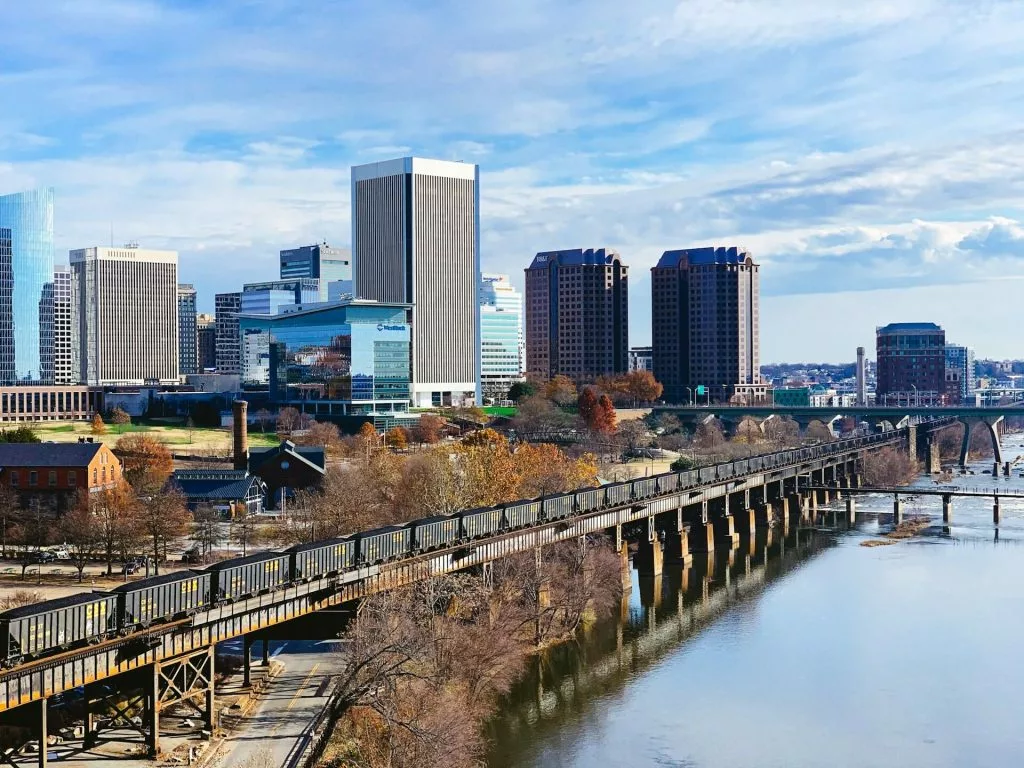
Virginia’s General Assembly moved forward on a bill to legalize online casino gambling in the state — but bettors likely won’t see the payoff until 2028.
That’s because the Virginia House of Delegates has inserted language into the compromise bill that it must pass the legislature twice before it becomes law. Proponents say that’s to make sure the state’s lawmakers do their due diligence on whether or not online casinos make sense for the Old Dominion State.
“Virginia has an opportunity to learn from other states and enact a balanced framework that reflects the realities of today’s gaming market,” said John Pappas, the state’s director for the iDevelopment and Economic Association, in an editorial for the Richmond Times-Dispatch.
But by forcing the bill to pass twice, Virginia risks another year of watching potential revenue move across state lines, as well as a possible defeat with new legislators. Virginia uniquely holds elections every year, as state legislators are elected in odd years. Any special elections take place in even years, which could mean a slight change in the makeup of the General Assembly.
What Would The Bill Permit?
Virginia’s combined bill, House Bill 161 and Senate Bill 118, would allow for legal online gambling in Virginia to begin on Jan. 1, 2028. It would allow the creation of up to three online skins for each existing brick-and-mortar casino in Virginia. Currently, five Virginia cities (Bristol, Danville, Norfolk, Petersburg and Portsmouth) are allowed to operate a brick-and-mortar casino.
Much of the framework exists in Senate Bill 118, written by Sen. Mamie Locke (D-Hampton). Locke initially introduced the bill in the 2025 legislative session, but pulled it before it could go through a vote, citing a need to study the issue further.
One change she has made is reducing the number of other states an operator would need to do business in to be eligible for a Virginia license. Originally, the bill required a casino operator to offer online casino gambling in three other states; the modified bill reduced that to two. Locke has also increased the amount of tax revenue that casinos would be required to provide to the state to 15%. While this would match Virginia’s existing tax rate for sports betting, it could make entry into the Virginia market for online casinos more difficult.
What Would The Bill Eliminate?
Locke and Del. Marcus Simon (D-Falls Church) have also taken aim at sweepstakes casinos. Both Locke and Simon have stressed that Virginia needs to do something about the illegal gambling market, and both believe the best way is to allow legal gambling under the scrutiny of the state.
“I think the best way to combat the illegal operators is to create a legal alternative for them, bring them in and then have them subject to the regulations,” Simon said.
That also means getting rid of sweepstakes casinos, which have skirted the law and thus avoided regulation. The bill as written says that any form of iGaming in Virginia outside of those offered by a licensed operator would be considered illegal and subject to a fine of $100,000 for a first offense and $250,000 for each additional offense. The language further states that every day that an unlicensed operator offers games in Virginia counts as a separate offense, making it cost prohibitive for any unlicensed operator in the state.
Locke’s language would also allow the Virginia Lottery board, which oversees gambling in the state, the power to subpoena alleged violators.
How Could Things Change?
One big change could come in the form of a companion bill, Senate Bill 756. That bill would allow Fairfax County, the state’s largest and wealthiest county, to vote on whether to allow a brick-and-mortar casino to be built in its borders. If that were to happen, that would allow another three operators to enter the Virginia market.
Fairfax County has long been a dream of casino operators, as roughly 12% of the state’s population resides in Fairfax County. Additionally, Fairfax is surrounded by other large, wealthy counties, including Arlington, Loudoun and Prince William. Currently, the closest brick-and-mortar casino to Northern Virginia sits in Petersburg, a two-hour trip each way. That’s meant a net loss of revenue for the state, as both Maryland and West Virginia offer brick-and-mortar casinos that are much closer to Fairfax.
SB 756 was written by Senate Majority Leader Scott Surovell (D-Fairfax). However, other Fairfax legislators oppose the idea, and the bill would require majority approval in both the county as a whole and the specific city where the casino would be built. For example, if the vote proposes a casino in Herndon and 65% of the county votes yes but 55% of Herndon votes no, the casino would be considered defeated.
Where Do Things Stand?
Both bills passed their legislative chambers, but they would need to do so again in 2027 for this to occur. A third companion bill, Senate Bill 609, could be crucial to that effort.
SB 609 would create an independent commission to oversee gambling in the state. That bill is seen as critical to winning the support of Gov. Abigail Spanberger, who was sworn into office in January. This is an area where she and former Gov. Glenn Youngkin, who opposed efforts to expand casino gambling in Virginia, are in alignment.
“Governor Spanberger is deeply concerned about any discussions of gaming expansion in Virginia without first establishing a single entity with clear authority, consistent standards and strong compliance and enforcement capabilities,” said Secretary of Agriculture and Forestry Katie Frazier.
-
Lawmaker Considers In-Person Incentives to Pass Ohio iGaming Bill
-
Another Round of Upsets in Week 3 of College Football
-

MLB Pitcher Props for Sep. 20: deGrom Goes Deep at Home
-

Steelers vs. Patriots Prediction, Odds & Picks for Sept. 20: Pittsburgh Covers
-

SNF Week 2 NFL Parlay Picks & Player Props: Best Chiefs vs. Colts Bets
-

Coinz.us Hub: Sweepstakes Casino Revamps Mobile Experience, Adds Free Prizes