'Tip of the Iceberg': NBA Gambling Scandals Imply Offshore Problem
In a dozen years as a federal prosecutor, Edward McDonald learned that those inclined toward nefarious deeds will keep going until stopped, certain they are the smartest in the room, until an indictment is placed on the table in front of them. The same was true of mob associate Henry Hill in the Lufthansa heist case McDonald handled as head of the Department of Justice’s organized crime strike force in the 1980s, and in countless other cases that didn’t make the cut for movies like Goodfellas.
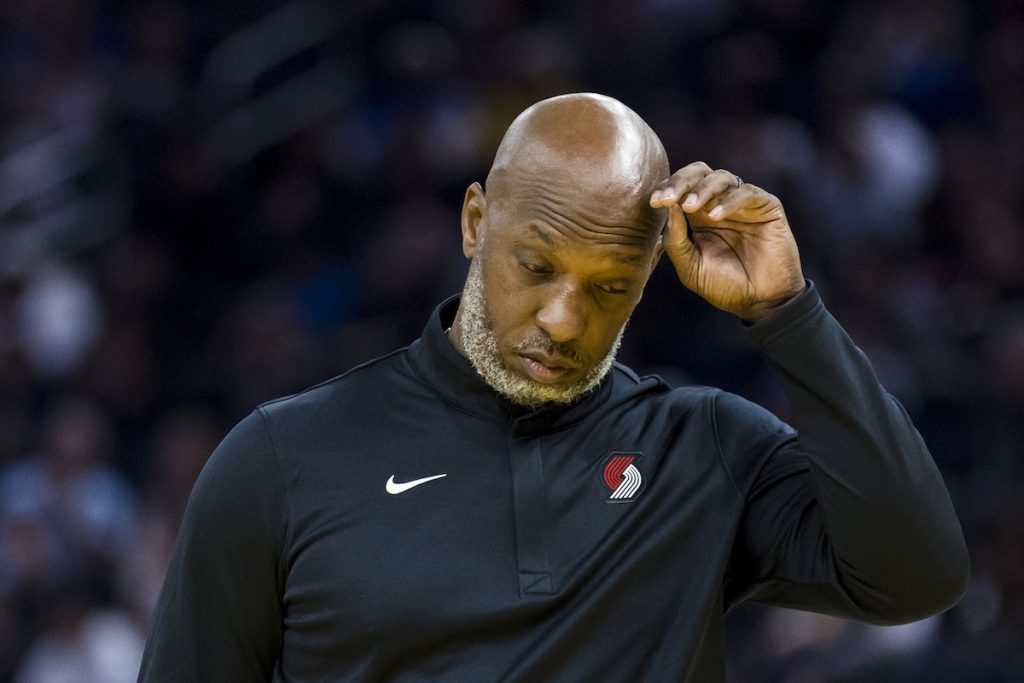
So while recent gambling scandals involving former NBA players Jontay Porter, Terry Rozier, Chauncey Billups, Malik Beasley, a score of college players and MLB castoffs Emmanuel Clase and Luis Ortiz Jr., prove, McDonald said, that the legal gambling integrity system in the United States works, it doesn’t mean it’s universally eradicated motivated guys with criminal ideas. And the dearth of new indictments and scandalous revelations since Beasley was indicted in June should not induce complacency.
These interconnected schemes and others are likely, said McDonald, who is now in private practice, either still underway or not completely being sanitized in the sunlight of public and legal scrutiny.
“I'm not involved in investigating any of these cases; I'm not a prosecutor or investigator anymore, but my common sense tells me, based on the fact that so many people have been indicted in the last 11 months, that this is just the tip of the iceberg,” said McDonald, whose first memoir, Chasing Goodfellas: Lufthansa, Henry Hill, Point Shaving and Making Movies, will be released on Oct. 13.
Regulated Sportsbooks Aided Investigation Into NBA Gambling Scandals
Multiple unnamed sportsbooks, the purported victims of fraud in recent cases where players allegedly conspired to alter their performance to win prop bets for gamblers, helped root out malfeasance. The effort began with the investigation and indictment of Porter, who pleaded guilty to one count of wire fraud in 2024 and is awaiting sentencing.
But the offshore sports betting black market remains a viable option that McDonald believes would be more attractive for those attempting to corrupt performances.
“If you're betting with an illegal bookmaker, now is there less chance that there's no record of what's happening — well, there might be a record with a bookmaker, but the government's not going to be able to get that,” said McDonald, who portrayed himself in Goodfellas. “He's not going to maintain them. He's going to shitcan them as soon as he can. So there are no records of what's happening, so there's less likelihood of being caught. But in addition, there's no tax.
“I think that's probably happening to a great extent. I don't know which is more.”
Ego, he said, probably leads many conspirators to take their chances on legal apps, where sportsbooks and leagues employ integrity monitors like IC360 and Sportradar to flag potentially untoward bets of questionable size or volume in certain markets. Such was the case in the NCAA investigation, when suspicious activity was detected on first-half betting lines for mid-level programs like Eastern Michigan.
“I think a lot of people, they think I'm never going to get caught,” McDonald said. “People have hubris. And [they think], ‘It's so simple. It's happening all the time. It's no big deal.’ And I think that they just go ahead and do it because they're lazy and they just don't think of the consequences.”
Professional and NCAA Athletes Targeted in Conspiracies
Athletes can be drawn into conspiracies either because they owe money — as is alleged of Beasley — in attempting to help friends and associates — as is alleged of Clase — or can be targeted because of their economic circumstance, as was apparently the case in the NCAA scandal where players at small schools with little or no Name Image Likeness support.
“Things to go to school cost money. And in this landscape of NIL and revenue-sharing and everything else, the students that are being targeted the most are the students that aren’t getting the money, that need the money,” Morgan State athletics director Dena Freeman-Patton said during a college sports integrity forum. “So they’re more susceptible.”
Rick Kuhn was. McDonald’s work in turning Hill into a state’s witness in the Lufthansa case revealed the back-up center as the cog in a Boston College men’s basketball point-shaving plot during the 1978-79 season. Kuhn was recruited to the scheme by high school friend Rocco Perla.
“Rick Kuhn was the perfect example of a kid who was going to be susceptible to overtures by someone,” McDonald said. “It started out with his buddy and his teammate from high school.”
Rocco Perla connected Kuhn with his brother, Anthony, a Pittsburgh bookie and drug dealer who eventually convinced him to enlist point guard Jim Sweeney, begrudgingly, and later leading scorer Ernie Cobb, into the plot.
“[Kuhn] knew he wasn't going to make it as a professional basketball player anywhere, except in Venezuela, where I think he played for two months, and they were able to say, ‘Look, your career is going nowhere, and he was brooding. He wasn't going to graduate. It was one thing to say, ‘Hey, we'll throw you a few hundred bucks for telling us who sprained his ankle or who's breaking up with his girlfriend and who seems depressed.’ It's quite another thing to say, ‘You're going to be in 10 or 15, 20 minutes a game, shave points, go out and get some other kids on the team. We'll pay.”
Money, Drugs, Women Listed Among Scheme Rewards
Kuhn was also, McDonald said, plied with the promise of drugs and women. He was later made to understand that his physical well-being was also in play in a scheme that was ultimately not very successful for the organizers, with gambler Paul Mazzei, one of five gamblers indicted, telling ESPN: “That was the worst fix in the history of fixing games. How can you have a fix and go broke or lose $10,000 or $20,000? What kind of fix is that?"
Kuhn eventually served 28 months of a 10-year prison sentence.
Personal relationships open doors, McDonald said. Human nature also creates entry points. He’s particularly perplexed how Naismith Hall of Fame player Billups, then the head coach of the Portland Trail Blazers, came to be allegedly involved as a “face card” luring victims to high-stakes poker games rigged by mafia figures, according to charging documents.
“The other way [to enlist co-conspirators] is just preying on people's greed. I feel like you’ve got to scratch your head and you ask how much money Chauncey Billups made in his career,” McDonald observed. “Terry Rozier, the guy's worth tens of millions of dollars. I don't know what his financial situation was, whether he squandered the money like Allen Iverson. And another is somebody who's going to have gambling debts. Your gambling debt will be taken care of. Malik Beasley, I guess, owed money.”
Plea Deals on the Table for Many Conspirators
The intertwined Porter-Rozier-NCAA-rigged poker cases have seen a spate of plea deals, with Shane Hennen pleading guilty in July to one count of wire fraud conspiracy in the poker scheme. William Brown, one of six indicted with Beasley and former NBA player Ed Davis, is scheduled to change his plea to guilty on Friday in the Eastern District of New York.
What will they get in return?
“Certainly they're looking to get the big cheats, McDonald said of federal prosecutors. “Were there organized crime figures involved? Certainly, there were [in the poker case].
“You don't need gangsters to be involved in the fixing of the games, the point-shaving, the fixing of the prop bets. However, it always is helpful if you do, particularly when you're betting with illegal bookmakers, because if they find out that the games have been fixed, they're not going to want to pay. The only way you get them to pay is by saying, ‘Hey, we're going to have the guys from organized crime that are going to come, and they're going to break your legs unless you pay.’ So you want to have support from organized crime.”
A Long History of Cheating in Sports
McDonald asserts that “cheating has always happened,” citing known notorious cases such as the 1919 Chicago White Sox team that conspired to successfully throw the World Series to the Cincinnati Reds for the benefit of gamblers, the Boston College men’s basketball team, and scandals in the 1951 and 1960-61 seasons at New York University. Little-discussed incidents, such as Earl Monroe being investigated and cleared by the NBA after scoring in the Trail Blazers’ basket and ruining the spread in the waning moments of a nondescript 1977 game, have faded from public memory.
Some potential gambling conspiracies faded, McDonald contends, because of legal conspiracy within the policing system.
“We had referred to us allegations about other schools,” McDonald said of his time in the Department of Justice. “And I can say that back in the 1980s, we sent some subpoenas out to some Midwestern field offices of the FBI, investigating big state schools. And I can tell you that those subpoenas got buried. The agents, no doubt, were alumni of those schools, and those cases just didn't go anywhere.”
Legal Betting Industry Pushes Match-Fixing Into Spotlight
Since the advent of widespread legal sports betting — the repeal of the Professional and Amateur Sports Protection Act in 2018 — he believes it has created a broader opportunity for game-fixing even though the vast majority of bettors wager only as a form of entertainment.
“With this incredible interest in betting, and the amounts that are at stake on many of these bets, people are greedy, and they'll take advantage of whatever edge they can get,” McDonald said. “And if that edge can be obtained because you have a relationship, or you know somebody who has a relationship with a player, or somebody who's associated with a team who can give you inside information, you're going to take advantage of it, and money is going to be passed, and things that are not legal take place.”
Just like always, he believes.
-
'Tip of the Iceberg': NBA Gambling Scandals Imply Offshore Problem
-
NHL Anytime Goal Scorer Predictions Today: Best Bets for Oct. 2
-
College Football Picks and Parlays for Week 5: The Big Boys Shine
-
Jalen Duren's Contract Standoff with Pistons Comes to an End
-
Pokémon Vintage Raffle: Win PSA 10 Cards for Free at Courtyard.io
-

Spree Sweepstakes Casino Adds NoLimit City Slots: Play With 'No Limits', 'No Rules'