Texas Gambling Expansion Possible, But Blue Wave Doesn't Guarantee It: Analysis
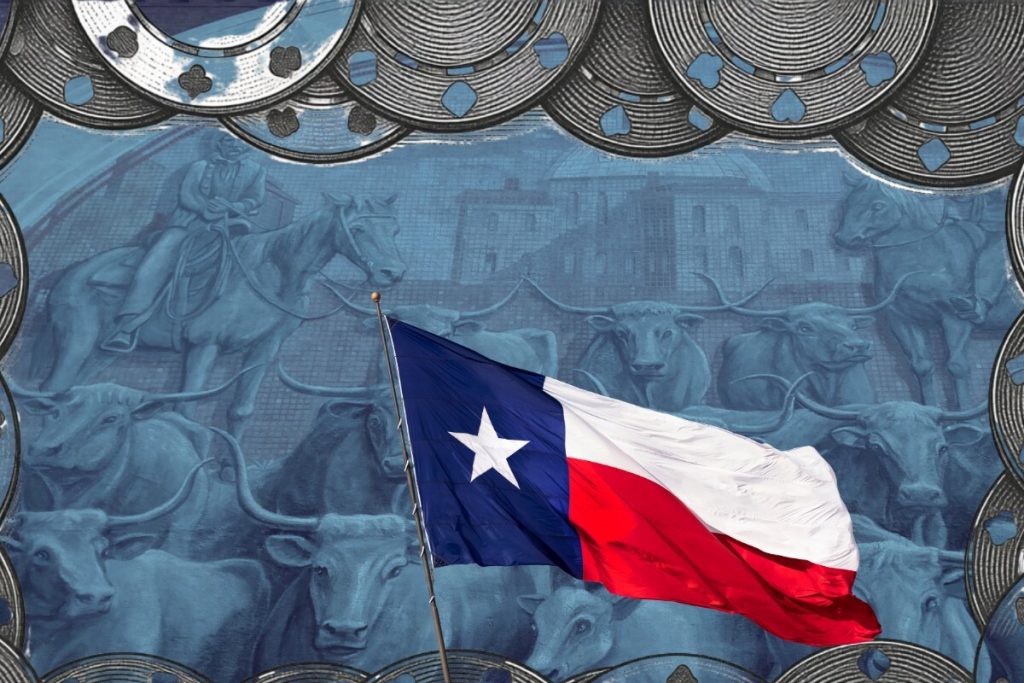
Texas has long been coveted. By Democrats who hoped to rupture the Republican Party’s political dominance over the state of nearly 32 million. By casino and sports betting company executives who envisioned so many potential customers in a place with scant legal forms of gambling.
The midterm elections last Tuesday offered both — more immediately the Democratic Party — encouragement that their dreams were realistic.
While the election of Democrat James Talarico to the United States Senate was emblematic of the so-called "Blue Wave," other down-ballot outcomes could eventually prove lucrative to the gambling industry. If there’s political will, and if Texans actually care enough about it, gambling industry and Texas political observers told TheLines.
And even if so, it’s going to be a while.
With Vikki Goodwin ousting anti-gambling crusader Dan Patrick as lieutenant governor and gatekeeper of the Texas legislature, an obvious obstacle was removed, and a path toward legalization has potentially been charted. The election of pro-gambling-legalization Democrat Nathan Johnson as attorney general can only be taken by the industry as a positive development, too.
Still, this is no sure thing for the likes of Caesars Entertainment owner and Texan Tilman Fertitta or Las Vegas Sands majority shareholder Miriam Adelson, who, with Dallas Mavericks co-owner Mark Cuban, have envisioned resort casinos to complement the American Airlines Center where their NBA team plays. The current stance of incoming Gov. Gina Hinojosa remains undefined in real time despite one clue from her past career in the state legislature. She twice voted against gambling-expansion bills as a state representative in 2023.
But ultimately, newly minted Democratic officeholders might not be willing to spend powder on an issue neither they nor their constituents care very much about right now, said Joshua M. Blank, the Director of Research for the Texas Politics Project at the University of Texas at Austin.
“The challenge for gambling interests is that Texas voters tend to be reasonably ambivalent towards gambling,” Blank told TheLines, citing a 2025 Texas Project poll that found that 38% supported the expansion of casino gambling, but 42% opposed. “Similarly, 31% supported legalizing online gambling [and] 45% opposed that.
"In both cases, the differences between Democrats and Republicans were not stark. And the patterns remain the same with slightly higher opposition and slightly less support for online betting versus a full casino gambling expansion.”
Texas Remains a Massive Prize for National Gambling Industry
California and Texas remain the largest untapped legal sports betting markets in the United States.
The uncomfortable question for the industry remains whether the residents of the nation’s two most-populated states are motivated enough to open the taps. Several states bordering Texas have some form of gambling, and to the consternation of policing legal authorities, unsanctioned online gambling via prediction markets or offshore casinos remains an option.
California voted down commercial- and tribal-backed sports betting initiatives in a costly and ground-scorching 2022 campaign that left the industry retrenching, and Native political power surging. Tribes already own a monopoly on casino gambling in the state through tribal compacts.
Eilers & Krejcik’s April Prediction Market Monitor surmised that 43% of sports event contract wagers placed nationally were originated in California and Texas.
Blank agreed that legalizing Texas sports betting might be more palatable to voters and more interesting to legislators because “it’s already going on” in those unregulated forms.
An analysis by GeoComply, a technology firm that verifies attempted online bettors are physically in legal sports betting jurisdictions, claimed that in Week 5 of the NFL season, more than 19,000 users in Texas attempted more than 120,000 wagers on sportsbook apps not licensed there.
Various bills have foundered during Patrick’s dozen years in office, and the main forces behind legalization remain the owners of several in-state professional sports franchises — via the Texas Sports Betting Alliance — and casino magnates like Fertitta and Adelson, whose company has spent millions on lobbying.
“The main vehicle for gambling expansion or at least the most-discussed vehicle for gaming expansion has been these large destination-style resort casinos,” Blank said. “Even that, in and of itself, is something where those might have some regional proponents, based on the potential locations of these casinos.
"But outside of that, there's not really much to be gained for most [Legislature] members by spending a lot of time on this issue because historically it's not going to go anywhere. And generally, from most members of the Legislature, it's not going to lead to any sort of direct benefit other than the perception that you've expanded gambling.”
Still, two joint resolutions that would allow Texans to eventually vote to amend the state constitution and legalize casino gambling and sports betting have already been filed for the 2027 session.
Lobbyist: New Lawmakers Likely to Need Gambling Education
Democrats flipped more than 20 seats in the Texas House, winning by an 83-67 margin. That assures control of one chamber, but also guarantees an influx of lawmakers likely unschooled in gambling policy, Princeton Public Affairs Group lobbyist Bill Pascrell III said.
“The new folks coming into town are unscripted on this issue,” Pascrell III told TheLines. “They haven't really weighed in on it. But I do think they'll be more open-minded and there'll be a better chance to move the dial. I know that multiple clients of mine who've always told me they had Texas covered are now asking me to help and get them different counsel there, and have me weigh in a little bit more because of my Democratic pedigree.
"So that's, I think, very optimistic because Texas has been a challenge for a long time.”
Pascrell III, conceding that gambling will be nowhere near the top priorities for these lawmakers, said he’s advised his industry clients that the time to engage with newly elected Texas officials comes before the next session begins on Jan. 12.
“Use January before the session starts to educate and say, ‘Hey look, you're giving up a load of tax revenue that you could bring in, and you're going to need because you’re concerned about the One Big Beautiful Bill's cuts to states’,” he explained, “‘Here's a way to make up some of that, if you're willing to go down the road. Of course, your citizens are gambling on black market sites.’ I guarantee that you need to educate them on that, saying that [the black market] is not creating jobs, that this will create jobs and it's not creating any tax revenue and there's no consumer protection.”
Gambling Executives Ready to Mess With Texas
Penn Entertainment CEO Jay Snowden said in a recent earnings call that his company is ready to “play offense,” alluding to an aggressive lobbying strategy in Texas. The company has existing gambling relationships there through ownership of three thoroughbred tracks.
Patrick Dumont, who acquired control of the Mavericks from his mother-in-law, Adelson, told CNBC that a casino could be incorporated into a new arena.
"When Las Vegas Sands thinks about Texas and the Metroplex, it's really about an asset that will be both for business and future tourism," he told CNBC.
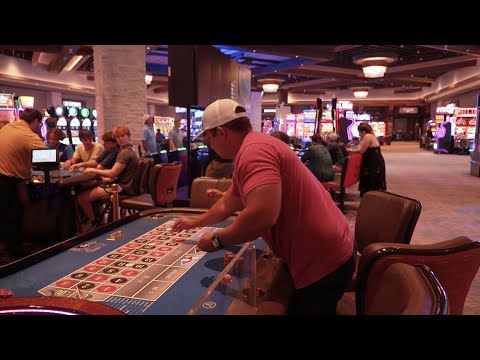
The future of gambling in Texas
Patrick Departure No Automatic Win for Gambling Companies
Patrick’s anti-gambling predilections have long been understood, both from his public proclamations and from his role as the executive charged with deciding which bills the Senate considers.
Goodwin's stance on gambling, from her campaign website: “I am in favor of letting the people of Texas vote on whether or not to legalize gambling in Texas. Right now people leave, and take their dollars with them, to go to nearby states where they can gamble, which means Texas is losing out on potential revenue and economic activity. This represents a significant economic opportunity that could benefit our state through job creation, tourism, and tax revenue if properly regulated. I think we should let the people of Texas have a say in this decision through the democratic process, as they are the ones who should ultimately determine what's best for our state's future.”
Texas' new lieutenant governor appears poised to give life to the possibility of a legal gambling industry in the Lone Star State.
“The most important shift is the end of Dan Patrick's term as lieutenant governor,” Blank said. “Patrick ruled the Texas Senate with an iron fist and was largely given the power to rule the Senate by senators from his party. Patrick had the political power to stop any bill that he disagreed with.
“[Goodwin] is also not adamantly opposed to gambling as Lieutenant Governor Patrick was … but it doesn't increase the probability [of legalization] dramatically. It's impossible to imagine how gambling would have moved forward without him. And you can just remove him from consideration, but it doesn't mean that there aren't still a significant number of obstacles.”
Key among them, Goodwin will likely not enjoy the same power, Blank said, with the still Republican-controlled Senate likely to rewrite rules that reduce her parliamentary sway.
“I don't think a dramatic change in the gambling landscape is on the horizon just because Democrats won a majority of the elections,” Blank said. “The only reason that expanded gambling might be a topic of discussion is because of the potential revenue it could generate.”
But even then, Blank said, analyses by state comptrollers show the gambling economic impact for a state the size of Texas is negligible. States often turn to the taxation of gambling revenues when in need of immediate fixes, but decades of fiscally conservative budgeting created a $24.8 billion budget surplus in 2025. School funding and tax cuts were pre-midterm issues in the conflict between deposed Gov. Greg Abbott and Hinojosa, but there were no glaring shortfalls demanding immediate attention.
“Texas is not a state that has a significant budget shortfall because Texas doesn't budget in a way that would allow for a significant shortfall,” Blank said. “The Legislature only meets every two years, and then it budgets for the next two years, so the combination of that plus the fact that they're required to pass a balanced budget, plus the amount of growth in the total expenditures is limited by population growth, for all those reasons, Texas, while it may be debatable whether Texas spends enough on certain areas, it's not debatable that the Texas budget is pretty conservative.”
Texas’ current budget is $338 billion.
The Tax Foundation, a self-described “non-partisan” organization, estimated this year that with around 12 million residents aged 18 to 44, “Once established, a well-structured sports betting market could be expected to generate approximately $326 million for the state from a 10 percent gross gaming revenue tax.”
Texas: Huge, Disparate, Difficult
There is such a dearth of gambling in Texas — aside from a state lottery, a handful of pari-mutuel horse racing tracks, and three casino-like tribal bingo parlors — that building momentum is harder because it's hard to define what it is. Visualizing a destination casino and the jobs and amenities it entails is easy, Blank said. But that’s not the breadth of modern gambling. And aligning the interests of gambling companies hoping to open retail casinos, online sports betting, and inevitably, iGaming, would be difficult, he added.
“What's really remarkable is the extent to which the ground underlying the discussion has shifted so much,” he said. “It's one thing to talk about the expansion of minor gambling activities or the creation of in-state non-reservation casinos. It's another thing now that we're in an environment in which online betting has become so ubiquitous. Whereas asking people about gambling in 2010 or 2012 might have brought up images of people at slot machines, bringing up gambling in 2026 brings up images of young men sitting at computers. And I think that's like a fundamental shift.
“Just because the politics of Texas has shifted and just because a significant new participant has entered the space in the form of online gambling and prop bets, it's not clear that any of those entities are in alignment with each other.”
-

Texas Gambling Expansion Possible, But Blue Wave Doesn't Guarantee It: Analysis
-
Cavaliers vs. Knicks Prediction, Picks & Odds: NY to Continue Winning Ways
-
Vikings Bank on Reunion With Kirk Cousins to Transform Struggling Offense
-

NHL Player Props and Parlay Picks 11/11: League Leaders Step Up
-
NFL MVP Prediction Markets: Joe Burrow Surges Ahead of Josh Allen
-
Wisconsin Sports Betting On Hold Until May Pending Lawsuit