James Files Lawsuit Accusing Polymarket of Violating New York Sports Betting Laws
While New York sports betting is fully legal, one tenet of the law is that wagers on in-state college teams are strictly prohibited. And that’s the latest example of where Polymarket appears to have run afoul of state laws.
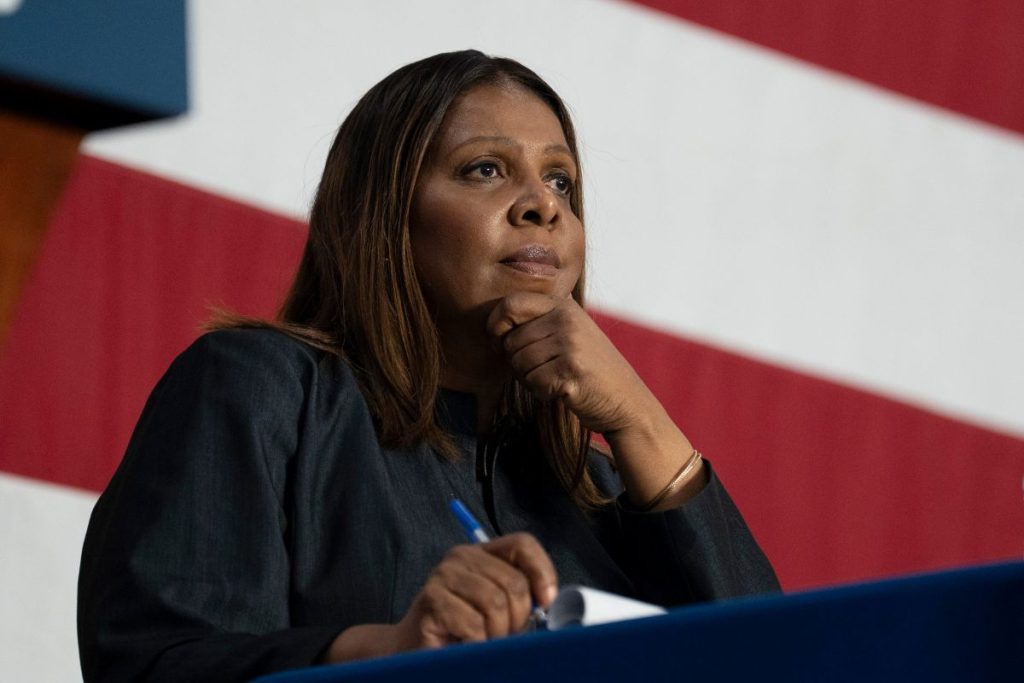
New York Attorney General Letitia James and Gov. Kathy Hochul filed a lawsuit against Polymarket, alleging that the prediction market operator both advertised itself to New Yorkers and allowed them to place illegal wagers. If successful, the lawsuit could drive Polymarket out of the Empire State and add another layer to a dispute that appears bound for the Supreme Court.
The lawsuit seeks both an injunction against Polymarket without New York licensure and massive fines. Per the filing, New York seeks that Polymarket refund all Empire State customers, pay $100,000 for each attempt to offer New York sports betting, and pay a fine of three times all revenue received from wages in New York.
Given that New York is the nation’s fourth-largest state, that could be a massive fine if awarded. Although New York has a robust legal sports betting market, prediction markets have avoided New York’s high tax rates. That has meant better lines for customers, which has enticed some bettors to try them out.
What New York Sports Betting Violations Are Alleged?
The violations listed are two-fold. First, James’ lawsuit accuses Polymarket of advertising itself to New Yorkers through the Super Bowl and other attempts. Offering bets on the Super Bowl doesn’t violate New York sports betting laws on its own, but James has reason to mention the activity.
James alleges that by offering Super Bowl wagers, Polymarket made itself available to the New York market. That leads into the second aspect: Polymarket explicitly violated New York’s law prohibiting in-state college wagers. Several states have laws banning bets on in-state college teams to prevent professional gamblers from taking advantage of college kids to fix games in their favor.
Although Polymarket and the federal government have argued against any state oversight of prediction markets, that’s a harder position to take on wagers involving college athletes. Protecting the integrity of college sports is a bipartisan issue, and going against state laws on that topic isn’t likely to win much support.
Why Is This Case a Big Deal?
The precedent such a case could set could have major consequences for state laws. If a judge rules Polymarket isn’t subject to New York sports betting laws, those laws would essentially be null and void.
That could trigger a flood of new wagers on prediction markets, especially as college sports seasons continue. Right now, a New Yorker cannot place a bet on Syracuse football without crossing state lines or trying a prediction market. Choosing Polymarket makes those bets available without consequences for bettors.
On the other hand, if James wins an injunction, it could trigger a copycat strategy. New Jersey and Virginia also don’t allow bets on in-state college teams, and multiple states do not allow college prop plays.
When Could More Information Come?
Given the potential for harm, an injunction in this New York sports betting violations case could be issued in early October. It’s not likely to be the final word on the case either way; the Supreme Court will likely agree to weigh in on the legality of prediction markets before the year is out.
If it does, this case will likely get amalgamated into that one. That would make a final decision likely to come in May or June of 2027.
-

James Files Lawsuit Accusing Polymarket of Violating New York Sports Betting Laws
-

Texas vs. Tennessee Prediction, Odds & Picks for Sept. 24: Vols Offer Value as Home Dog
-
Key Injuries Ahead of Week 3 in the NFL
-

Cardinals vs. Brewers Prediction, Odds & Props for Sept. 25: Lay the Under
-
MLB Home Run Props and Predictions Today: Top Player Props for Sept. 25
-

Super Bowl Halftime Show Prediction Market: Miley Cyrus Leads