Indiana Moves to Ban Sweepstakes Casinos as Bill Heads for Final Approval
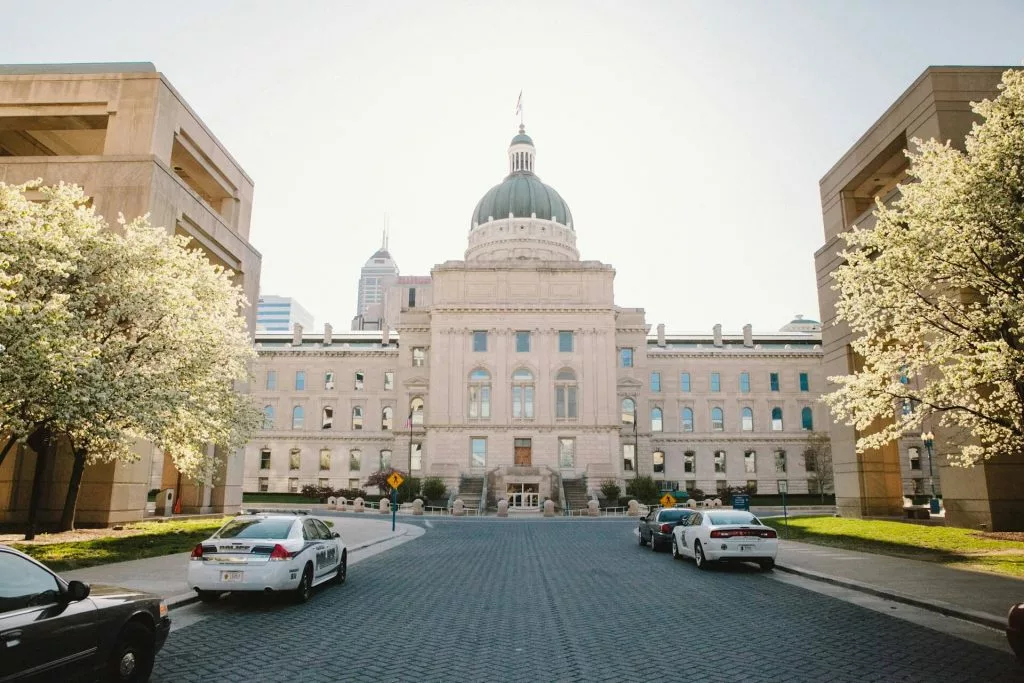
Indiana moved a bill that would ban sweepstakes casinos back into the legislature, after a conference committee between the state House and state Senate hammered out disagreements between two competing bills.
The final bill, House Bill 1052, must now go through both chambers of the Indiana General Assembly again. Should it do so, Indiana would become the newest state to make sweepstakes casinos effectively illegal.
Passage of the legislation appears virtually certain, as long as Indiana legislators get it done before the session adjourns on Feb. 27. The first bill passed the House 86-12 and passed the Senate 37-8. Both margins are well above the two-thirds needed to override any veto from Gov. Mike Braun, although a veto seems unlikely.
If passed, the bill would levy a fine of $100,000 on any individual or operator running a dual-currency game that allows players to exchange currency for a chance to win a cash prize or reward. Rep. Ethan Manning (R-Peru) has been the driving force behind this bill, and brokered it through committee to its final form.
What Changes Were Made Between Bills?
One of the biggest sticking points between the House and Senate was whether to regulate sweepstakes casinos or ban them entirely. Sen. Kyle Walker (R-Fishers) led one successful fight to the final bill, which exempted skill-based online poker from the ban.
As Indiana’s only form of legal online betting is sports wagering, Walker pushed to keep poker games between human players legal. The original legislation enacted a ban on all forms of video poker, but the final form of HB 1052 keeps games such as Texas Hold Em and Stud Poker legal in the Hoosier State.
“This just clarifies that peer-to-peer skill-based poker games are not sweepstakes games, which they’re not, and there’s some important differences in the two types,” Walker said. “A sweepstakes game is a chance-based game, it’s the player vs. the house, peer-to-peer poker is a skill-based game and it is player vs. player.”
Less successful was a push from Sen. Ron Alting (R-Lafayette) that would have taxed and regulated sweepstakes casinos in Indiana. According to Alting, there was some support from other legislators for regulation, but none from the leadership in either chamber.
“I offered the amendment for the sweepstakes which regulated and taxed it that I thought would be appropriate, but got a tremendous amount of feedback of ‘no go,” Alting said at a public meeting before the bill entered committee hearings.
Why Is HB 1052 Considered Necessary?
The major reason for the push is that under current Indiana law, sweepstakes games are in full compliance. Other states, such as Tennessee, have sent cease-and-desist letters to sweepstakes casino operators, resulting in many big names pulling out of the market. But Indiana’s Gaming Commission has said that it does not have the power to do that under the laws as currently written.
Sweepstakes casinos have come under fire in 2025 and 2026, as they are unregulated by state laws. That results in millions of dollars flowing to the operators, but none for the state. According to Sean Ostrow, spokesman for the Social Gaming Leadership Alliance, regulation instead of banning could result in around $20 million in revenue for the Hoosier State.
How Likely is Passage?
It seems very likely to happen. Indiana was one of the earliest states to permit online sports betting, and the state has been friendly to expanding brick-and-mortar casinos in recent years. Recently, Indiana legislators allowed the relocation of a casino from Gary to Terre Haute, expanding legal gambling options in the western part of the state along Interstate 70.
Gov. Mike Braun has not given an indication of whether or not he will sign the legislation. But with both chambers able to override him if needed, that seems a formality. If approved, the ban would come into force on July 1, 2026.
-
Courtyard.io Adds Pokémon Booster Raffle: Win 6 Packs Worth $1,500+
-

Anytime Touchdown Scorer Picks for Oct. 19: 5 Commanders-49ers MNF Bets
-

NHL Anytime Goal Scorer Predictions Today: Best Bets for Oct. 19
-
Commanders vs. 49ers Prediction, Odds & Picks for Oct. 19: San Francisco Cruises
-

NBA Orders Sportsbooks to Prohibit Some Prop Bets, Parlays
-
MNF Week 6 NFL Parlay Picks & Player Props: Commanders vs. 49ers