Georgia Sports Betting Supporter Loses Primary Runoff for Governor
Georgia sports betting advocates have one candidate for governor in November who’s clearly in their corner. Whether she’s the only one to support gambling is now a question mark.
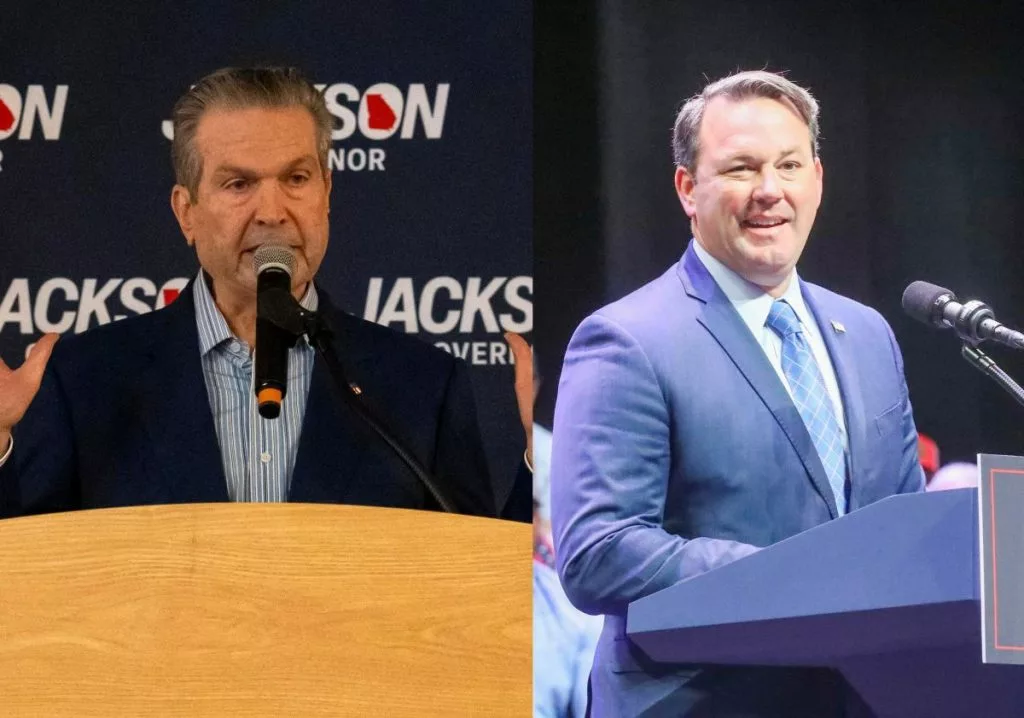
Republican primary voters in Georgia chose Rick Jackson, a health care executive, as their nominee for governor in the fall. Jackson defeated lieutenant governor Burt Jones, who had taken a positive stance toward legalizing Georgia sports betting. Jackson hasn’t yet made his position on gambling clear.
Jackson moves on to the Nov. 3 general election, where he’ll face Democrat Keisha Lance Bottoms, the former mayor of Atlanta. That could push Georgia sports betting and gambling in general to the forefront of the campaigns. Bottoms has openly supported not just sports betting, but legalizing casino gambling as a way to increase Georgia’s revenue.
That represents a radical departure from current governor Brian Kemp’s position. Kemp has maintained neutrality on gambling, saying the issue should be left to voters. Bottoms favors letting the voters decide, but she has made clear she supports casinos in Georgia.
Why Is Georgia Sports Betting Such a Hot Political Topic?
Two factors have brought Georgia sports betting to the political forefront. First, Georgia is one of the largest states in the country without legal sports betting. It’s one of just two states on the East Coast that doesn’t allow it, and with Atlanta being the hub of the South, legal betting in Georgia would likely attract a lot of customers, both from the Peach State and its neighbors.
Second, Georgia has to find ways to increase its revenue. Kemp recently signed a budget that cut Georgia’s income tax rate to 4.99%, which fulfilled a campaign promise but left the state with a $1 billion hole in its budget.
Sports betting and casino gambling could offset some of those expenditures. In neighboring North Carolina, state government has collected $250 million in revenue over two years of legal sports betting. Georgia’s population is similar to North Carolina, and revenues could be similar or even higher.
Unlike North Carolina, most of Georgia faces little competition for gambling dollars from its neighbors. North Carolina faces regular competition from Virginia, which has multiple casino resorts near its southern border to attract out-of-state customers.
Most of Georgia’s borders are shared with Alabama, South Carolina and Florida. Of those three, only Florida offers any form of gambling. Bettors from other states must drive to Tampa, 210 miles from the Georgia state line, to gamble in Florida.
What Other Forms of Gambling Could Come to Georgia?
Bottoms’ support for casinos and Georgia’s geography could lead to multiple possibilities. Out of Georgia’s five largest cities, three — Augusta, Columbus and Savannah — sit within a half-hour of a neighboring state’s border. The state’s other two large cities, Atlanta and Macon, occupy a 355-mile stretch of Georgia on Interstate 75.
However, Bottoms would need to have enough allies in the legislature to make that happen. Ironically, her own party’s most powerful members seem to be at odds with her on this topic. House Minority Leader Carolyn Hugley (D-Columbus) voted no on House Resolution 450, which would have sent an amendment regarding legal sports betting to Georgia voters.
House Majority Leader Jon Burns (R-Newington) didn’t vote on that bill, but has been known to be friendly to sports betting. Republicans currently hold a 101-80 majority in the Georgia House and a 33-23 majority in the Georgia Senate, making this year’s legislative elections important.
What’s The Immediate Future?
The next question is whether Jackson will take a position on Georgia sports betting. He has tried to tie himself to Kemp, who is term-limited but enjoys high approval ratings in the state.
Bottoms’ advertising could provide a clue toward gambling’s future in Georgia. If she makes it a centerpiece of her campaign, it’s a sign the issue will be a top priority in 2027. If she barely mentions it, gambling in Georgia might not happen for several years.
-

Courtyard.io Adds Pokémon Booster Raffle: Win 6 Packs Worth $1,500+
-

Anytime Touchdown Scorer Picks for Oct. 19: 5 Commanders-49ers MNF Bets
-

NHL Anytime Goal Scorer Predictions Today: Best Bets for Oct. 19
-
Commanders vs. 49ers Prediction, Odds & Picks for Oct. 19: San Francisco Cruises
-

NBA Orders Sportsbooks to Prohibit Some Prop Bets, Parlays
-
MNF Week 6 NFL Parlay Picks & Player Props: Commanders vs. 49ers