Candidates Decided, Could Shape Massachusetts iGaming Future
Michael Minogue faces an uphill climb to become the Bay State’s next governor. But if Massachusetts iGaming is going to become reality in this decade, he might be betting advocates’ best hope.
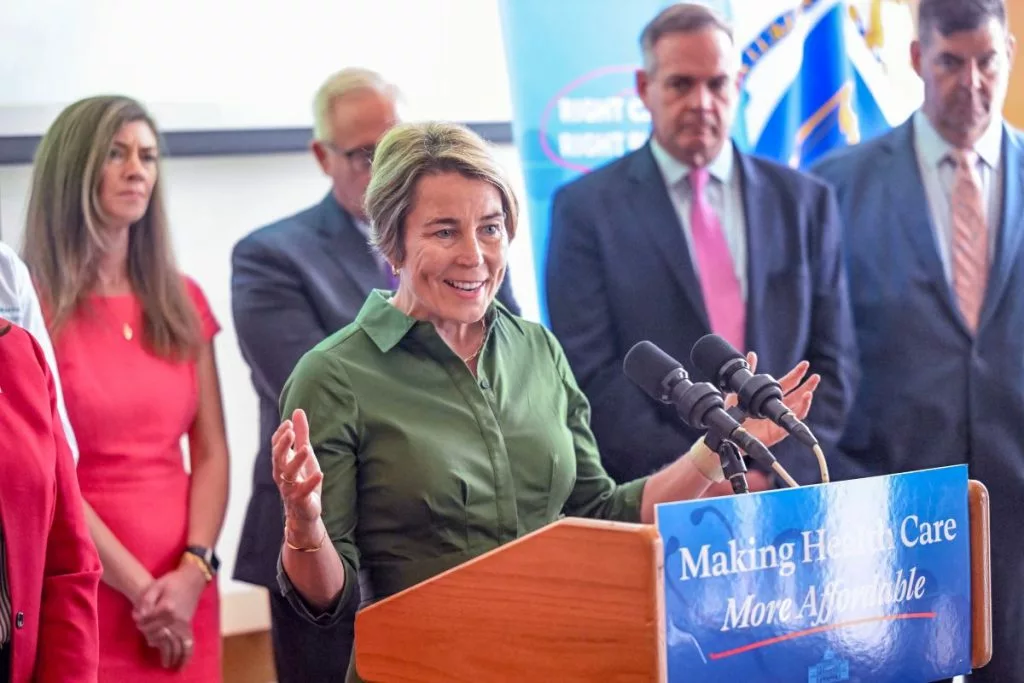
Minogue, a businessman from Danvers, defeated Brian Shortsleeve with 75.9% of the vote in the Massachusetts Republican Primary. He’ll face incumbent governor Maura Healey, the Democratic candidate running for a second term.
Healey is heavily favored to defeat Minogue, according to recent polls. A poll from the University of New Hampshire dated August 27 had Healey ahead 56%-30%, with 14% undecided. That’s a worry for Massachusetts iGaming advocates, because Healey has opposed bringing iGaming to the commonwealth.
Minogue hasn’t taken a stance on either iGaming or sports betting. But according to polling, that might be an opening for him. Healey’s biggest issue with Massachusetts voters is cost of living, and increasing tax revenue through iGaming could be a way to address that.
Why Does the Gubernatorial Race Affect Massachusetts iGaming?
Massachusetts has two key bills on the table that are likely to come up again in 2027. Earlier this year, Rep. David Muradian (R-Grafton) introduced a bill to make Massachusetts iGaming available in the commonwealth. The bill would have allowed Massachusetts’ brick-and-mortar casinos to create up to three online skins each.
The second bill, proposed by John Keenan (D-Quincy), would ban prop betting in Massachusetts. While Massachusetts has been friendly to sports betting since legalizing it in 2023, certain lawmakers have looked to rein it in.
Both bills sat in review as the Massachusetts legislature adjourned on July 21. Muradian has already said he will bring his bill back up in 2027, assuming he wins re-election.
Where Does Healey Stand On the Two Bills?
Healey has opposed Muradian’s bill, mainly because she and state treasurer Deb Goldberg don’t want Massachusetts iGaming competing with the state’s new online lottery. Healey signed the online lottery into law with Massachusetts’ 2024 budget, and the games went live in July.
She hasn’t taken a position on Keenan’s bill, but she’s not likely to be a strong supporter. Healey has a mixed record on gambling in Massachusetts, and she’s gradually moved in favor of it as she’s held statewide office.
When former governor Deval Patrick signed the Expanded Gaming Act in 2011, Healey stood in opposition. But as gambling revenue has become important to Massachusetts, she has softened her stance. She’s said that she wants to put gambling revenue into tourism, a sign that she’s embraced what gambling brings to the commonwealth.
What Races Matter Most to Massachusetts iGaming?
Like in most states, the most important races are in the state legislature. Muradian is one of just 25 Republicans in the Massachusetts State House, but his seat has elected a Republican since 1995. Assuming he wins, the Massachusetts iGaming bill will come up again in 2027.
If it does, it will likely have the support of House Speaker Ronald Mariano. Mariano (D-Quincy) took a sizable donation from DraftKings earlier this year, which will likely help betting advocates’ interests on both bills. Having Mariano’s support is critical, as Massachusetts’ Democratic Party holds a veto-proof majority in both chambers.
Mariano also faces re-election, and he has held his seat since 1991. The general election takes place on Nov. 3, and the new governor and legislature will take office in January.
-

Anytime Touchdown Scorer Picks for Oct. 19: 5 Commanders-49ers MNF Bets
-

NHL Anytime Goal Scorer Predictions Today: Best Bets for Oct. 19
-
Commanders vs. 49ers Prediction, Odds & Picks for Oct. 19: San Francisco Cruises
-

NBA Orders Sportsbooks to Prohibit Some Prop Bets, Parlays
-
MNF Week 6 NFL Parlay Picks & Player Props: Commanders vs. 49ers
-

Kalshi Boss Warns of Prediction Markets Exodus if Regulations Change