College Basketball Team Building Has Altered NCAA Tournament's Madness
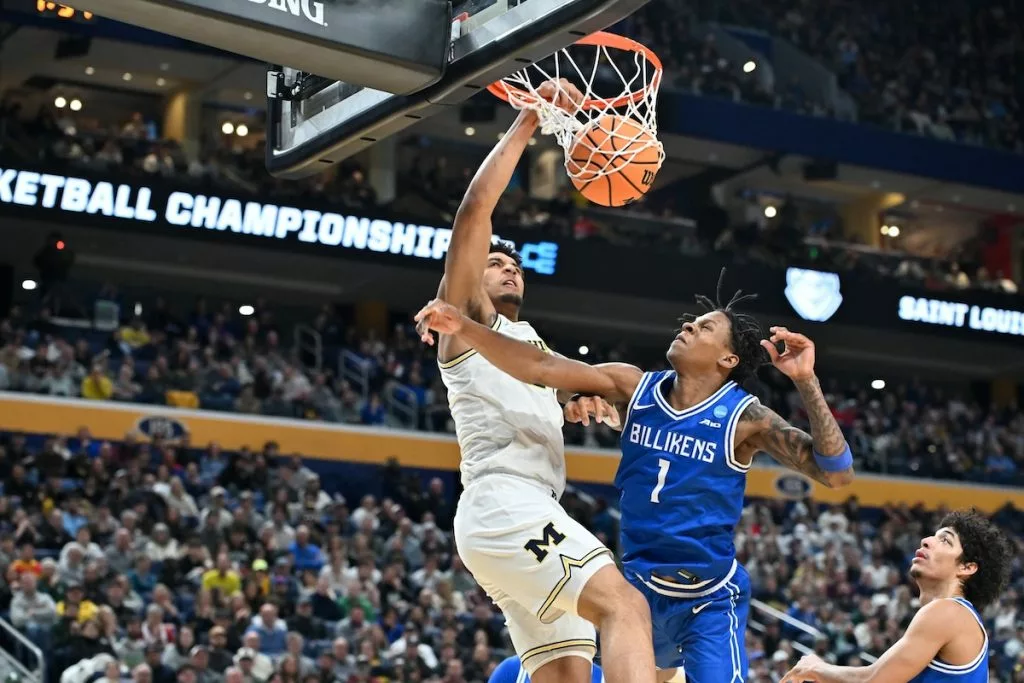
There’s a real case to be made that the NCAA Tournament is losing some of its element of chaos and madness.
Last season, there was an emerging theme that started to take shape. There was a lack of Cinderella teams, fewer upsets and the later rounds of the tournament were dominated more by top seeds than in years past. That same phenomenon is happening once again this year.
In fact, the lowest seeds in the Sweet 16 are an 8, a 9 and an 11. And all three of those bottom-tier teams, relative to the rest of the field, are big schools with significant history and name recognition. There is not a single true outlier school or Cinderella making a name for itself, the kind of team that the vast majority of the public had never really heard of or watched until now.
It just does not feel like March Madness in the way people have come to expect.
Again, there are no mid-majors in the Sweet 16 for a second straight year. It is a chalk-heavy bracket with No. 1 and No. 2 seeds dominating. There were a few upsets in the first round, but largely this has played out the way most people expected.
The chaos of the tournament has not disappeared completely. There have still been great games, spectacular finishes, contests that went down to the wire and endings that you simply do not see every day. That part is still here. But the actual seeding upsets just have not been there.
And a lot of that comes down to the landscape of how teams are built in modern college basketball.
With NIL, there are a few things at play. There is less emphasis on building your team around highly rated incoming freshmen and more emphasis on getting players with experience and a proven track record, even if they are older. That includes international players coming over with experience playing professionally overseas. It includes taking talent from mid-major schools and bringing it to blue blood or power-conference programs with NIL opportunities. It includes the transfer portal being more of a factor than ever.
The way these teams are put together now, very few of the remaining 16 teams in the tournament are made up mostly of players who started their careers at that school. A lot of these are mixed rosters, assembled from different places, and college basketball now looks more like free agency than it ever has before.
That does not mean the NCAA Tournament has lost its luster completely. It still is one of the best sporting events of the year. It is just different, and maybe fans should start adjusting their expectations moving forward. Barring a significant change in the way rosters can be built at the college level, this is probably what it is going to look like.
There may be less magic. There may be fewer unforgettable underdog runs. Brackets may become more predictable. But it is also better-quality basketball, more elite matchups, and more stars on bigger stages.
So the chaos is not gone. It has just been traded, to some degree, for quality. March Madness is not broken. It is just evolving.
And because this was a theme that started to emerge last season and has only become more noticeable this season, it may be time to accept that this is just what March Madness is now.
-
Caleb Williams Returns For Bears’ Sunday Matchup With Falcons
-

Anytime Touchdown Scorer Picks for Oct. 18: 5 NFL Week 6 Bets
-

Chargers vs. Chiefs Prediction, Odds & Picks for Oct. 18: Kansas City Stays Undefeated
-
Cowboys vs. Packers Prediction, Odds & Picks for Oct. 18: Offensive Shootout
-
Chanced Casino Launches Dark Harvest Halloween Drops: Win 500 SC Instantly
-

SNF Week 6 NFL Parlay Picks & Player Props: Aerial Fireworks at Lambeau