How to grade sports cards yourself in 2026: A comprehensive guide to assessing card condition
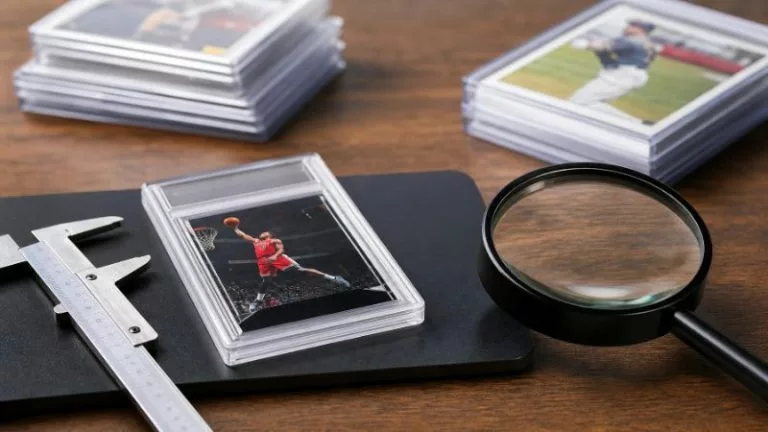
Have you ever wondered how to grade sports cards yourself or even what it means to get your cards graded? Grading is where a third party company like Beckett analyzes the quality of your card and assigns it a rating.
This is not something you do yourself - you simply send your submissions to the company and they do the hard work for you, at a cost, of course. In this guide, we explain the grading process, how you can send your sports trading cards off to be checked, and the potential pros and cons of doing it.
The Best Sites For Digital Sports Trading Cards
 20% off First Pack Purchase
 - Discover diverse packs for different collector interests
- Keep pulled cards in your digital collection
- Ship physical cards directly to your home
 Buy any pack. Get one Pack FREE!
 - Open real Pokémon cards digitally
- Live market values on every pull
- Sell, vault, trade, or ship cards
 SWEAT-FREE Pack Up To $100
 - Rip sports and Pokémon mystery packs online
- View pack values and odds before ripping
- Sell cards back for 90% of value
 Up to 100% Buyback value on your First Purchase
 - Covers Pokemon and several sports CCGs.
- Transparent potential pull probabilities.
- Fun “Biggest Hits” and adjustable probabilities features.
 3 FREE Packs on Signup!
 - Pokémon, One Piece and Riftbound cards
- Graded and authenticated
- Quick and easy to rip cards
 Exclusive ONE PIECE raffles!
 - Discover Pokémon, football, and basketball cards
- Trade cards through Beezie’s Marketplace
- Enjoy fun and interactive digital card openings
 Open TCG Packs Online!
 - Standard and hit packs
- Trade or sell unwanted pulls
- Real verifiable pull odds
 Enjoy 3 Win Boxes
 - Wide range of trading card packs
- Professionally graded cards
- Secure digital vault storage
 New players can receive 3 free mystery boxes and a 5% bonus on their first deposit
 - Explore boxes featuring valuable collectible items
- View exact item odds before opening boxes
- Preview box-opening animations with free Test Spin
How to grade sports cards yourself?
This ain’t possible. Anyone can give their basketball and baseball cards a rating. Anyone can look at the quality of the card and stick a value on it. Instead, when looking at how to grade sports cards yourself, what you are actually doing is sending them to a grading service.
People do not pay the top dollar for guesswork or for self-imposed grading labels. They pay for cards that have been checked, analyzed, and verified by one of the top 5 grading services which include PSA, BGS, CGC, SGC, and TAG.
You don’t grade them - reputable grading services do
As the sport trading card industry developed, people needed a way to tell which cards were better quality, and therefore, which had the highest potential FMV (Fair Market Value). Enter professional sports card grading services. These are companies that employ teams of people, and use ultra complex technologies to scan, analyze and grade your cards.
When we say complex we mean it! The organization typically uses manual checking elements, with employees scanning the cards and looking for things like the centering of the print, the quality of the card corners, and for signs of wear and tear. However, most also use additional scanning technologies to look deeper into the makeup of the card to look for imperfections that you can’t see with the naked eye.
It’s this level of detail and verification that people want. Grading companies have agreed on a simple universal rating system of 1-10. This is why you will see people talking about sports trading cards saying things like, “A Michael Jordan PSA-10” or a “BGS 9.5 Shohei Ohtani” - they are referencing the grading organization, and the card quality rating.
Pros and cons of card grading

- The slabs are protective.
- Grading adds value.
- Better resale chance.
- The slabs look epic.
- It’s costly.
- Lead times are rubbish.
Understanding the sports card grading process
Like we said in our guide on how to grade Pokemon cards, there’s a typical three step process from the point of submission to getting your graded sports card back:
- Submission - you first choose an operator, pick one of their services, pay the fee, and post your physical card to them.
- Analysis - they receive your submission, and it goes into their processing queue. When ready, the card is then analyzed. This can include manual analysis by employees, using scanned, microscopes, and other technology to look for defects and things like centering. There might also be automated and advanced scanning involved to spot imperfections we can’t see with our eyes.
- Receipt - Once finished, they produce a grading report, and your card is given a Grading between 1-10. It’s also encased in their protective slab which usually includes a printed head containing the quality report, card name, and score. They then send the card back to you.
Is it worth getting my sports trading cards graded?
There are two considerations you must make before submitting your sports TGCs for grading:
Lead times
Lead times are currently pretty terrible across the board for grading services. This is because trading cards have exploded in popularity. More people than ever want their cards graded and are submitting them to companies like PSA and BGS.
As a result, some of the companies have lead times of 40+ business days just to get a single card graded. You have to think if that wait is worth it, and if you want to place your potential investment in someone else’s hands for that length of time.
Is the cost worth it?
There’s no denying that card grading is expensive. Most of the time, you’ll pay $50+ for single card submissions. And it’s only if you’re submitting in bulk with 25-50+ cards that you get a substantial discount. Is the cost worth it? Do you think your ungraded card will break even in value after the grading cost? We can look at two examples:
| Card | Ungraded | Grade 9 | Grade 10 |
|---|---|---|---|
| Michael Jordan #57 1986 Fleer Rookie | $4,654.00 | $45,812.57 | $321,805.95 |
| Victor Wembanyama #172 Panini Prizm 2024 | $2.20 | $28.27 | $50.00 |
Here we have two different scenarios. Firstly, it’s clear that regardless of the quality, it would be worth getting the MJ Fleet Rookie card graded. However, in the case of the Panini Wemby card, it’s a gamble - even if you get a Grade 10, you’re most likely only breaking even.
PSA and BGS are the two top options for sports card grading
Whether you’re looking at how to grade football cards or how to grade sports cards in general, two names will crop up. PSA and Beckett. From our research and testing, most people prefer these two operators for sports grading services:
PSA - a great service but inflated lead times
PSA is best-known for their Pokemon grading services, but they do just as many sports cards too. When people talk about sports card grading, oftentimes PSA is used as a generic term to replace Grade, so a Grade 10 might be a PSA 10 - this just goes to show the reputation of the brand and how widespread their services have become.
As we talked about in our PSA card grading review, the issue with this service now is that it’s a product of its own popularity. Lead times have sky-rocketed for PSA recently, with single cards taking 90-100+ business days to be graded. Their costs have also gone up, and their basic submissions for sports trading cards start from $59.99.
BGC - widely used for sports trading card grading
Beckett is a superb option for getting your sports card graded, but it’s also having issues with supply and demand. When this how to grade sports cards yourself guide was created, Beckett had suspended its standard card submissions. Things have gotten so bad, that they have actually taken their services offline and you can’t easily find information about their prices and processes.
If you do have some potentially valuable trading cards that you think could be worth thousands, the Beckett Express Submission could be worth considering though. You’ll have to pay more, but you’ll also get your cards back much quicker - you can check out more info about this brand in our separate BGS card grading review.
CGC, SGC, and TAG are potential niche grading options to try
Right now, PSA and Beckett are becoming less viable options because of their cost and lead times. This is where the following three grading services come in - CGC, SGC, and TAG. They are considered more niche options, but each of them grades sports cards:
CGC - bulk grading prices are available for sports cards
CGC primarily deals in the grading of comic books and other niche types of merchandise like we stated in our CGC card grading review. However, they do have a separate sports trading card section too. We like CGC Comics as an option because they have six different tiers of sports grading service to meet your needs:
- Bulk - for submissions of 25+ cards.
- Economy - for cards of up to $1,000 in value.
- Standard - for cards of up to $3,000 in value.
- Express - for cards of up to $10,000 in value.
- WalkThrough - for cards of up to $100,000 in value.
- Unlimited Value.
If you are considering submitting regularly, CGC also has a membership option where you can pay a monthly fee to get a 20% discount on the price of their grading services.
SGC - grading sports trading cards since 1998
If you want to keep things mobile then SGC could be a great option. As we noted in our SGC card grading review, they have one of the best customer mobile apps which allows you to check on the progress of your submissions and to keep track of your sports trading card collection. It’s available for Android and iOS and definitely worth looking into.
They currently offer a $50 per card fee for their standard service which takes 40+ business days and is for cards up to a value of $1,500. Alternatively, for cards of up to $3,500 in value, they also have an expedited service costing $85 per card, with a 2-3 business day lead time. SGC also has a more in-depth grading scale which includes half units such as 8.5, and 9.5.
TAG - fast lead times and transparent slabs
Our TAG card grading review showed that this company flies under the radar and it’s not as well known as the other brands. It’s a shame - TAG offers some of the best current lead times for basketball, baseball, and football trading card grading. For their standard service, it’s $149 per card, but you can expect to get your slab back within 5 business days.
They do have limited processing availability though. Another cool feature of the TAG service is the transparent slabs they have. Each slab has an engraving inside showing the card name and TAG rating - we think this looks much cooler than the other service’ slabs.
Save time and expense and consider card rip sites instead
If we look at how to grade sports cards yourself, there is an alternative. Perhaps you don’t want to pay to get a card graded, or to have to wait for the massive lead times. If so, you might want to consider card rip sites.
You can look at the banners we’ve got on this page. But, these sites offer sports packs that you can rip, and from each one, you get a random, graded sports trading card. This means you cut out 90% of the card work and extra cot and can just get the graded card shipped home.
Conclusion - grading sports cards is essential, but can also be avoided
In most cases, graded sports trading cards have more value than their ungraded counterparts, unless the grade is 5 or less. This is why grading is important and you should consider how to grade sports cards for yourself. Companies like BGS, TAG, and PSA provide professional grading services with industry-recognized grading scales.
However, it’s also worth considering the card rip sites we’ve mentioned. Brands like Packz.io, Clutchpacks, and Lastpack all have sports trading card packs that you can rip. These cut out the hassle and expense of having sports cards graded yourself - just check out the banners on this page for our recommended operators.
How to grade sports cards FAQs
-

UIGEA 20 Years Later: Ep. 91 of Low Rollers Podcast ft. John Pappas (Sponsored by TheLines)
-

$10 Free on Signup, No Deposit Required on Chargers vs Chiefs NFL: Use Dabble Code JOIN10
-

Promo Code TLCBET for Fliff: Week 6 NFL: Fliff & Betting Odds
-
Promo Code From Fliff: TLCBET Week 6 NFL Weekend
-

Anytime Touchdown Scorer Picks for Oct. 15: 5 Seahawks-Broncos TNF Bets
-

10 NFL Player Prop Trends Bettors Need to Know Entering Week 6: Analysis