How to grade cards for 2026: Step-by-step guide to card grading and assessment
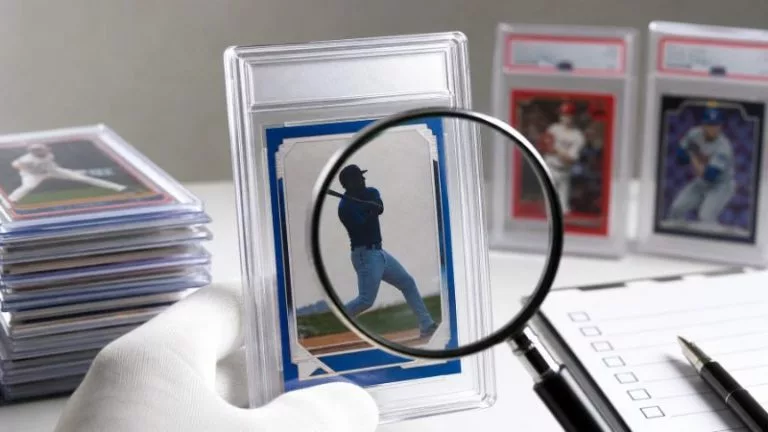
Grading your trading cards is an ideal way to protect them for long-term storage. The collectibles are authenticated to be in a particular condition based on the grade, which buyers can easily trust when you decide to sell.
The question now is about how to grade cards. Well, you can do it yourself as part of the hobby. However, for relevance in the community, we recommend using professional grading companies like PSA, BGS, CGC, SGC, and TAG. Each brand has its own rules, but you generally have to apply, send in the collectible, and pay applicable fees.
Find Trading Cards of All Grades at These Top Sites
 Up to SWEAT-FREE Pack Up To $100
- Rip sports and Pokémon mystery packs online
- View pack values and odds before ripping
- Sell cards back for 90% of value
 Buy any pack. Get one Pack FREE!
- Open real Pokémon cards digitally
- Live market values on every pull
- Sell, vault, trade, or ship cards
 Play $5, Get 5 Free Rips Packs Worth Up to $750
- Fast Trustly, Venmo redemptions
- Apple Pay quick purchases
- Helpful customer support
 Get Up To $300 Deposit Bonus!
- Up to 100% FMV buyback
- Pokémon, One Piece, Baseball and Basketball packs
- Full transparency for all card rips
 Get 85% back Instantly!
- Nine franchise options
- Multiple packs and card tiers
- Sell back at 85% of a card’s FMV
 20% off First Pack Purchase
- Discover diverse packs for different collector interests
- Keep pulled cards in your digital collection
- Ship physical cards directly to your home
 Open TCG Packs Online!
- Standard and hit packs
- Trade or sell unwanted pulls
- Real verifiable pull odds
 Exclusive ONE PIECE raffles!
- Discover Pokémon, football, and basketball cards
- Trade cards through Beezie’s Marketplace
- Enjoy fun and interactive digital card openings
 Enjoy 3 Win Boxes
- Wide range of trading card packs
- Professionally graded cards
- Secure digital vault storage
 New players can receive 3 free mystery boxes and a 5% bonus on their first deposit
- Explore boxes featuring valuable collectible items
- View exact item odds before opening boxes
- Preview box-opening animations with free Test Spin
- 20% back on your first pack as a sign-up bonus
- 10 Pokémon rip tiers that cost between $5 and $2,500
- Shipping or instant sellback at 90% FMV in store credit
Quick facts about grading trading cards
- You can grade cards from sports, Pokémon, One Piece, Magic: The Gathering (MTG), Yu-Gi-Oh!, other trading card games (TCGs), and non-sports categories.
- PSA is the most recognized grading company in the industry, followed by BGS, CGC, SGC, and TAG.
- High grades signify that the trading card is in good condition, but it doesn’t automatically make the item expensive.
Why grade your trading cards?
Some collectors keep raw, ungraded cards, and we admit that there’s nothing wrong with that. However, getting your collectibles graded by a professional company offers some important benefits we can’t ignore. These include:
Potential increase in resale value
As experts, we know that a buyer will confidently pay for a high-graded rare trading card over its raw version. Let’s look at some of the most valuable trading cards in history as an example:
| Card | Sale price |
|---|---|
| 1998 Pikachu Illustrator, PSA 10 (Pokémon) | $16.49 million |
| 2007 to 2008 Michael Jordan and Kobe Bryant Dual Logoman, PSA 6 (Basketball) | $12.93 million |
| 1952 Topps Mickey Mantle #311, SGC 9.5 (Baseball) | $12.60 million |
| 1909 to 1911 T206 Honus Wagner, SGC 2 (Baseball) | $7.25 million |
| 1914 Baltimore News Babe Ruth, SGC 3 (Baseball) | $7.20 million |
There’s a reason each of them has a PSA or SGC grade. We’re not trying to say that every graded card will have a high resale value, though. The item’s rarity and relevance are the main price drivers. Two of the most valuable cards in the above list have low SGC 2 and SGC 3 scores, but they sold for over $7 million because they’re vintage MLB cards over 100 years old.
Confirm an item is genuine
Grading companies specifically check whether a trading card is counterfeit or altered. They’ll look at the printing patterns, weight, and reactions under UV and IR.
That’s why you can learn how to grade sports cards yourself, but you may not have the means to apply the type of specialized methods professionals use. If a trading card has a high grade, like 7 and above, the probability of it being fake or doctored is extremely low.
This factor also connects to the previous one we gave about resale value. Professional grading companies assign certification numbers to each authenticated card with online tools to look them up. So you can simply ask a buyer to confirm the card is genuine without doing much to convince them.
Protect the cards
Raw collectibles can get damaged from scratches or surface wear. Not to mention, the corners sometimes bend, and the paperboard may crease. Those are less likely to happen to professionally authenticated collectibles.
After grading, the cards get sealed in plastic holders, which are the slabs you hear about. The slabs keep the items safe from direct contact, so there’s less chance for bending or corner damage. Plus, dust can’t reach the cards.
We should mention that slabs can still get damaged. You still need to store your graded cards the right way to protect them in the long term.
Access to certain sales services
Several auction houses and specialist marketplaces only accept graded cards, sometimes from specific companies. That’s particularly true for rare collectibles with high demand. Therefore, if you’re a serious collector who wants more selling options, it’s worth getting your cards graded.
Top 5 companies that grade trading cards
Before we go into our step-by-step guide on how to grade trading cards, it makes sense to know the companies you’ll be submitting the collectibles to. Here are the top five:
| Company | Highest grade |
|---|---|
| PSA | Gem Mint 10 |
| BGS | Black Label Pristine 10 |
| CGC | Pristine 10 and Gem Mint 10 |
| SGC | 10 Pristine and 10 Gem Mint |
| TAG | Pristine 10 and Gem Mint 10 |
Professional Sports Authenticator (PSA)
This brand has been active since 1991 and is the largest in the world. So, don’t be surprised when you see US collectors talking more about grading with PSA than any other company. PSA is most popular for Pokémon and sports cards.
The company grades collectibles on a scale from 1 to 10, which we explained in our PSA card grading review. If you spot an item with a PSA Gem Mint (GM MT) 10 score, that means it’s in virtually perfect condition.
Beckett Grading Services (BGS)
BGS has quite a detailed grading system that focuses on four aspects of a card: centering, corners, edges, and surface. The company assigns an individual subgrade to each of the four. That said, the general scale is still 1 to 10, but with half-points like 7.5, 8.5, and 9.5.
Many collectors target getting a BGS Black Label Pristine 10, the company’s highest grade level. However, it’s not an easy feat, as it warrants getting the maximum score in all four subgrade categories.
Certified Guaranty Company (CGC)
During our CGC card grading review, the first thing we noted is that the company is a leader in pop culture collectibles. Therefore, you can submit TCG, sports, and non-sports cards for authentication.
The highest standard grades from CGC are Pristine 10 and Gem Mint 10. However, the sole maximum is Pristine 10, as it has stricter requirements to meet than Gem Mint 10. Conversely, the lowest grade is 0.5 (Poor), but we rarely see such collectibles around.
Sportscard Guaranty (SGC)
From the name of this grading company, it’s easy to connect it to sports trading cards. Indeed, the brand is renowned in the US collector community for authenticating vintage cards. The most common are older baseball cards, like the expensive T206 Honus Wagner and Baltimore News Babe Ruth items we listed earlier.
SGC’s grading scale is quite similar to CGC. So, the highest designations are 10 Pristine and 10 Gem Mint, with the former being the superior rating. That said, you can easily tell an SGC-graded card apart, as they come with unique black-insert holders. Collectors nickname them tuxedo slabs.
Technology Assisted Grading (TAG)
TAG is arguably the lesser-known name on our list, but the company has a major selling point: it heavily applies technology. A typical process involves using machine-learning software — AI, in other words — to scan and identify defects. Like CGC and SGC, the highest grades are Pristine 10 and Gem Mint 10.
While AI assists, we confirmed in a TAG card grading review that human experts always review the findings before assigning the ultimate score. If you choose TAG, you’ll also get a DIG (Digital Image & Grading) report with a visual breakdown of the card’s condition.
7-step guide on how to grade your cards
Without further ado, follow our step-by-step process below to professionally grade your collectible cards in the US:
1. Check the card’s condition
Don’t just take one look at your card and say it's good for grading because it looks clean. You need to make a detailed assessment. For that, we recommend an LED bulb and your phone’s camera, which won’t cost you anything.
You should check the collectible under the light for scratches, print lines, dents, stains, creases, and anything that speaks to its condition. Also pay attention to the centering.
If there are major issues with the card, it’ll typically receive a low rating from a professional company. In such a situation, grading is only worth it if it's a rare collectible.
For common items, you may spend more on grading fees than what you could get from reselling. And if you’re simply collecting, we believe it's best to just buy a protective holder yourself to secure the card.
2. Pick a professional grading company
We’ve already discussed the top five companies to consider. So, what you’re to do here is to visit their websites and check their grading requirements and fees. Fees, in our opinion, are the most crucial, and here's what we found:
| Company | Base price range per card |
|---|---|
| PSA | $59.99 to $599 |
| BGS | $14.95 to $124.95 |
| CGC | $17 to $300 |
| SGC | $50 to $85 |
| TAG | $39.95 to $299.95 |
On paper, BGS appears to be the cheapest. However, we’d give that title to CGC because the $17 rate covers submission for up to 25 cards. Besides, service availability can vary. For instance, while making our BGS card grading review, we noted that the $14.95 tier was sold out.
We must stress that the listed fees are just for grading. You’ll still have to cover costs for shipping (usually to and fro), handling, insurance, and any add-ons. Also, expedited grading costs more. To illustrate, SGC’s $85 tier takes 40+ days, but if you pay $150 instead, the company will authenticate your card within 2 to 3 days.
3. Prepare your cards
Once you’ve decided on the right grader, it’s time to get your collectibles ready to send. The companies have different rules for card protection, grading, and arrangement. That’s why we advise checking the grading requirements alongside the fees.
We’ve graded a couple of cards with PSA and BGS, the top two in the country. From our experience, both usually require submitting collectibles in semi-rigid holders, such as Card Saver 1, not top loaders. Plus, you’ll add a clear penny sleeve to protect each item.
It’s in your best interest to prepare your cards according to your selected company’s guidelines. Otherwise, the items may get damaged, and the grader won’t be held responsible. Even when they arrive in good condition, the submission can be flagged, which’ll cause delays. You may even pay fees for repacking.
4. Complete the online submission form
You start the actual grading process by filling out the online form for your grader. When we do this, we usually identify the card by its year, manufacturer, set, number, character, or any special features. In addition, you often have to state the item’s estimated raw value.
Entering wrong information can cause significant problems, but we don’t need to tell you that. So, before you hit the submit button, review every detail carefully.
After submitting, proceed to pay the required fees. Then, you can print the confirmation, invoice, or other paperwork that must accompany your collectible.
5. Package and send in your cards
For this step, the grading company usually won’t specify a particular shipping carrier to use. So, you can send in your cards through any major logistics company you prefer. Based on our expertise, though, the most reliable are USPS, FedEx, UPS, and DHL. Anyway, what’s important here is for the collectibles to be securely packed and, again, in line with the grader’s standards.
When submitting multiple cards, it’s ideal to stack them in the same sequence as they appear on your submission form. You should put cardboard in between the cards and bind the bundle with a rubber band.
Another point we should stress is sending the package to the right address. On the PSA website, for instance, we saw one location for USPS and a different one for UPS, FedEx, and DHL.
6. Track the grading process
Here, you’ll have to monitor the shipment with the carrier’s tracking number to know when it's delivered to the grader. Then, you follow the grading progress through the company website.
The status updates will depend on the company you use. Here’s a summary of what we see on PSA:
| Status | Meaning |
|---|---|
| Arrived | Your shipment has been received |
| Order Verification | Your package has been opened and is being checked |
| Research & Identification | The grader is reviewing the submission for labeling accuracy |
| Authentication & Grading | Your submission has been approved, and the cards are being graded |
| Encapsulation | The collectibles have been placed in a tamper-proof case after being authenticated |
| Grades Ready | You get charged for the grading and see the results |
| Holder & Label Review | An additional grader reviews and verifies everything |
| Complete | The graded cards have been shipped back to your address |
For other graders, the portal should show when the cards arrived, whether they’re being processed, and when the grading is complete. Of course, you’ll also be informed when the order has been delivered to you. We advise staying on top of the updates to know when there’s any issue or delay.
7. Receive your graded cards
Now, all you have to do is wait to receive the graded card package from the company. Once it arrives, open and inspect the slabs, especially to be sure the labels carry the correct card details and grades. At this point, we also suggest verifying the certification number online.
If anything is incorrect, contact the grading company right away. Otherwise, rest easy, and store your slabs safely.
Upsides and downsides of grading your cards
Here’s a rundown of the benefits and trade-offs of sending collectibles for professional grading:
- Multiple grading companies to select from
- Confirms card authenticity and condition
- Can improve resale value
- Grading fees may cost more than the card’s value
Conclusion – Grading can make a difference to cards’ value
Let’s restate that receiving a high grade doesn’t automatically make a collectible valuable. That said, if it's a rare trading card, a PSA GM MT 10 or BGS Black Label rating makes it a chase. You’ll typically get premium sale offers compared to if it's a raw version.
From the seven steps we outlined, you can see that the process of grading a card is quite intricate. Not to mention, it can be expensive. Our takeaway is to only grade cards that justify the cost — and effort, we should add.
Besides sending in your collectibles for grading, you can rip digital mystery packs and pull already graded trading cards. If that sounds appealing, check the banners on this page for the trusted sites we recommend.
How to grade cards FAQs
-

Quenton Nelson Dealt By Colts to Seahawks
-

Up to 103 SC + 20,500 GC for FREE on Cavaliers vs Bucks NBA: Use Legendz Code LINESWEEP
-

Trade $25 Get $55 on Clippers vs Timberwolves NBA: Use Kalshi Code PREMARLINES
-
Trade $25 Get $55 on Nuggets vs Suns NBA: Use Kalshi Code PREMARLINES
-
Up to 103 SC + 20,500 GC for FREE on Bulls vs Celtics NBA: Use Legendz Code LINESWEEP
-

Spend $5 Get $50 in Free Play, Plus a 100% Match Up To $100 on Lakers vs Warriors NBA: Use Fliff Code TLCBET