Breaking Down the Cavaliers’ Victory Over Sacramento: Stats, Injuries, & Strategy
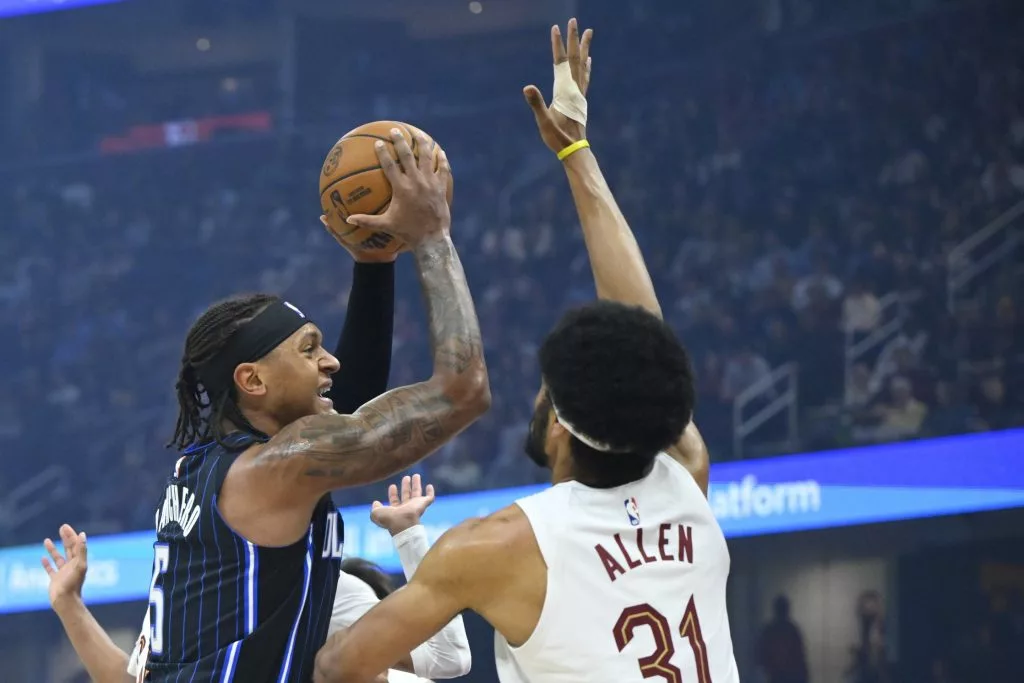
The Cleveland Cavaliers hosted the Sacramento Kings on Friday, January 23, 2026, at Rocket Mortgage FieldHouse, tipping off at 7:30 p.m. EST. On paper, the matchup appeared straightforward: a playoff-positioned Eastern Conference team against a Western Conference side struggling near the bottom of the standings
However, the game revealed several nuances. Sacramento entered attempting to end a seven-game road losing streak, while Cleveland aimed to maintain momentum amid injuries and a tightly packed Eastern Conference race. Betting markets had strongly favored the Cavaliers, yet recent trends and historical matchups suggested the game might be closer than the records implied.
Key Takeaways
- The Cleveland Cavaliers secured a victory over the Sacramento Kings, highlighting their home dominance and interior scoring strength despite injuries.
- Cleveland's strong home record and interior scoring, led by Evan Mobley and Donovan Mitchell, were key factors in their victory.
- Sacramento's road struggles and the absence of key players like Keegan Murray and Domantas Sabonis limited their competitiveness.
- The game demonstrated how context, efficiency metrics, and player availability significantly influence NBA outcomes.
Team performance and statistical profile
Cleveland entered the game with a 25–20 record, sitting fifth in the Eastern Conference. Their 14–11 home record had been a stabilizing factor throughout the season, helping them stay competitive even during stretches when the lineup was affected by injuries. For a deeper read on Cleveland’s current form and betting angles, see our recent Cavaliers prediction article.
Offensively, the Cavaliers averaged 119.1 points per game and had outscored opponents by 87 total points, or roughly two per contest. This reflected a team capable of executing in close games rather than relying on blowout victories.
Sacramento, by contrast, came into the matchup as underdogs with a 12–33 record and was 14th in the Western Conference, a profile that matched the Sacramento Kings odds pricing them as a clear dog. Their struggles were most pronounced on the road, where they had managed just three wins in 20 games. That 3–17 road record had prevented the Kings from building season-long momentum.
Defensively, Sacramento allowed 120.7 points per game and had been outscored by an average of 10 points per contest. Over the season, this contributed to a minus-451 point differential, highlighting ongoing issues on both ends of the floor.
Interior scoring as a structural advantage
One of Cleveland's most reliable strengths during the game was their production in the paint. The Cavaliers averaged 50 points near the basket, ranking seventh in the Eastern Conference in that category.
Evan Mobley played a central role, averaging 10.5 paint points per game. His finishing efficiency and positioning allowed Cleveland to generate high-percentage looks even when perimeter shots were inconsistent.
Against a Sacramento defense that struggled to contain dribble penetration and interior movement, Cleveland's inside scoring set the tone early, forcing the Kings into help-heavy defensive schemes and opening opportunities elsewhere on the floor.
Shooting efficiency and recent performance trends
Sacramento held a slight edge in shooting efficiency during the season, converting 46.7 percent of its field-goal attempts. Cleveland's opponents had shot 46.5 percent against them, a narrow difference that suggested both teams needed to execute well for consistent scoring.
Leading into the matchup, Cleveland had gone 6–4 over its last 10 games, averaging 117.1 points per contest, with opponents scoring at a similar rate. Sacramento had posted a 4–6 record in its last 10 games, scoring 111 points per game while allowing nearly 115. That gap had often left the Kings playing from behind, especially on the road.
Player impact and injury implications
Donovan Mitchell remained the central driver of Cleveland's offense, averaging 28.9 points per game along with 4.8 rebounds and 5.7 assists, which lines up with the kinds of angles featured in our recent NBA player props roundup. He carried an increased workload due to Darius Garland's absence, managing both scoring and playmaking responsibilities.
Mobley complemented Mitchell effectively, averaging 16.3 points and 7.7 rebounds over the previous 10 games and shooting 56.2 percent. His efficiency inside reinforced Cleveland's strategic emphasis on interior scoring.
For Sacramento, Russell Westbrook provided pace and playmaking, averaging 15.6 points, 6.1 rebounds, and 6.9 assists. DeMar DeRozan served as the Kings' most consistent scorer, averaging 20 points per game over the last 10 contests.
Injuries played a role for both teams. Cleveland was without Garland and Max Strus, while Sam Merrill was listed as day to day with a hand injury. Sacramento missed Keegan Murray due to an ankle issue, and Domantas Sabonis was day to day with a knee concern. Sabonis' absence limited the Kings' rebounding and interior scoring options, further amplifying Cleveland's structural advantage.
Betting analysis and market indicators
Before the game, NBA odds listed Cleveland as a heavy moneyline favorite. The Cavaliers had won 60 percent of games when listed as moneyline favorites this season, with a 21–14 record.
When favored by similar odds, Cleveland had gone 5–1, translating to an implied win probability of roughly 86 percent. Sacramento, conversely, had won only nine of 41 games as underdogs, resulting in an implied win probability below 20 percent.
Against-the-spread indicators
Against the spread, trends were more nuanced. Cleveland averaged 119.1 points per game, only slightly below the 120.7 Sacramento allowed. While the Cavaliers had posted a 10–8 record against the spread in such situations, large margins proved challenging, especially with Garland out.
Sacramento, by contrast, performed well against the spread when surpassing 117.1 points, posting a 10–2 record in those cases. This suggested that if the Kings' offense functioned efficiently, they could remain competitive even in games they were expected to lose.
Total points outlook
The projected total for the game hovered in the mid-230s. Cleveland's implied team total was 123 points, slightly above its season average of 122.1, and the Cavaliers had surpassed 123 points in 17 games this season. Sacramento's implied total was below its season average, suggesting tempered expectations for their scoring output. The trends pointed to a steady scoring game with potential for the over, even if Cleveland maintained control.
Historical context and tactical considerations
Despite the Kings' current record, they had found success against Cleveland in recent seasons, winning seven of the last 10 meetings. That history demonstrated that matchup-specific factors could influence outcomes more than season-long performance alone.
For Sacramento, the path to competitiveness relied on disciplined defense, controlling pace, and avoiding scoring droughts. Limiting Cleveland's perimeter effectiveness and contesting shots inside remained critical strategies.
For Cleveland, maintaining ball movement without Garland and leveraging interior advantages were key. By establishing control early and managing possessions efficiently, the Cavaliers could dictate the game's tempo, which ultimately proved decisive in securing the win.
Friday's game underscored how context, efficiency metrics, and player availability shape outcomes. Cleveland's home strength, combined with Sacramento's road struggles and injury limitations, confirmed the favored status in the listed Cleveland Cavaliers Odds, while also revealing that the Kings could remain competitive within certain margins. This matchup served as a detailed illustration of how data-driven analysis and tactical execution converge in the NBA.
-

Lonestar's Evoplay Cup Returns With a 50,000 Free SC Prize Pool
-

Sidepot Is Now an App, and It Comes With 1 Free SC
-

TheBoss Boosts Your First Play: 20,000 GC + 20 Free SC for $7.99
-

Most Improved Big 12 Teams in 2026: Cowboys Look For Massive Turnaround
-
Las Vegas Raiders Avoid Disaster With Ashton Jeanty Injury
-
MLB Pitcher Props for Aug. 24: Cade Cavalli Mows Down the Rockies